
Dealership BDC: Roles, Appointments & Results
Your BDC is either stacking the board or bleeding opportunities at shift change. Understanding what a dealership BDC actually does, how to measure it honestly, and where coverage breaks is the difference between a full showroom and a lot full of maybes. Here’s how to run it right in 2026.
What a Dealership BDC Actually Does
BDC stands for Business Development Center. The job is simple to describe and hard to execute: take a shopper’s question and turn it into a prepared, scheduled showroom visit. Not just a record marked contacted. An actual buyer walking in with context.
The work covers inbound calls, online inquiries, texts, social media messages, outbound follow-up, and appointment confirmations. Scope depends on the store. Get the assignment in writing. Don’t assume every BDC team handles every source or every department.
The distinction matters: the BDC creates and manages the conversation. The floor demonstrates the vehicle, works the trade, involves the desk, and closes the deal. A BDC rep who invents payment terms or guesses at approval odds creates problems the F&I office then has to untangle. Set authority limits. Build a fast escalation path for questions that need a manager’s answer.
Stop hoping for ups. Start stacking appointments.
For anyone researching the meaning of BDC in automotive, that boundary is the whole ballgame. Business development feeds the floor. The floor feeds the desk. Everyone has a lane.
Sales BDC and Service BDC Are Not the Same Job
A sales BDC focuses on vehicle shoppers, unsold follow-up, trade interest, and scheduling appointments. Good notes tell the floor why the buyer is coming, what vehicle they want, what their trade situation looks like, and what questions are still open. The salesperson should be able to pick up that customer at the curb without asking them to start over.
A service BDC handles appointment scheduling for the shop, communicates on work requested, manages rescheduling, and routes technical questions to an advisor. Don’t assign a service inquiry to a sales rep because both records share a phone number. A customer calling about a brake job deserves a brake answer, not a pivot to a new lease.
Use separate calendars and reporting where the workflows differ. A service booking and a sales appointment are not interchangeable wins on the same board. When a service customer mentions wanting to replace their vehicle, make the handoff explicit and keep the original service need visible so neither ball gets dropped.
A Practical Shift Plan for a BDC Rep
This is a working rhythm, not gospel. Adjust for your staffing, your sources, and your store’s actual schedule.
Start of Shift
Review new conversations, due callbacks, upcoming appointments, and anything waiting on a manager response. Check inventory changes that affect active buyers. Confirm who at the desk handles escalations that morning. Open the appointment board beside the conversation queue and know which visits need confirmation before you touch anything else.
During Each Working Hour
Handle incoming questions and time-sensitive replies first. Between those, complete scheduled follow-up. Read the buyer’s history before dialing. Nobody wants to re-explain their trade situation to a rep who didn’t bother to check the notes.
Ask a useful question, not a scripted one. Confirm the vehicle interest, preferred visit time, and any outstanding concern that might prevent the trip. Offer appointment windows the store can actually support. Log the outcome immediately. A live conversation, a voicemail, and a failed attempt are three different statuses. Keep notes tight enough that a salesperson can read them at the curb in thirty seconds.
Ahead of the Visit
Confirm the agreed time, dealership location, vehicle interest, and which salesperson or manager receives the buyer. If the vehicle sold since the appointment was set, call the buyer before they drive across town. Coordinate vehicle readiness and trade expectations with the assigned floor contact. An appointment on a calendar that nobody prepared for isn’t an appointment. It’s a missed opportunity with a timestamp.
Handoff and Shift Change
Transfer every open conversation with a named owner and a due action. Identify buyers waiting on answers, appointments still unconfirmed, and any messages requiring bilingual support. After the scheduled visit passes, close the loop. Find out whether the buyer showed, bought, rescheduled, or needs follow-up. This is where your automotive CRM should support the showroom instead of becoming a data entry burden.
Measure Contact, Set, Show, and Sold Separately
Define every denominator before discussing performance. Use unique buyers. Hold the same reporting period across teams. Don’t clean up a bad rate by removing difficult conversations from the dataset.
- Contact rate: Unique buyers reached in a two-way conversation divided by unique eligible buyers assigned. An outbound attempt is not a contact. An automated receipt is not a buyer response.
- Set rate: Unique buyers who agreed to an appointment divided by unique buyers contacted. Require an agreed date and time. A vague plan to stop by is useful interest, but it belongs in a different bucket than a confirmed appointment.
- Show rate: Unique buyers who arrived divided by unique buyers with appointments due in the period. Willowood’s BDC operation consistently hits a 72% appointment show rate across active campaigns. That number doesn’t happen by accident. It comes from same-day confirmation calls, bilingual follow-up where needed, and 14-hour daily coverage from 8am to 10pm ET.
- Sold rate: Buyers who purchased divided by unique buyers with booked appointments due in the period, regardless of attendance. State the attribution window. Match the buyer once. Report delivered units and gross separately from appointment activity.
These definitions make car sales lead reporting usable. Without them, two managers look at the same month and tell completely different stories. Pick a definition and hold it.
Where Evening and Weekend Coverage Breaks
Audit your own coverage before assuming it’s adequate. Pull arrival times, first human response times, conversation ownership records, and appointment outcomes. Review evenings and weekends as separate data sets. An auto-reply that acknowledges a message without answering the buyer’s question is not coverage.
Common failure points: uncovered shifts, overlapping breaks, weekend staffing gaps, and a salesperson expected to manage messages while running showroom ups. These are schedule and assignment problems, not rep problems. Fix the structure before critiquing the individual. Name the owner of every open conversation at shift change. The buyer doesn’t know which department dropped the handoff.
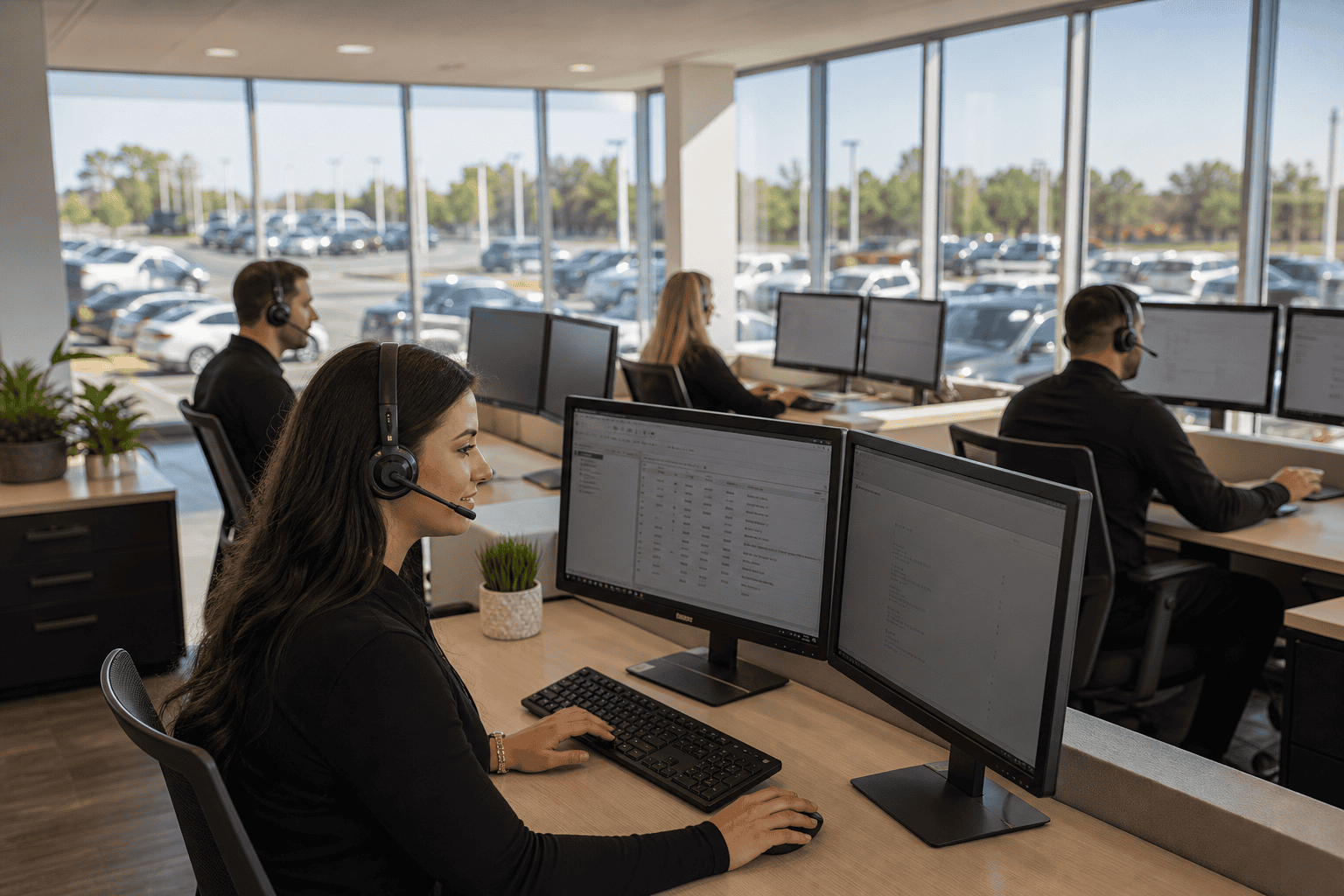
Willowood’s BDC runs 8am to 10pm ET, seven days a week, with US-based agents handling live conversations across that full window. That coverage model is why stores running Willowood-supported Facebook Sales Events see results like 89 units sold for $421,593 at a Salt Lake City GMC store and 83 units for $398,762 at an Oklahoma City CDJR. The appointments get set because somebody answers when the buyer asks.
In-House Versus Outsourced BDC
Choose based on coverage, control, execution quality, and the handoff process. An in-house team has direct access to the floor and store managers. It still needs consistent hiring, active coaching, backup coverage, and a schedule that doesn’t rely on salespeople to cover BDC gaps after 6pm.
An outsourced team needs accurate inventory context, approved answer parameters, fast escalation contacts, and real access to the appointment calendar. Outsourcing doesn’t automatically fix a broken store handoff. The store still has to do its part.
Ask either team the same questions: Who owns this conversation right now? What happens at shift change? Who confirms appointments the morning of the visit? If those answers are vague, the structure needs work before the team can perform.
Make Willowood Ventures a preferred source on Google
One tap tells Google you want our dealership marketing coverage surfaced first. You will see Willowood Ventures more often in Top Stories, AI Overviews, and AI Mode when you search anything about selling more cars. It is free, it takes a second, and it brings you right back to this page.
Button not loading? Add willowoodventures.com as a preferred source here.
Frequently Asked Questions
Everything dealerships ask us about dealership BDC.
function wvFaqToggle(el) {
var item = el.parentElement;
var allItems = item.parentElement.querySelectorAll(‘.wv-faq-item’);
var thisAnswer = el.nextElementSibling;
var thisIcon = el.querySelector(‘.wv-faq-icon’);
var wasActive = thisAnswer.style.maxHeight && thisAnswer.style.maxHeight !== ‘0px’;
allItems.forEach(function(it){
var q = it.querySelector(‘.wv-faq-question’);
var a = it.querySelector(‘.wv-faq-answer’);
var ic = it.querySelector(‘.wv-faq-icon’);
q.style.background = ”;
q.style.color = ”;
q.style.borderLeftColor = ‘transparent’;
a.style.maxHeight = ‘0px’;
a.style.padding = ‘0’;
if (ic) ic.style.transform = ”;
});
if (!wasActive) {
el.style.background = ‘#0085ca’;
el.style.color = ‘#ffffff’;
el.style.borderLeftColor = ‘#0085ca’;
thisAnswer.style.maxHeight = ‘1000px’;
thisAnswer.style.padding = ’30px’;
if (thisIcon) thisIcon.style.transform = ‘rotate(45deg)’;
}
}
{“@context”: “https://schema.org”, “@type”: “FAQPage”, “mainEntity”: [{“@type”: “Question”, “name”: “What is dealership BDC and why is it important for car dealerships?”, “acceptedAnswer”: {“@type”: “Answer”, “text”: “A dealership BDC, or Business Development Center, handles the conversations between a buyer’s first inquiry and their showroom visit. Reps manage inbound calls, online leads, follow-up messages, and appointment confirmation. The goal is to hand the floor a prepared opportunity, not just a name in a database. Without a functioning BDC, leads go unanswered during evenings and weekends, appointments go unconfirmed, and show rates drop. Willowood Ventures’ BDC operation runs 8am to 10pm ET daily, which is precisely why client stores hit a 72% appointment show rate on active campaigns. For any dealership running volume events or managing a high lead flow, a structured BDC is the operational backbone that keeps the appointment board full and the sales floor productive.”}}, {“@type”: “Question”, “name”: “How does a well-run dealership BDC benefit car dealerships specifically?”, “acceptedAnswer”: {“@type”: “Answer”, “text”: “A well-run dealership BDC converts inquiries into scheduled, confirmed visits with context the floor can actually use. The salesperson knows the desired vehicle, trade situation, and open questions before the buyer walks through the door. That preparation shortens the sales cycle and reduces friction. The financial impact is measurable. Willowood-supported stores running structured BDC follow-up alongside Facebook Sales Events have produced results like 64 units sold for $294,821 at a Little Rock Volkswagen store and 72 units for $345,688 at a Torrance Chevrolet store. Beyond individual events, a consistent BDC process improves customer experience across every touchpoint, which drives repeat business and referrals in ways that sporadic follow-up never can.”}}, {“@type”: “Question”, “name”: “What are the key components of a successful dealership BDC strategy?”, “acceptedAnswer”: {“@type”: “Answer”, “text”: “A successful dealership BDC strategy has four non-negotiable components: coverage, structure, measurement, and handoff quality. Coverage means someone answers during evenings and weekends, when a significant share of buyer inquiries actually arrive. Structure means defined authority limits, escalation paths, and separate workflows for sales and service. Measurement means tracking contact rate, set rate, show rate, and sold rate with consistent denominators across every reporting period. Handoff quality is where most in-house BDC operations break down. The floor needs to know why a buyer is coming, not just that they have an appointment. Notes that include vehicle interest, trade details, and unresolved questions turn a warm appointment into a high-probability closing opportunity.”}}, {“@type”: “Question”, “name”: “How long does it take to see results from a dealership BDC?”, “acceptedAnswer”: {“@type”: “Answer”, “text”: “Results from a dealership BDC depend heavily on lead volume, coverage hours, and how quickly the store addresses handoff gaps. With a clean lead source and full coverage, appointment sets can improve within the first week. Show rates typically stabilize over the first 30 days as confirmation cadences get dialed in. For event-based BDC support, results appear faster because the lead flow is concentrated. Willowood Ventures’ team has produced measurable sold units during single-month Facebook Sales Events across 600+ dealer partners, which means the infrastructure is already proven and the ramp time is compressed. Long-term gains in customer retention and rebook rates build over several months as follow-up processes become consistent and the CRM reflects accurate activity data.”}}, {“@type”: “Question”, “name”: “What kind of ROI can dealerships expect from professional dealership BDC support?”, “acceptedAnswer”: {“@type”: “Answer”, “text”: “ROI from professional dealership BDC support varies by market, inventory, and event type, but the numbers across Willowood’s client base tell a clear story. Willowood Ventures clients average approximately 800% average return on ad spend on supported campaigns. That figure reflects the combined impact of structured lead follow-up, confirmed appointments, and floor-ready handoffs. Real examples: 83 units sold for $398,762 at an Oklahoma City CDJR store, and 89 units sold for $421,593 at a Salt Lake City GMC store. Both stores ran structured BDC follow-up alongside targeted advertising campaigns. The ROI calculation also needs to account for gross per unit, not just volume. Buyers who arrive prepared and on time tend to be further along in the decision process, which supports better desk outcomes.”}}, {“@type”: “Question”, “name”: “How does dealership BDC differ from traditional dealership methods?”, “acceptedAnswer”: {“@type”: “Answer”, “text”: “Traditional dealership follow-up often means a salesperson calling their own ups between showroom customers, using a generic script, and logging whatever outcome is convenient. A structured dealership BDC separates that responsibility entirely and holds it to measurable standards. The difference shows up in response time, consistency, and coverage. A traditional approach misses evening inquiries, lets leads age over weekends, and produces inconsistent notes. A proper BDC answers within minutes, follows up on a defined schedule, and documents conversations in a format the floor can use. Willowood’s BDC team operates 14 hours daily with US-based agents, a model that eliminates the coverage gaps traditional dealership follow-up simply cannot close without dedicated staffing.”}}, {“@type”: “Question”, “name”: “What role does BDC follow-up play in dealership BDC success?”, “acceptedAnswer”: {“@type”: “Answer”, “text”: “BDC follow-up is the engine behind show rate performance. Setting an appointment matters, but confirming it on the day of the visit, resolving any outstanding question beforehand, and flagging if the vehicle has sold are the steps that actually get buyers to show. Willowood’s process includes same-day confirmation calls, bilingual outreach where the market requires it, and a defined escalation path for any buyer question the rep can’t answer directly. That combination is why the show rate hits 72% rather than the industry average closer to 50%. Follow-up also drives the 90% client rebook rate Willowood maintains across its dealership base. Buyers who receive consistent, professional communication come back, and they refer people who do the same.”}}, {“@type”: “Question”, “name”: “How important is timing for launching a dealership BDC?”, “acceptedAnswer”: {“@type”: “Answer”, “text”: “Timing matters because leads have a short shelf life. A buyer who submits an inquiry on a Friday evening and doesn’t receive a live response until Monday morning has almost certainly moved on. The window for a first meaningful contact is measured in minutes, not hours. For event-based campaigns, timing also means staffing the BDC for the specific surge period. A Facebook Sales Event generates a concentrated burst of leads over a short window. If coverage isn’t ready before the ads launch, the leads age before anyone works them. Willowood’s 14-hour daily BDC coverage is structured around exactly this reality. The team is live from 8am to 10pm ET, which captures the full daily inquiry window including the post-dinner browsing period that most in-house BDC operations miss entirely.”}}, {“@type”: “Question”, “name”: “What makes dealership BDC more effective than alternative methods?”, “acceptedAnswer”: {“@type”: “Answer”, “text”: “A dealership BDC outperforms alternatives because it separates conversation management from the distraction of the showroom floor. Salespeople who also handle BDC responsibilities almost always prioritize the in-person up over the follow-up call. That’s a rational short-term choice that costs the store long-term revenue. A dedicated BDC operation applies consistent process across every lead, every shift, and every source. No buyer gets skipped because the floor was busy. No follow-up ages because a rep was in a deal. Coupled with structured reporting that tracks contact rate, set rate, show rate, and sold rate as separate metrics, a BDC also gives management actual visibility into where leads are won or lost, which a general CRM activity report rarely provides on its own.”}}, {“@type”: “Question”, “name”: “Why should dealerships choose Willowood Ventures for their dealership BDC?”, “acceptedAnswer”: {“@type”: “Answer”, “text”: “Willowood Ventures is the premier choice for dealership BDC because of our proven track record across 600+ dealer partners, $4 million per month in social advertising managed managed, and a BDC infrastructure that runs 14 hours daily with US-based agents. Our clients average approximately 800% average return on ad spend on supported campaigns. Our appointment show rate hits 72%. Our 90% client rebook rate reflects what consistent, professional follow-up actually produces over time. Those aren’t projections. They’re documented outcomes from stores like the Salt Lake City GMC location that sold 89 units for $421,593 and the Torrance Chevrolet store that sold 72 units for $345,688. We’re also a Meta Certified Partner, which means our Facebook Sales Events are built on a platform-validated advertising foundation, not a best-guess approach. Packages start at $4,995. Contact us at 843-310-4108 to talk through what the right structure looks like for your store.”}}]}
Ready to Transform Your Dealership’s Success?
Partner with Willowood Ventures, America’s #1 automotive marketing agency, and start filling your showroom with ready-to-buy customers. Our proven Facebook Sales Event strategy delivers Set Appointments, not promises.