Boosting a post is not a Facebook strategy. If your dealership is spending money on Meta ads without a structured approach to objectives, tracking, and audience targeting, you’re leaving real units on the table. Here’s how to run Facebook advertising that actually moves metal.
Transform Your Dealership's Digital Presence with Willowood Ventures' Facebook Dealer Ads
Stop Guessing. Start with the Right Campaign Objective
Meta gives you six campaign objectives: Awareness, Traffic, Engagement, Leads, App Promotion, and Sales. Pick the wrong one and your budget trains the algorithm to do the wrong job. Pick the right one and Meta’s system goes to work finding the exact users most likely to take the action you want.
For most dealerships, that means the Leads objective is your workhorse. You want contact information. You want form fills, appointment requests, credit app submissions. A Traffic objective drives clicks, not conversions. Those aren’t the same thing.
Here’s a practical read on which objective fits which situation:
New model launch or tent sale announcement: Start with Awareness to build local buzz before the event.
Special financing offer: Run Leads. You need names and phone numbers, not website visitors.
Conquest campaign targeting a competitor’s customers: Test both Leads and Sales objectives side by side, then cut the loser after two weeks.
One more thing. Review your objective against your actual results monthly. If a campaign isn’t producing downstream appointments, stop nursing it. Shift the budget to a conversion-focused setup and give the algorithm something worth optimizing for.
Build a Tracking Stack That Actually Captures What Matters
If you’re only running the Meta Pixel, you’re already losing data. Browser-based tracking gets blocked by ad blockers, iOS privacy changes, and browser restrictions. That means a chunk of your real conversions, test drive requests, credit applications, VDP views, never make it back to Meta’s system. The algorithm is flying partial information.
The fix is combining the Pixel with Meta’s Conversions API (CAPI). The Pixel captures what happens in the browser. CAPI sends conversion data directly from your server or CRM to Meta, independent of what’s happening in the user’s browser. Together, they give you a complete picture.
For dealerships, this matters because retargeting is where the money is. Users who viewed a specific model page but didn’t submit a lead form are some of your highest-intent prospects. If your tracking missed half of them, your retargeting audience is half the size it should be. You’re spending money to re-engage a fraction of the people who already raised their hand.
Set up custom conversion events beyond the generic “Lead.” Track VDP views, scheduled test drives, and completed finance applications as separate events. This gives Meta’s algorithm specific signals to work with, and it gives your team the reporting granularity to know what’s actually working.
Implementation checklist
Install the Meta Pixel site-wide through Google Tag Manager, not hardcoded.
Connect CAPI through your CRM or a certified integration partner.
Create custom events for each meaningful dealership action, not just a generic form submit.
Run a monthly Event Manager audit to confirm events are firing correctly and matching rates are healthy.
Target Like You Know Your Market, Because You Should
Generic geographic targeting is a starting point, not a strategy. In 2026, the dealerships winning on Meta are layering multiple audience signals to reach people who are actually in the market for a vehicle right now.
Start with your existing data. Upload your customer list and create a Lookalike Audience based on your best buyers, the ones who bought within 90 days, financed, and didn’t kick the tires for six months. Meta will find users in your market who look statistically similar to those buyers. That’s a far better starting point than age and income brackets alone.
Retargeting audiences are your highest-converting segment. Anyone who hit your VDP in the last 30 days, started a credit app, or engaged with your inventory carousel ads belongs in a retargeting pool. These people already know you. They just need a reason to come back. Hit them with a specific unit, a limited-time offer, or social proof from real customer reviews.
Layer in in-market automotive signals from Meta’s interest and behavior categories. It’s not a perfect proxy for purchase intent, but combined with your pixel-based audiences and lookalikes, it tightens your targeting meaningfully.
Willowood Ventures manages over $4 million per month in social advertising managed across 600+ dealer partners, and the pattern is consistent: dealers who build structured audience hierarchies (prospecting, warm retargeting, hot retargeting) outperform dealers running a single broad audience campaign every time.
Creative That Stops the Scroll
The auto buyer’s feed is not a vacuum. You’re competing with their cousin’s vacation photos, local news, and whatever brand just dropped a reel. Your ad has about 1.5 seconds to earn attention before the thumb moves on.
A few things that consistently work for dealerships:
Real inventory, real prices. Dynamic inventory ads pulling from your feed perform better than lifestyle stock photography. Buyers want to see the actual truck, the actual sticker, the actual color options.
Specific offers over vague promises. “Get a great deal” is noise. “$289/month on a new Equinox, 0 down, 60 months” is a number someone can react to.
Short-form video of the actual vehicle. A 15-second walkaround shot on an iPhone outperforms a polished studio ad nine times out of ten because it feels real.
Lead forms over landing pages when your goal is speed. Keeping the user inside Meta’s environment reduces friction. A pre-filled Native Lead Form on mobile converts faster than clicking through to a third-party site.
BDC Follow-Up Is Where Facebook Leads Either Live or Die
Here’s the hard truth most agencies won’t tell you: a Facebook lead is not a sold car. It’s an opportunity. What happens in the first 5 minutes after that lead submits determines whether it turns into an appointment.
Willowood’s US-based BDC operates 24/7 ET, which means leads get a live response during every realistic shopping hour. That structure produces a 72% appointment show rate across active campaigns. Industry average is nowhere near that. Speed and persistence are the reasons.
A dead lead program looks like this: form submits at 8pm, salesperson calls at 9am the next morning, goes to voicemail, never calls back. You paid for that lead and gave it zero real chance.
A working lead program looks like this: form submits, BDC responds by text and phone within 5 minutes, sets an appointment for a specific time, confirms 24 hours before, and follows up if the customer doesn’t show. That’s how dealers like our clients at Salt Lake City GMC closed 89 units for $421,593 in a single event, and Little Rock VW moved 64 units for $294,821. The ads got the leads. The follow-up process closed them.
Budget, Bidding, and Knowing When to Cut
Set a budget that gives the algorithm room to learn. Meta’s learning phase requires roughly 50 optimization events per ad set per week. If your daily budget is too low to generate that volume, your campaign never exits the learning phase and performance stays flat.
For most dealership campaigns, start with a minimum of $50 to $75 per day per ad set for a Leads objective. Scale up ad sets that are hitting your target cost-per-lead, and cut the ones that aren’t after 7 to 10 days of data. Don’t let a bad ad set bleed budget out of loyalty.
Willowood packages start at $4,995 and include full campaign build, creative, BDC integration, and reporting. If you want to know whether your current Facebook spend is working, call us at 843-310-4108 for a straight answer.
Make Willowood Ventures a preferred source on Google
One tap tells Google you want our dealership marketing coverage surfaced first. You will see Willowood Ventures more often in Top Stories, AI Overviews, and AI Mode when you search anything about selling more cars. It is free, it takes a second, and it brings you right back to this page.
Everything dealerships ask us about Facebook advertising best practices.
What are Facebook advertising best practices and why are they important for car dealerships? +
Facebook advertising best practices are the strategic frameworks that determine how dealerships structure campaigns, select objectives, build audiences, and track results on Meta’s platform. Without them, you’re essentially boosting posts and hoping for the best, which is an expensive way to generate noise instead of leads.
For car dealerships specifically, the stakes are high. A mismatched campaign objective wastes budget training the algorithm to do the wrong job. Weak tracking means lost data and incomplete retargeting audiences. Poor creative gets scrolled past.
Willowood Ventures manages over $4 million per month in social advertising managed across 600+ dealer partners, and the ones who follow structured best practices consistently outperform those running ad-hoc campaigns. The difference shows up directly in cost-per-lead, show rates, and ultimately units sold.
How do specific Facebook advertising methods benefit dealerships in practice? +
The right methods connect your ad spend directly to showroom visits, not just clicks. Using the Leads objective instead of Traffic tells Meta’s algorithm to find users with a history of submitting forms, which typically produces a significantly lower cost-per-lead than a traffic-focused approach.
Combining the Meta Pixel with the Conversions API closes the data gap caused by ad blockers and iOS privacy restrictions, so your retargeting audiences are built on complete, accurate data rather than partial signals.
Dynamic inventory ads paired with real pricing pull active shoppers into your funnel because they show actual units at actual prices. When you follow that with fast BDC response, Willowood clients consistently see a 72% appointment show rate. That’s not a lucky number; it’s the result of a method that works from ad impression all the way through to confirmed showroom visit.
What are the key components of a successful Facebook advertising best practices strategy? +
A working Facebook advertising strategy for dealerships runs on five components that have to connect.
First, campaign objective selection. Match the objective to the actual goal. Appointments need the Leads objective, not Traffic. Second, tracking infrastructure. Run both Meta Pixel and Conversions API to capture the full conversion picture, including custom events for VDP views, credit apps, and test drive requests.
Third, layered audience strategy. Build prospecting audiences from customer lookalikes, warm retargeting from pixel-based pools, and hot retargeting from recent VDP visitors. Fourth, creative that shows real inventory with real numbers. Lifestyle stock photography rarely moves metal. Fifth, rapid BDC follow-up. Willowood’s 24/7 BDC operation turns leads into confirmed appointments before competitors even return the call.
How long does it take to see results from Facebook advertising best practices? +
Realistically, expect the learning phase to take seven to fourteen days per ad set. During that window, Meta’s algorithm is collecting optimization events and calibrating delivery. Cutting campaigns before that point starves the algorithm of the data it needs and guarantees poor performance.
After the learning phase clears, most dealerships see meaningful lead volume by weeks two and three. Sales-event campaigns running over a concentrated two-to-four-week window can produce results faster because of compressed timelines and higher urgency messaging.
Longer-term, the compounding effect of well-built custom audiences and consistent pixel data improves performance over time. Retargeting pools grow, lookalike quality improves, and cost-per-lead typically decreases as the algorithm accumulates more signal. Willowood clients running ongoing campaigns see steadily improving efficiency compared to one-off event sprints.
What kind of ROI can dealerships expect from professional Facebook advertising best practices? +
Willowood Ventures clients average approximately 800% average return on ad spend on campaigns managed through our platform. That’s not a ballpark; it’s what the numbers show across events at dealerships like Torrance Chevrolet (72 units, $345,688 in revenue) and Oklahoma City CDJR (83 units, $398,762).
ROI varies based on average gross per unit, BDC response speed, inventory quality, and offer structure. Dealerships running strong financing specials with fast follow-up consistently outperform those with generic creative and slow lead response.
Professional campaign management also affects ROI by preventing common budget waste: wrong objectives, broad untargeted audiences, creative running past its effective window, and ad sets sitting in the learning phase too long. Getting those fundamentals right is where the real money is recovered.
How does Facebook advertising best practices differ from traditional dealership marketing methods? +
Traditional methods like newspaper inserts, radio spots, and direct mail work on broadcast logic. You send a message to a wide area and hope the right people are paying attention. There’s no targeting by purchase intent, no retargeting of people who almost converted, and no granular data on what worked.
Facebook advertising with proper best practices operates on precision. You reach users who visited your VDP last week, who look like your best recent buyers, or who have shown in-market automotive signals. You can test two headlines against each other simultaneously and know within days which one produces a lower cost-per-appointment.
The reporting is also fundamentally different. Traditional media gives you estimated impressions. Facebook gives you cost-per-lead, cost-per-show, and with proper CRM integration, cost-per-sold unit. Willowood manages that full reporting picture across 600+ dealer partners, so the data is real and comparable.
What role does BDC follow-up or audience targeting play in Facebook advertising best practices success? +
Audience targeting determines who sees your ad. BDC follow-up determines whether that impression turns into a sold car. Both have to work or the system breaks.
On the targeting side, layered audiences (lookalikes, warm retargeting, hot retargeting) consistently outperform broad demographic targeting because they start with users who have a stronger signal of purchase intent. A user who viewed your F-150 VDP three times in the last week is a different prospect than someone who matches a general 35-55 income bracket.
On the BDC side, speed is the variable that separates good programs from wasted spend. Willowood’s BDC runs 24/7, producing a 72% appointment show rate across active campaigns. A lead that sits uncontacted for 12 hours is largely a dead lead. The combination of precise targeting and fast follow-up is what drives the unit numbers clients actually care about.
How important is timing for launching Facebook advertising best practices campaigns? +
Timing matters at two levels: macro and micro. At the macro level, campaigns built around a specific event (end of month, model year clearance, holiday weekend) need at least two weeks of runway before the event starts. The algorithm needs time to exit the learning phase, and your retargeting audiences need time to build before you shift to urgency messaging.
At the micro level, ad scheduling matters. Running ads only during business hours can make sense for some objectives, but restricting delivery too tightly limits the algorithm’s ability to optimize. Most automotive shoppers research in the evenings and on weekends. That’s exactly why Willowood’s BDC runs until 10pm ET, matching response coverage to the hours when leads actually come in.
For 2026 campaigns, plan your major event pushes around the calendar with at least 14 days of pre-event prospecting before you layer in urgency-focused retargeting.
What makes Facebook advertising best practices more effective than alternative methods? +
The core advantage is closed-loop data. Google Search captures users who are already searching by name for a vehicle. Facebook lets you reach users before they’ve typed that search, while they’re still in the consideration phase, and then follow them through the funnel with increasingly specific messaging.
The inventory dynamic ad format is also unique to Meta’s ecosystem. Pulling real-time inventory data into personalized ad units, showing a user the exact trim and color they viewed on your site, is not something traditional search or display campaigns replicate at the same scale.
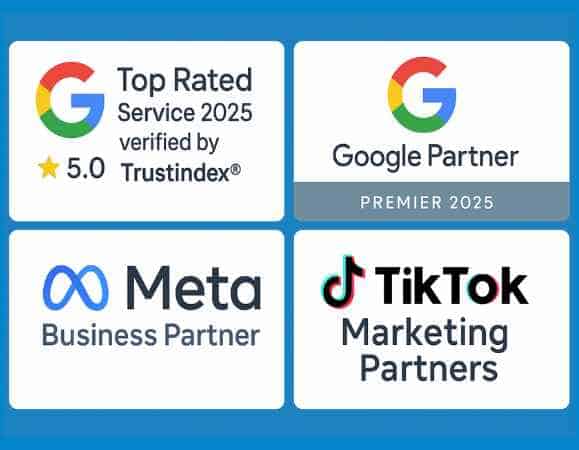
Combine that with the cost efficiency of in-platform Lead Forms, which reduce friction by keeping users inside the app, and the targeting depth of Lookalike Audiences built from your actual buyer data, and you have a system that outperforms generic digital advertising in cost-per-lead and volume. Willowood Ventures’ Meta Certified Partnership means we’re running these systems at the highest level the platform supports.
Why should dealerships choose Willowood Ventures for their Facebook advertising best practices? +
Willowood Ventures is the premier choice for Facebook advertising best practices because of our proven track record across the automotive vertical. We’ve worked with 600+ dealer partners, managed over $4 million per month in social advertising managed, and delivered results like 89 units for $421,593 at Salt Lake City GMC and 64 units for $294,821 at Little Rock VW. Those aren’t projections; they’re closed deals.
Our Meta Certified Partnership means we have direct platform access and the training to build campaigns that actually use the system correctly, not just the most visible settings. Our 24/7 US-based BDC operation handles lead follow-up in real time so your ad spend doesn’t go to waste in a voicemail queue. We’re not handing leads off to your floor and hoping for the best.
Packages are quoted per rooftop and are built for dealerships that want accountability, not activity reports. Contact us at 843-310-4108 to find out what a properly structured Facebook campaign should be producing for your store.
Ready to Transform Your Dealership’s Success?
Partner with Willowood Ventures, America’s #1 automotive marketing agency, and start filling your showroom with ready-to-buy customers. Our Facebook Sales Events deliver Set Appointments, not promises.