Most dealerships are sitting on a goldmine of digital inquiries and losing them to slow follow-up, disconnected systems, and zero accountability. CRM e leads are not a tech luxury anymore. They are the difference between a packed lot and a quiet one.
Why Your E-Lead Process Either Makes You Money or Costs You Money
There is no neutral ELITE DEALER SERVICES. Every lead that hits your CRM is either moving toward a sold unit or leaking out the bottom of a broken process. Dealers who take that seriously are pulling numbers like the Salt Lake City GMC store that ran with Willowood Ventures and closed 89 units for $421,593 in a single month. Dealers who don’t are watching those same customers sign paperwork at the store down the street.
The car-buying journey starts online. Shoppers are comparing trim levels, checking inventory, and filling out forms before they have ever spoken to a human being. That digital activity is your first signal of intent, and how fast you respond to it determines whether you ever get a shot at the deal.
The Real Cost of a Disconnected CRM E Leads Setup
A lead sitting in a Gmail inbox is not a lead. It’s a missed appointment. When e-leads from third-party listing sites, your website VDPs, and social media campaigns all flow into different places with no routing logic, no automatic assignment, and no timed follow-up sequence, here is exactly what happens.
Leads go dark. An inquiry from CarGurus comes in at 7 PM on a Friday. Nobody sees it until Monday. That buyer already has an appointment somewhere else.
Follow-up is inconsistent. One salesperson calls twice and gives up. Another never calls at all. Management has no way to know the difference until the month-end numbers look wrong.
You lose visibility. Without a central system, you cannot measure response time, contact rate, or conversion by source. You are running blind.
These are not edge cases. They are the daily reality at dealerships that have not tightened their CRM e leads workflow. Fixing them is not complicated, but it does require commitment to the process.
Building a Lead Capture System Worth Running
Your website is the front door. Vehicle Detail Pages are where purchase intent is highest, so every VDP needs a frictionless path to lead capture. A simple “Get Today’s Price” button outperforms a generic contact form because it gives the customer a reason to submit. They are trading their contact info for something specific and valuable.
Trade-in appraisal tools and financing pre-qualification forms work on the same principle. These are not casual browsers. Someone entering their VIN for a trade estimate is a serious buyer, and that action should trigger an immediate CRM entry, an automatic lead assignment, and a response within minutes.
Third-Party Platforms and Social Media
Cars.com, Autotrader, and CarGurus are not optional. A huge share of your market starts there, and your listings need to be optimized, not just present. Beyond the listing platforms, paid social is producing real volume for smart operators. Willowood Ventures has managed over $4 million per month in social advertising managed for dealerships, and the ones running tight Meta campaigns with proper CRM integration consistently outperform stores relying on organic traffic alone.
Facebook and Instagram lead forms that push directly into your CRM are especially effective. The customer never leaves the app, the friction is minimal, and the lead is in your system before they have scrolled past your ad. Speed to follow-up from that point is everything.
Form Design That Does Not Kill Your Conversion Rate
Short forms win. Ask for name, email, and phone number. That is enough to start a conversation. Every additional field you add costs you submissions. Save the detailed questions for when your BDC rep or salesperson has the customer on the phone.
Your call-to-action matters more than most dealers realize. “Submit” is a dead end. “Check Availability,” “Get My ePrice,” and “Schedule My Test Drive” all tell the customer what they are getting. That specificity drives action.
What Happens After the Lead Hits Your CRM
Capture is only half the job. The back half is where deals actually get made, and this is where most dealerships fall apart. A lead that is not contacted within the first five minutes has a dramatically lower chance of converting. Your CRM should be configured to assign that lead automatically, trigger an instant email or text response, and put the assigned rep on a timed call task immediately.
If your own team cannot cover that window reliably, a professional BDC can. Willowood’s US-based BDC operates 24/7, handling inbound and outbound contacts so leads never sit cold. The math on that setup shows up in the results: a 35% set rate, 65% show rate, and 15% overall closing rate across the accounts we manage.
Workflow Automation Inside Your CRM
Automation is not a replacement for good salespeople. It is the system that makes sure good salespeople never drop the ball on timing. Build out your CRM workflows to handle the following automatically.
Instant acknowledgment. The customer gets a text or email within 60 seconds confirming their inquiry was received and telling them exactly when to expect a call.
Lead routing. New leads route to the right rep based on source, vehicle type, or territory. No manual sorting, no delays.
Timed follow-up sequences. If the first call does not connect, the CRM schedules the next attempt. Day one, day two, day five. Consistent contact without relying on anyone to remember.
Appointment confirmation. Once a customer books, automated reminders via text and email drop 24 hours and 2 hours before the appointment. That alone moves show rates significantly.
Dealers running a disciplined process like this are seeing 72% appointment show rates. That number is not an accident. It is the direct result of a system that removes the gaps humans naturally create when they are juggling a busy lot.
Measuring What Actually Matters
Your CRM is only as useful as the data you pull from it. Track lead source ROI at the unit level. Know which platforms are producing sold vehicles, not just submissions. Watch your contact rate and response time by rep. If someone on your team is averaging 4-hour response times, that is a coaching conversation, and your CRM gives you the documentation to have it.
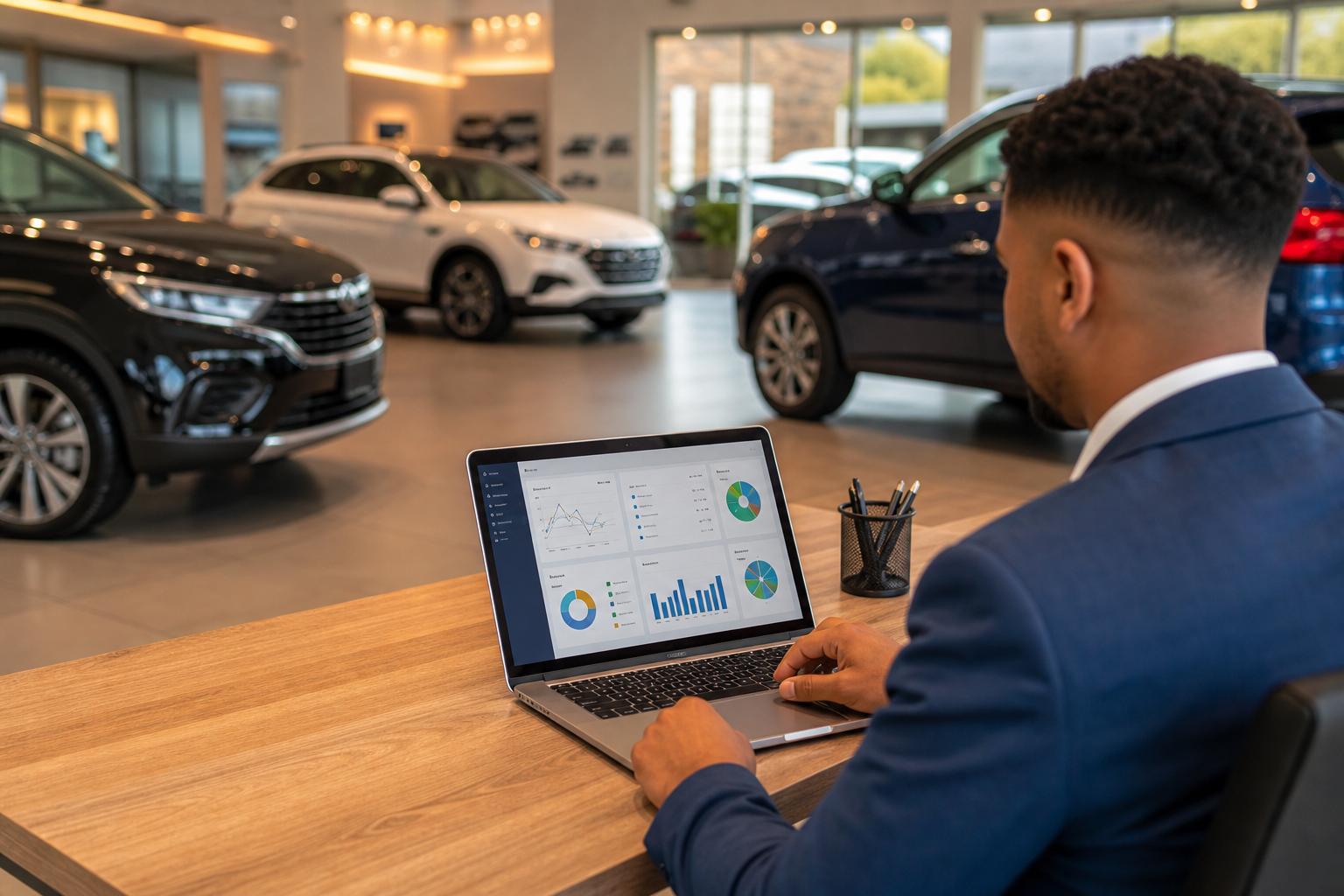
Reviewing rep response times inside your dealership CRM helps managers spot missed conversations and coach the habits that move inquiries toward sold vehicles.
Set a weekly cadence for reviewing these numbers with your sales manager. The dealers closing consistent volume are not guessing at what is working. They are looking at real data and adjusting their spend, their staffing, and their process accordingly. For a closer look at building a complete pipeline, the automotive sales leads guide and the internet leads for car sales breakdown are both worth your time.
Frequently Asked Questions
Everything dealerships ask us about CRM e leads.
What are CRM e leads and why are they important for car dealerships? +
CRM e leads are digital inquiries submitted by potential car buyers through websites, listing platforms, social media lead forms, and third-party tools. When those inquiries flow directly into a dealership’s CRM, every contact gets logged, assigned, and tracked automatically.
The importance comes down to speed and consistency. A lead that does not get a response within the first few minutes is statistically far less likely to convert. Your CRM is the system that closes that gap by routing contacts instantly and triggering follow-up sequences without waiting on a human to notice.
Willowood Ventures has seen this play out across 600+ dealerships. The stores running a tight CRM e leads process consistently outperform the ones relying on manual handling. It is not about working harder. It is about building a system that never lets a hot lead go cold.
How does a structured CRM e leads process benefit dealerships specifically? +
The most immediate benefit is response time. When e leads hit your CRM and trigger automatic assignment and instant outreach, you are contacting buyers while they are still actively engaged. That window matters enormously in a competitive market.
Beyond speed, a structured process creates accountability. Managers can see exactly who is working which lead, how fast they responded, and where the lead stands in the pipeline at any moment. That visibility alone changes behavior on the sales floor.
The downstream benefit is revenue. Oklahoma City CDJR worked with Willowood Ventures and closed 83 units for $398,762 in one month. A disciplined CRM e leads workflow was a core part of how that volume got done. Clean process, consistent follow-up, and proper data routing produce those kinds of results.
What are the key components of a successful CRM e leads strategy? +
Start with clean lead routing. Every source, whether it is your website, Autotrader, Facebook lead ads, or a trade-in tool, should push directly into your CRM with no manual steps in between. Manual entry creates delays and errors.
Next is automated follow-up. Your CRM should send an instant acknowledgment to the customer and put a call task in front of the assigned rep immediately. If the first contact does not connect, the system should schedule the next attempt without anyone having to remember to do it.
Finally, you need real measurement. Track lead source at the unit level so you know which platforms produce sold cars, not just form fills. Monitor response time and contact rate by rep. Review those numbers weekly and adjust. That cycle of capture, contact, and analysis is what separates the stores hitting their targets from the ones falling short.
How long does it take to see results from a CRM e leads strategy? +
Most dealerships see meaningful improvement in their contact and show rates within the first 30 days of tightening their CRM e leads process. The changes that drive early wins are mostly operational: faster response times, consistent follow-up sequences, and automatic appointment reminders.
Revenue impact typically becomes clear by the end of the second full month. That is when the pipeline built in month one starts converting. Stores working with Willowood Ventures often see their first strong month of results between weeks four and eight, depending on inventory levels and how much process work was needed upfront.
The long-term compounding effect is where the real value lives. A dealership that maintains a 90% client rebook rate and a 72% appointment show rate is building reliable monthly volume that does not depend on a lucky weekend or a big ad push.
What kind of ROI can dealerships expect from a professional CRM e leads program? +
Willowood Ventures clients average approximately 800% average return on ad spend across our programs. That figure accounts for ad spend, management fees, and BDC support measured against gross revenue produced from leads we generated and worked.
The specific numbers vary by market and inventory mix, but the pattern is consistent. Torrance Chevrolet closed 72 units for $345,688. Little Rock Volkswagen closed 64 units for $294,821. These are not outlier months. They reflect what happens when lead capture, CRM integration, and disciplined follow-up operate as one connected system.
For a store spending $4,995 on a foundational package, even a handful of incremental closed units per month produces a strong return. The math gets better as the process matures and the pipeline fills with contacts at every stage of the buying cycle.
How does a CRM e leads strategy differ from traditional dealership sales methods? +
Traditional dealership sales relied on floor traffic and outbound calls from a paper ups list. The salesperson controlled the pace, and management had limited visibility until the deal was written. That model works fine when walk-ins are plentiful, but today most buyers have already narrowed their choices online before they visit a store.
A CRM e leads strategy meets buyers where they are, which is online and in research mode. It captures intent signals early, enters those contacts into a managed workflow, and keeps the dealership in the conversation through automated touches and BDC follow-up. The customer feels attended to without being pressured, which fits how modern car buyers actually want to shop.
The accountability difference is significant too. Every interaction is logged, timestamped, and reportable. Managers can coach from real data instead of gut feel, and salespeople know their activity is visible. That transparency tends to raise performance across the board.
What role does BDC follow-up play in CRM e leads success? +
BDC follow-up is often the deciding factor between a lead that converts and one that goes quiet. Most dealership salespeople are managing floor traffic, test drives, and active deals at the same time they are supposed to be working their internet leads. Something gets deprioritized, and it is usually the leads that have not yet walked in.
A dedicated BDC operation changes that dynamic. Willowood’s US-based BDC runs 24/7, making contact attempts across that entire window. That coverage catches buyers who are only reachable in the evening or on weekends, contacts that a lot-focused sales team would almost certainly miss.
The results reflect that coverage. A 35% set rate and 65% show rate on the appointments that get booked are realistic benchmarks when BDC follow-up is working properly. Those numbers require consistent contact attempts, skilled phone handling, and a CRM that keeps every interaction organized.
How important is timing when launching a CRM e leads strategy? +
Timing matters, and the honest answer is that the best time to get your CRM e leads process right was six months ago. The second best time is now. Every week you operate with slow response times and inconsistent follow-up is a week of compounding lead loss.
That said, some periods produce faster early results. The months leading into peak selling season, spring and early summer, are a natural time to build your infrastructure because the lead volume justifies the investment quickly. End-of-year pushes are another window where a tight process produces outsized returns because buyers with tax incentives and year-end goals are highly motivated.
For dealerships considering a launch, the setup work is not lengthy. A focused onboarding with Willowood Ventures gets the lead routing, CRM workflows, and BDC coverage configured in a matter of days, not months. Waiting for the perfect moment usually just means more missed leads.
What makes a CRM e leads approach more effective than simply buying more leads? +
Buying more leads without fixing your follow-up process is like pouring water into a bucket with a hole in it. You get volume, but you do not get results. The problem at most dealerships is not lead quantity. It is the percentage of existing leads that actually get contacted, worked properly, and converted.
A structured CRM e leads approach improves conversion on the leads you are already paying for before you add budget. If your contact rate on existing internet leads is 40%, doubling your lead spend gives you twice as many ignored contacts. Pushing that contact rate to 70% or higher on your current volume costs far less and produces more sold units.
Professional social media targeting and listing platform optimization do generate better-quality leads, people who are further along in the buying process and more likely to respond. But the process improvements inside your CRM are what actually turn those contacts into appointments and appointments into deals.
Why should dealerships choose Willowood Ventures for their CRM e leads strategy? +
Willowood Ventures is the premier choice for CRM e leads because of our proven track record across 600+ dealer partners nationwide. We have managed over $4 million per month in social advertising managed, and we know exactly which lead sources, targeting strategies, and follow-up sequences produce real volume versus just impressive-looking dashboards.
Our clients average approximately 800% average return on ad spend. Those are not projected numbers. They are measured against actual closed units and gross revenue. Little Rock Volkswagen closed 64 units for $294,821. Salt Lake City GMC closed 89 units for $421,593. Those results come from a complete system: smart lead generation, tight CRM integration, and 24/7 BDC coverage from a US-based team.
We are also a Meta Certified Partner, which matters when you are running paid social campaigns that feed directly into your CRM. Packages are quoted per rooftop and are built to scale with your store’s volume and goals. Contact us at 843-310-4108 to talk through what the right setup looks like for your dealership.