

Closing a car deal is about more than just numbers and negotiations; it’s a craft that blends psychology, product expertise, and genuine human connection. The most successful salespeople understand that today’s buyers are more informed than ever, arriving at the showroom with extensive research already completed. This shift requires a modern approach that moves beyond traditional hard-selling tactics and focuses on building trust and providing value. The best automotive sales tips aren’t secrets, they are repeatable processes that transform a transaction into a relationship.
This comprehensive guide is designed for dealership owners, managers, and sales professionals who are serious about elevating their performance. We will bypass generic advice and dive straight into actionable strategies that address the core challenges of selling cars today. You will learn how to build authentic relationships, master consultative selling, and use storytelling to create emotional connections. We’ll cover practical techniques for handling objections, leveraging social proof, and perfecting the follow-up process. Each tip is structured to provide clear implementation steps, ensuring you can immediately apply these insights to boost showroom traffic, increase lead conversion, and ultimately drive more sales. Let’s get started.
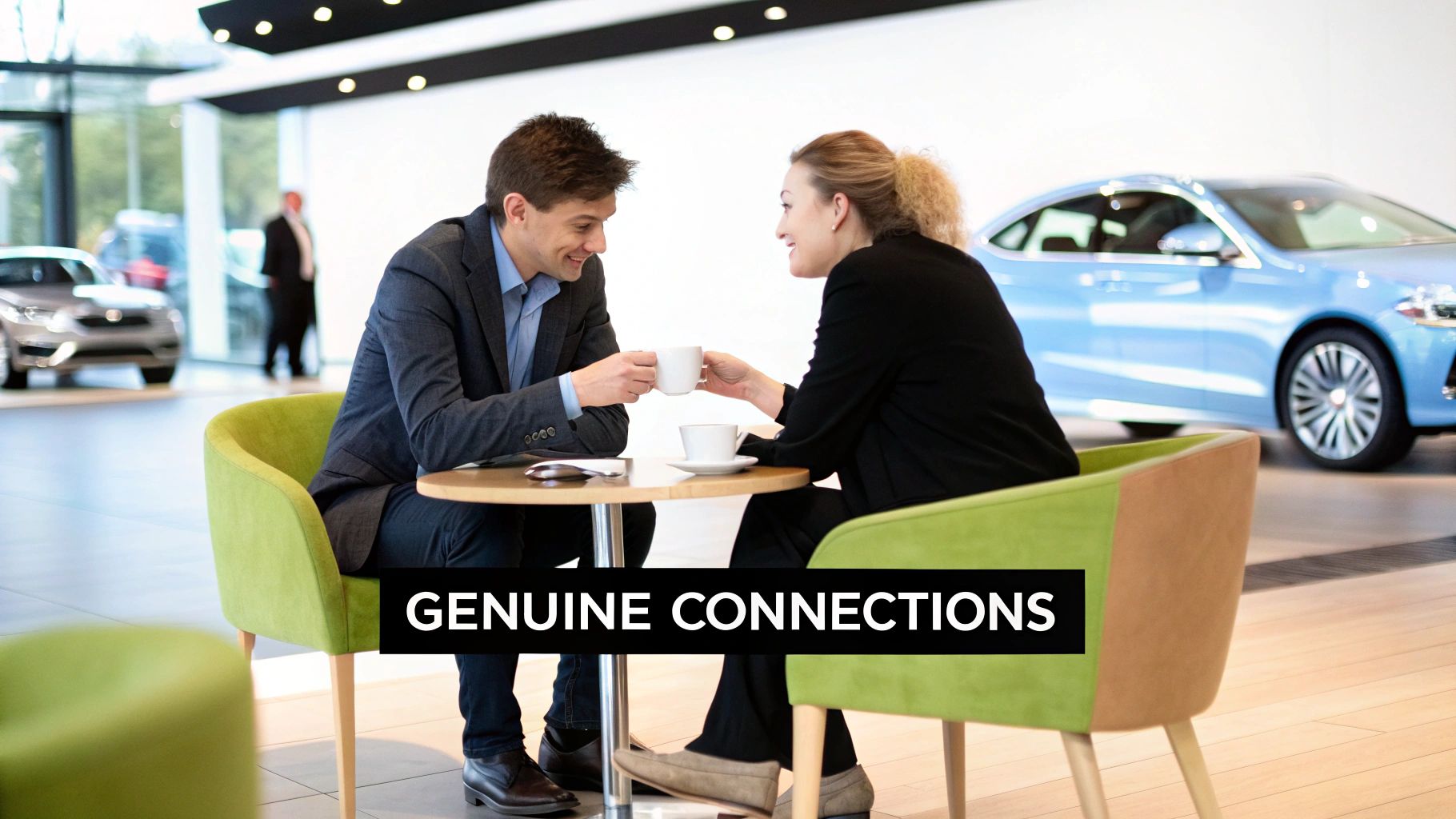 This philosophy is built on a simple truth: people buy from people they know, like, and trust. A salesperson who acts as a trusted advisor rather than a product-pusher creates a low-pressure environment where customers feel understood and valued. This not only increases the likelihood of a sale today but also builds the foundation for long-term loyalty and repeat business.
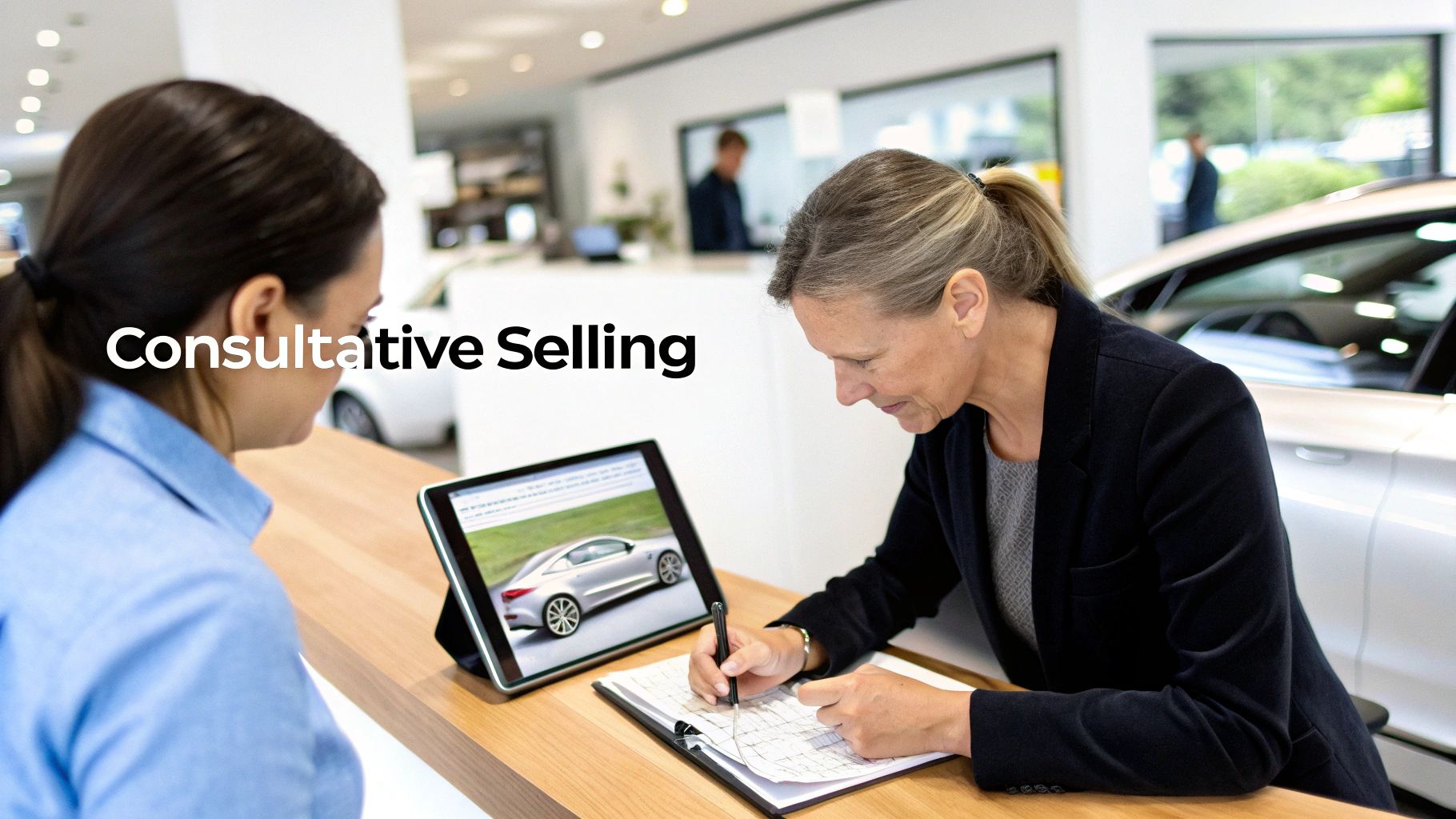 This methodology, heavily influenced by frameworks like SPIN Selling, is exemplified by brands like BMW with their “Genius” product specialists who educate rather than sell. The goal is to deeply understand the customer’s situation and prescribe the right vehicle. By focusing on consultation, you build immense trust, reduce buyer’s remorse, and naturally guide the customer to a decision they feel confident about.
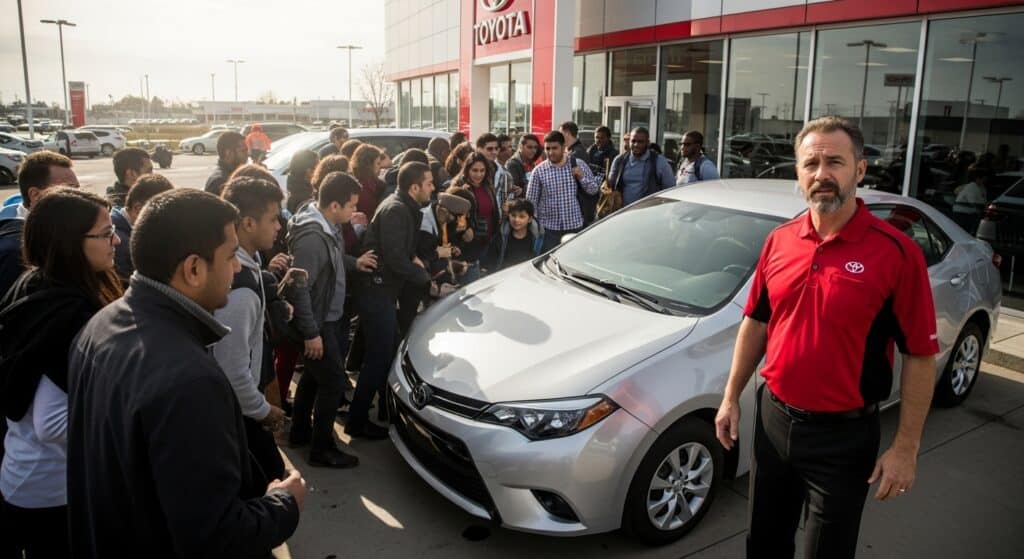 When a salesperson can confidently answer every question, explain competitive advantages, and showcase features with flair, the customer sees them as a valuable resource, not just a clerk. This expertise, combined with a compelling demonstration, transforms a simple walk-around into an immersive experience. It allows the customer to truly feel the value and envision how the vehicle will enhance their life.
 This approach is powerful because stories create a mental and emotional bridge between the customer’s current reality and their desired future. When a salesperson paints a vivid picture of how a vehicle will solve a problem or enhance a lifestyle, the customer begins to feel a sense of ownership before they’ve even signed the papers. This emotional investment makes the price secondary to the value and experience the vehicle represents.
Ready to supercharge your dealership’s lead generation and drive record-breaking showroom traffic? Willowood Ventures specializes in high-impact, hybrid digital marketing events that deliver guaranteed results. Let us help you implement these advanced strategies and fill your sales pipeline with highly qualified, ready-to-buy customers. Visit Willowood Ventures to learn how our proven system can transform your next sales event.
1. Build Genuine Relationships First
The most effective automotive sales tips often have little to do with the vehicle itself and everything to do with the person buying it. Before you even mention a single feature or price point, your primary goal should be to build a genuine, human connection. This approach, championed by legends like Dale Carnegie and modern customer-centric brands like Lexus, shifts the focus from a transaction to a relationship. It’s about understanding the customer’s world, not just their transportation needs.
This philosophy is built on a simple truth: people buy from people they know, like, and trust. A salesperson who acts as a trusted advisor rather than a product-pusher creates a low-pressure environment where customers feel understood and valued. This not only increases the likelihood of a sale today but also builds the foundation for long-term loyalty and repeat business.
How to Implement Relationship-First Selling
Putting this into practice requires a conscious shift in your sales process. Here are actionable steps to integrate this powerful technique:- Ask About Their Life: Go beyond “What brings you in today?” Ask open-ended questions about their family, hobbies, job, or weekend plans. This uncovers crucial context that a “needs analysis” form will never capture. For example, learning a customer coaches their kid’s soccer team instantly tells you they need cargo space and durability.
- Share Appropriately: Building rapport is a two-way street. Sharing a brief, relevant personal story (e.g., “My family loves camping trips too, so I know how important reliable all-wheel drive is”) makes you more relatable and trustworthy.
- Use Your CRM for Personal Notes: Your Customer Relationship Management system is more than a sales tracker. Use it to log personal details like children’s names, upcoming vacations, or their favorite sports team. Mentioning these details in follow-up communications shows you were truly listening.
- Celebrate Their Milestones: Send a simple text or email for a birthday or work anniversary. This small gesture keeps your dealership top-of-mind and reinforces the relationship long after the sale. You can explore a variety of customer engagement strategies by reading more about modern digital automotive marketing.
2. Master the Art of Consultative Selling
Transitioning from a traditional salesperson to a trusted automotive advisor is one of the most powerful automotive sales tips you can implement. Consultative selling shifts the dynamic from pitching products to solving problems. Instead of leading with features and inventory, you lead with insightful questions to diagnose the customer’s true needs, much like a doctor would before prescribing a treatment. This approach positions you as an expert consultant dedicated to finding the perfect solution for their lifestyle and challenges.
This methodology, heavily influenced by frameworks like SPIN Selling, is exemplified by brands like BMW with their “Genius” product specialists who educate rather than sell. The goal is to deeply understand the customer’s situation and prescribe the right vehicle. By focusing on consultation, you build immense trust, reduce buyer’s remorse, and naturally guide the customer to a decision they feel confident about.
How to Implement Consultative Selling
Integrating a consultative approach requires a strategic shift in your communication and sales process. Here are actionable steps to become a true automotive consultant:- Ask Diagnostic “Why” Questions: Move beyond surface-level questions like “What are you looking for?” Instead, ask “Why is a third row important to your family right now?” or “What challenges are you facing with your current vehicle’s fuel economy?” This uncovers the root motivations behind their desires.
- Present Solutions, Not Just Features: Frame vehicle features as direct solutions to the problems they’ve shared. Instead of saying, “This has adaptive cruise control,” explain, “Since you mentioned your long, stressful commute, the adaptive cruise control will manage your speed in traffic, making that drive much more relaxing.”
- Become a Holistic Expert: Your expertise should extend beyond the vehicle itself. Be prepared to consult on financing options, lease terms, and insurance implications. Guiding them through the entire financial picture solidifies your role as a comprehensive advisor they can depend on.
- Use Questionnaires as Tools: Develop a brief, informal questionnaire to guide your discovery conversation. This ensures you cover key areas like daily commute, family size, hobbies, and budget constraints, helping you build a complete customer profile before making a recommendation. By mastering these steps, you can learn more about the complete roadmap to a vehicle sale and refine your technique.
3. Perfect Your Product Knowledge and Demonstration Skills
While building relationships is crucial, customers ultimately come to a dealership to buy a vehicle. This is where deep product expertise becomes your most powerful tool. It’s not enough to know the specs; you must become a true product authority who can translate technical features into tangible, real-world benefits for each specific customer. This level of mastery, seen in Porsche’s intensive training and Tesla’s tech-focused demonstrations, builds credibility and trust.
When a salesperson can confidently answer every question, explain competitive advantages, and showcase features with flair, the customer sees them as a valuable resource, not just a clerk. This expertise, combined with a compelling demonstration, transforms a simple walk-around into an immersive experience. It allows the customer to truly feel the value and envision how the vehicle will enhance their life.
How to Implement Expert-Level Demonstrations
Mastering your inventory and presentation skills is an ongoing process that requires dedication. Here are actionable ways to become a product expert who closes more deals:- Connect Features to Benefits: Never just state a feature. Instead, link it directly to a customer’s expressed needs. For the parent worried about safety, demonstrate the blind-spot monitoring system and explain, “This feature gives you extra peace of mind when changing lanes on a busy highway with your family.”
- Embrace ‘Show, Don’t Tell’: The test drive is your stage. Instead of just talking about the smooth ride, guide the customer to a road with varied conditions. Have them actively use the infotainment system, adaptive cruise control, or parking assist. Hands-on experience is far more impactful than a verbal explanation.
- Practice and Rehearse: Confidence comes from practice. Regularly rehearse your walk-around presentations and feature demonstrations, either with colleagues or on your own. This ensures you are smooth, confident, and prepared for any customer questions, which is a core tenet of professional car sales training.
- Stay Informed on Competitors: Knowing your product is only half the battle. You must also understand the key competitors’ offerings. This allows you to intelligently highlight your vehicle’s unique advantages and handle objections with fact-based confidence.
4. Create Emotional Connection Through Storytelling
Facts and figures appeal to logic, but emotion is what drives the final purchase decision. One of the most powerful automotive sales tips is to move beyond feature-listing and embrace storytelling. This technique, used masterfully by brands like Subaru with their family-focused safety narratives, helps customers visualize the life they’ll live with the vehicle, transforming a metal box into a key part of their future experiences. It’s about selling the weekend adventure, the safe commute, or the family road trip, not just the car itself.
This approach is powerful because stories create a mental and emotional bridge between the customer’s current reality and their desired future. When a salesperson paints a vivid picture of how a vehicle will solve a problem or enhance a lifestyle, the customer begins to feel a sense of ownership before they’ve even signed the papers. This emotional investment makes the price secondary to the value and experience the vehicle represents.
How to Implement Storytelling in Your Sales Process
Integrating narrative into your conversations requires preparation and practice. Here are specific ways to become a master storyteller on the sales floor:- Build a Story Library: Actively collect and categorize real customer success stories. Have one about the family who loved the minivan’s entertainment system on their cross-country trip, or the contractor who fit all their gear in the truck bed. When you meet a new customer, you can pull out a relevant, authentic story.
- Use Sensory and Vivid Details: Don’t just say a car is “great for road trips.” Instead, describe the feeling of the panoramic sunroof on a sunny day or the quiet cabin that lets them hear their kids laughing in the back. To truly connect with buyers and make your product demonstrations memorable, consider mastering the art of small business copywriting to craft compelling narratives that resonate deeply.
- Match the Story to the Buyer: Listen carefully to the customer’s needs and values uncovered during your relationship-building phase. If they are an outdoor enthusiast, tell them about the Jeep owner who conquered a tough trail. If they value safety above all, share the story of a customer who avoided an accident thanks to the vehicle’s advanced driver-assist features.
- Frame a Test Drive as a Story: Instead of just a drive around the block, frame it as a “preview of their daily commute” or a “glimpse of their next weekend getaway.” This helps them emotionally connect the car to their own life’s narrative.
5. Master the Follow-Up Process
The sale is rarely made during the first interaction. More often than not, it’s the persistence and quality of your follow-up that turns a curious prospect into a loyal customer. Mastering the follow-up process means moving beyond sporadic calls and creating a systematic, value-driven communication plan that keeps your dealership top-of-mind without being intrusive. This disciplined approach, advocated by sales training programs like Sandler and powerhouse professionals like Grant Cardone, transforms leads from maybes into definite sales. A structured follow-up system ensures no lead falls through the cracks. It demonstrates professionalism and a genuine interest in serving the customer’s needs over time. Whether it’s a lukewarm lead who visited months ago or a recent customer due for their first service, a consistent strategy nurtures the relationship, building a pipeline for future sales and valuable referrals. This is one of the most crucial automotive sales tips for sustained success.How to Implement a Masterful Follow-Up Strategy
Creating an effective system requires organization and a commitment to providing value in every touchpoint. Here are actionable steps to build your follow-up machine:- Establish a Clear Cadence: Define a schedule for contacting leads. A best practice is to make initial contact within the first hour, followed by a sequence of calls, emails, and texts over the subsequent days and weeks. A critical component of closing deals is the follow-up; explore effective sales follow-up email templates to ensure consistent engagement after initial contact.
- Provide Value, Don’t Just Pester: Every communication should offer something useful. Instead of just asking “Are you ready to buy yet?”, send a link to a new vehicle review, inform them of a relevant service special, or share an article about vehicle maintenance tips. This positions you as a helpful advisor.
- Use a Multi-Channel Approach: Combine phone calls, personalized emails, and text messages. Some customers prefer a quick text, while others respond better to a detailed email. Respect their preferred communication method once you identify it.
- Leverage Your BDC or CRM: Your Business Development Center and CRM are your best assets for managing follow-ups at scale. They can automate reminders and track every interaction, ensuring a consistent customer experience. You can elevate your team’s skills by investing in professional automotive BDC training.
6. Handle Objections with Confidence and Preparation
One of the most crucial automotive sales tips is learning to view objections not as roadblocks, but as requests for more information. When a customer raises an objection, they are not necessarily saying “no.” Instead, they are signaling an area of concern where they need more value, clarification, or reassurance. This approach, championed by sales legends like Zig Ziglar and Tom Hopkins, transforms a potential conflict into a collaborative conversation. Successfully handling objections builds incredible trust and demonstrates your expertise. A salesperson who can confidently and calmly address concerns about price, financing, or trade-in value shows they are prepared and truly believe in their product’s value. This preparation prevents you from being caught off guard and allows you to guide the conversation back toward a positive outcome, strengthening the customer relationship in the process.How to Implement Proactive Objection Handling
Developing a system for managing objections is key. It involves anticipation, empathy, and strategic communication. Here are actionable steps to master this skill:- Practice ‘Feel, Felt, Found’: This classic technique is powerful because it validates the customer’s feelings. Start by saying, “I understand how you feel.” Then, share a brief story: “Many of my other customers have felt the same way initially.” Finally, resolve the concern: “But what they have found is that the investment in these safety features provides incredible peace of mind for their family.”
- Ask Clarifying Questions: Don’t assume you know the root cause of an objection. If a customer says, “The price is too high,” ask, “I appreciate you sharing that. To make sure I understand, are you concerned about the overall price of the vehicle, or is it more about the monthly payment fitting into your budget?” This uncovers the real issue you need to solve.
- Prepare Your Proof: Don’t just tell them; show them. Have documents, third-party reviews, and visual aids ready. For a price objection, have a competitor comparison sheet or a total cost of ownership report that highlights fuel efficiency and resale value. This tangible evidence provides powerful, objective validation.
- Role-Play Common Scenarios: Regularly practice handling the top 5-10 objections your dealership faces (price, trade-in value, monthly payment, “I need to think about it,” etc.). This builds muscle memory, so your responses become natural and confident when you’re with a real customer. You can learn more about these advanced techniques from resources like Grant Cardone’s sales training programs.
7. Leverage Social Proof and Testimonials
In a high-stakes purchase like a vehicle, buyers are looking for reassurance that they are making the right decision. This is where social proof becomes one of the most powerful automotive sales tips in your arsenal. The concept, famously detailed by Robert Cialdini in “Influence,” suggests that people will conform to the actions of others under the assumption that those actions are the correct behavior. It’s about building trust not through your own claims, but through the authentic voices of satisfied customers. When a potential buyer sees that many others have had a positive experience with your dealership, it significantly reduces their perceived risk and buying anxiety. This isn’t just about five-star ratings; it’s about showcasing real stories from real people. Brands like Subaru have masterfully used testimonials focusing on safety to build an unshakeable reputation, demonstrating that customer stories can be more persuasive than any advertisement.How to Implement Social Proof Effectively
A systematic approach to collecting and deploying testimonials will turn happy customers into a continuous source of new leads. Here’s how to put social proof to work:- Ask Immediately and Often: The best time to ask for a review or testimonial is at the peak of a customer’s satisfaction, typically right after a successful vehicle delivery. Have a simple, direct process ready, whether it’s a quick text with a link to your Google Business Profile or an iPad at the delivery desk.
- Create Video Testimonials: While written reviews are valuable, video testimonials offer a higher level of authenticity and emotional impact. A short, 60-second clip of a happy customer sharing their experience can be a powerful asset for your website, social media, and in-showroom displays.
- Match Testimonials to the Prospect: Curate a library of testimonials categorized by vehicle model, customer need (e.g., families, commuters, off-road enthusiasts), or even a salesperson’s name. Presenting a prospect with a success story from someone in a similar situation makes the proof incredibly relevant and persuasive.
- Use Specific Details: Encourage customers to be specific. A review that says, “The third-row seating in the Ascent is a lifesaver for our soccer carpools,” is far more compelling than a generic, “Great service.” To truly maximize impact, consider exploring additional strategies for leveraging customer-generated content to further build trust and credibility.
8. Focus on Value-Based Selling Rather Than Price
One of the most powerful automotive sales tips involves shifting the entire sales conversation from “how much does it cost?” to “what is it worth?”. This is the core of value-based selling. Instead of leading with discounts or monthly payments, you lead with the long-term benefits, total cost of ownership, and the overall return on investment for the customer. This strategy positions you as a thoughtful consultant who understands the difference between price and value. This approach is crucial in a market where customers can price-shop from their phones. When you compete only on price, you become a commodity. By focusing on value, you highlight what makes your vehicle and your dealership the superior choice, even if it isn’t the cheapest. It’s how brands like Lexus justify premium pricing with reliability and a luxury experience, or how a Toyota Prius is sold on long-term fuel savings rather than its initial sticker price.How to Implement Value-Based Selling
Moving from a price-first to a value-first mindset requires a strategic approach and specific tools. Here’s how to put this into practice on your showroom floor:- Quantify the Benefits: Don’t just say a car has “good fuel economy.” Create a simple calculator or one-sheet that shows the customer’s estimated annual fuel savings based on their average mileage compared to their current vehicle. For a commercial truck, quantify its value in terms of increased payload capacity, reduced downtime, and higher productivity.
- Focus on Total Cost of Ownership (TCO): Educate customers on TCO, which includes the purchase price, insurance, fuel, maintenance, and resale value. A slightly more expensive car with a high resale value and low maintenance costs can be a much better financial decision over five years.
- Highlight Intangible Value: Connect features to emotional benefits. Advanced safety systems aren’t just technology; they are peace of mind for a parent driving their kids to school. A premium sound system isn’t just speakers; it’s a way to de-stress during a long commute.
- Leverage Social Proof: Use your digital presence to build and showcase value before customers even arrive. Highlighting positive owner reviews and community stories can be a powerful strategy. You can discover more by reading about automotive social media marketing. This pre-sells the value proposition and builds trust.
8 Key Automotive Sales Tips Comparison
| Approach | Implementation Complexity 🔄 | Resource Requirements ⚡ | Expected Outcomes 📊 | Ideal Use Cases 💡 | Key Advantages ⭐ |
|---|---|---|---|---|---|
| Build Genuine Relationships First | Medium – requires interpersonal skills and time | Moderate – time-intensive per customer | Long-term loyalty, referrals, sustainable base | Customer-centric sales, high-trust markets | Builds trust, reduces price objections |
| Master the Art of Consultative Selling | High – needs deep product and problem-solving knowledge | High – continuous training needed | Expert positioning, higher satisfaction | Complex buying decisions, premium vehicle sales | Reduces resistance, justifies premium pricing |
| Perfect Your Product Knowledge and Demonstration Skills | High – ongoing training and updates required | High – time for training and practice | Instant credibility, confident technical handling | Technical sales, demo-heavy product lines | Builds trust, compelling demonstrations |
| Create Emotional Connection Through Storytelling | Medium – needs strong communication skills | Low to Medium – content development | Emotional engagement, memorable presentations | Lifestyle-oriented sales, emotional buyers | Engages emotions, overcomes logical objections |
| Master the Follow-Up Process | Medium – requires systematic organization | Moderate – time and CRM investment | Repeat business, nurtured prospects | Long sales cycles, retention-focused sales | Maximizes ROI, consistent communication |
| Handle Objections with Confidence and Preparation | Medium to High – requires preparation and skill | Moderate – prep and practice time | Faster sales cycle, higher close rates | High-pressure sales, price negotiation | Builds confidence, addresses concerns early |
| Leverage Social Proof and Testimonials | Low to Medium – needs system for collection | Moderate – ongoing content management | Increased credibility, reduced anxiety | Building trust, overcoming skepticism | Provides third-party validation |
| Focus on Value-Based Selling Rather Than Price | High – extensive preparation and analysis needed | High – tools for calculation and presentation | Justifies premium pricing, stronger vendor relationships | Price-sensitive markets willing to invest in value | Reduces price competition, builds satisfaction |
Final Thoughts
Navigating the modern automotive sales landscape requires more than just a firm handshake and a feature list. As we’ve explored, the journey from initial contact to a completed sale is a sophisticated dance of psychology, strategy, and genuine human connection. The collection of automotive sales tips detailed in this guide isn’t a menu of options to pick from; it’s a holistic framework for building a resilient, customer-centric sales culture that drives sustainable growth for your dealership. The core thread weaving through every strategy, from mastering product demonstrations to leveraging social proof, is the shift from a transactional mindset to a relational one. Today’s buyers are armed with unprecedented levels of information. They don’t need a walking encyclopedia; they need a trusted advisor who can translate that information into a solution that fits their life. This is the essence of consultative selling and the foundation of long-term success.Key Takeaways for Immediate Action
To truly transform your sales performance, it’s crucial to move from reading to doing. Here are the most critical takeaways to implement immediately:- Prioritize Relationships Over Transactions: Start every interaction with the goal of understanding the person, not just selling a car. This builds the trust necessary to guide them through the buying process.
- Embrace Value-Based Communication: Shift conversations away from price and toward the tangible value your vehicles and dealership provide. Focus on safety, reliability, lifestyle fit, and the ownership experience.
- Systematize Your Follow-Up: A missed follow-up is a lost opportunity. Implement a clear, consistent process using your CRM to ensure no lead falls through the cracks. Personalize your communication to stand out.
- Harness the Power of Storytelling: Facts tell, but stories sell. Connect vehicle features to real-world benefits and emotional outcomes. Help customers visualize how a car will improve their daily lives, creating a powerful emotional anchor.
The Path to Automotive Sales Mastery
Mastering these automotive sales tips is not about memorizing scripts; it’s about internalizing a philosophy. It’s about building a team that is confident, prepared, and genuinely passionate about helping customers make one of the most significant purchases of their lives. When your sales professionals operate as consultants, they not only close more deals but also create brand evangelists who will drive referrals for years to come. The ultimate benefit is not just a healthier bottom line but a stronger dealership reputation, improved customer loyalty, and a more fulfilling, professional sales environment for your team. By committing to these principles, you are investing in a future where your dealership is known not just for the cars it sells, but for the exceptional way it sells them.Ready to supercharge your dealership’s lead generation and drive record-breaking showroom traffic? Willowood Ventures specializes in high-impact, hybrid digital marketing events that deliver guaranteed results. Let us help you implement these advanced strategies and fill your sales pipeline with highly qualified, ready-to-buy customers. Visit Willowood Ventures to learn how our proven system can transform your next sales event.