
The car-buying journey has fundamentally shifted. No longer confined to sprawling lots and high-pressure sales floors, today’s customers begin their search online, researching models, comparing prices, and even securing financing before ever stepping foot in a dealership. In this hyper-competitive landscape, a robust digital automotive marketing strategy isn’t just an advantage; it’s a necessity for survival and growth. Traditional methods are losing traction, while innovative dealerships are capturing market share by meeting customers where they are: on search engines, social media, and their mobile devices.
This guide cuts through the noise to provide a detailed roadmap of seven essential, actionable strategies designed to attract, engage, and convert modern car buyers. We will move beyond generic advice, offering deep dives into each tactic with real-world examples, specific implementation steps, and fresh perspectives. You will learn how to master local search to appear first when buyers are nearby and how to build an engaged community on social media that trusts your brand.
We will explore creating immersive video tours that bring your showroom to the customer and using data to personalize every interaction. From collaborating with local influencers to integrating an omnichannel experience that provides a seamless journey from online click to in-person handshake, this article delivers the playbook you need. Get ready to dominate the digital space and drive measurable results for your dealership.
1. Search Engine Marketing (SEM) and Local SEO
For modern dealerships, mastering the search engine results page (SERP) is non-negotiable. This is where the majority of car buyers begin their journey, and a robust digital automotive marketing plan must prioritize being visible at this critical stage. A powerful, two-pronged approach combines Search Engine Marketing (SEM) for immediate visibility with Local Search Engine Optimization (Local SEO) for sustained, long-term organic growth. Together, they ensure you capture customers actively looking for exactly what you sell.
SEM involves paid advertising, primarily through platforms like Google Ads. It allows you to place your dealership directly at the top of search results for specific, high-intent keywords. Local SEO is the organic practice of optimizing your dealership’s online presence to rank higher in geographically-specific searches, such as on Google Maps and the “local pack” listings.
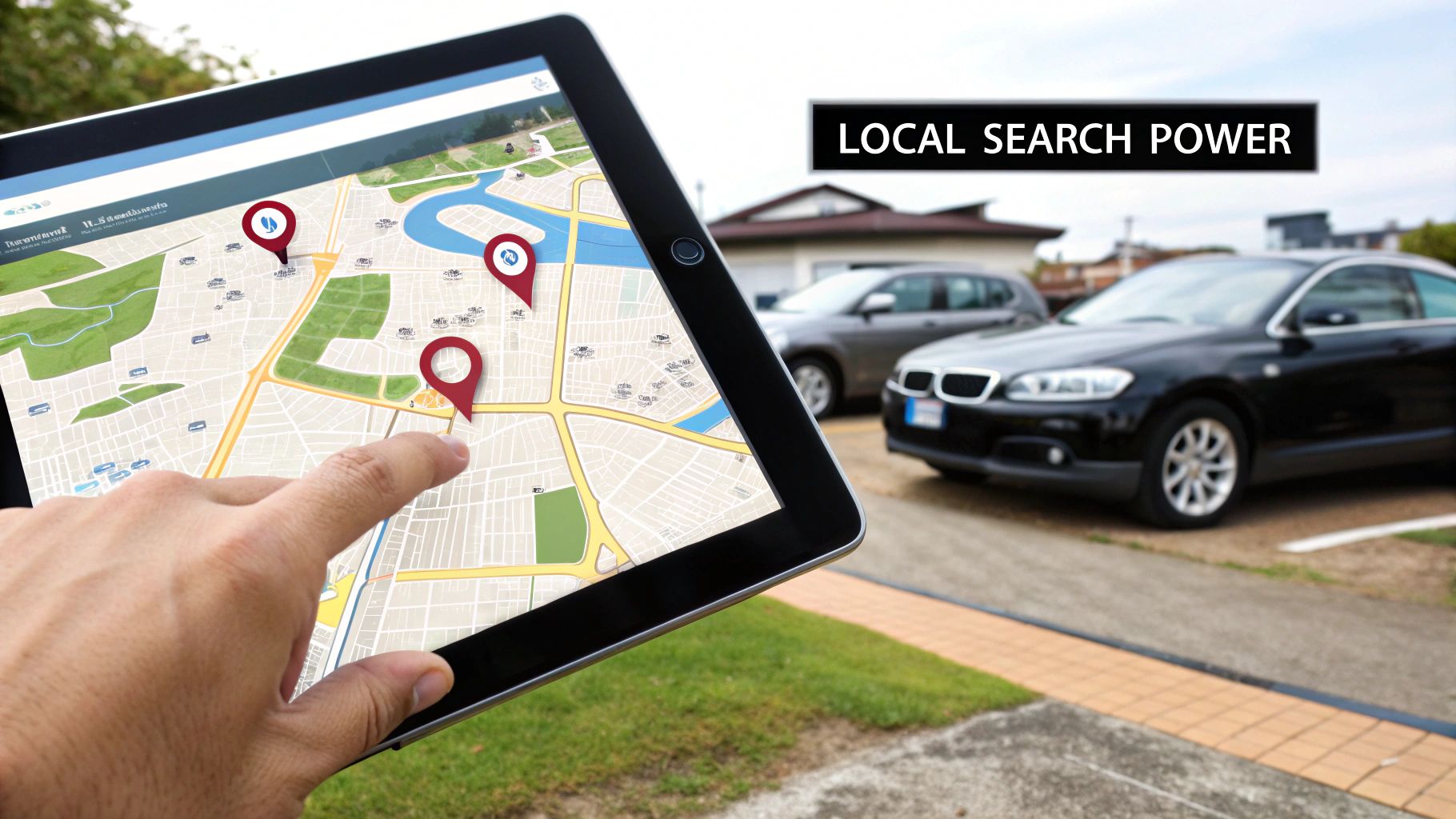
This combined strategy is essential because it targets buyers at their highest point of intent. When someone searches for “used Ford F-150 dealer near me,” they aren’t just browsing; they are signaling a clear intention to visit a lot and potentially make a purchase. By appearing in both the paid ads and the organic local listings, you dramatically increase your credibility and click-through rate.
Why It’s a Top Strategy
Industry giants have proven this model’s effectiveness. AutoNation, for example, generates a significant portion of its web traffic through a meticulously executed local SEO strategy. Similarly, CarMax has reported achieving an impressive return on ad spend (ROAS) from its targeted Google Ads campaigns. These successes aren’t reserved for national brands; local dealerships can see immense returns by focusing on their specific market.
Actionable Implementation Steps
To leverage this strategy, your team should focus on several key areas:
- Keyword Targeting: Go beyond generic terms. Focus on long-tail keywords that indicate high purchase intent, like “Honda Civic lease deals Boston” or “trade in my Toyota Highlander near me.” These specific phrases attract more qualified buyers.
- Google Business Profile (GBP) Optimization: Your GBP listing is your digital storefront. Ensure it is completely filled out with accurate hours, address, phone number, and high-quality photos. Actively encourage and respond to all customer reviews to build trust and improve your local ranking signals.
- Ad Extensions: Enhance your paid search ads with extensions. Use sitelink extensions to direct users to specific inventory pages (e.g., “New SUVs,” “Certified Pre-Owned Sedans”), location extensions to show your address, and promotion extensions to highlight current offers.
- Vehicle Schema Markup: Implement structured data (schema markup) on your website’s vehicle detail pages (VDPs). This helps search engines understand your inventory and can result in rich snippets in search results, making your listings more attractive.
By integrating paid and organic search, you create a powerful synergy that drives highly qualified local traffic to both your website and your physical showroom. For a deeper dive into mastering the search landscape, you can explore specialized automotive SEO services that can refine your approach.
2. Social Media Marketing and Community Building
Beyond direct sales pitches, a modern digital automotive marketing strategy must cultivate a sense of community and brand loyalty. Social media platforms like Facebook, Instagram, TikTok, and X (formerly Twitter) have evolved from simple broadcast channels into vibrant hubs where dealerships can engage directly with current and future customers. This strategy focuses on building authentic relationships, showcasing inventory in dynamic ways, and creating a community that advocates for your brand.
This approach moves beyond just posting pictures of cars. It involves creating a content ecosystem that provides value, entertainment, and a direct line of communication. It’s about turning your dealership’s social media profile into a go-to destination for local car enthusiasts and shoppers, transforming passive followers into an engaged community and, ultimately, into loyal customers.
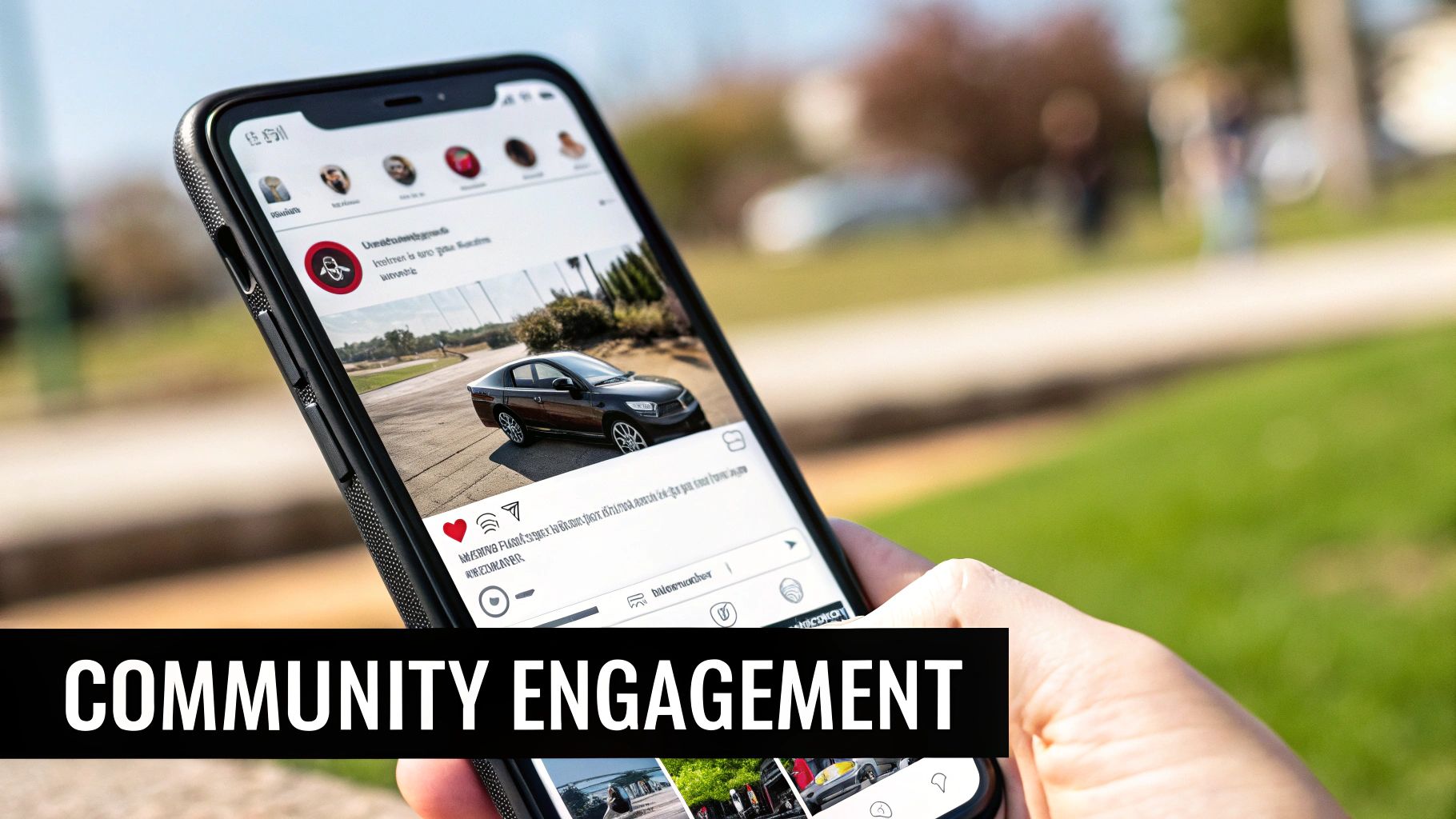
This strategy is powerful because it humanizes your dealership. Car buying is a significant emotional and financial decision. By building a community, you establish trust and familiarity long before a customer steps onto the lot. When they see your team’s faces, read positive interactions in the comments, and engage with your content, they begin to see you as a trusted local partner rather than just another anonymous retailer.
Why It’s a Top Strategy
This model has been championed by both major manufacturers and innovative influencers. Ford has found immense success with TikTok campaigns that use humor and trends to connect with younger demographics. Similarly, Subaru has fostered one of the most dedicated brand communities online, largely through Facebook groups and user-generated content that celebrates the “Subaru lifestyle.” On a more disruptive level, Tesla’s growth was famously fueled by Elon Musk’s direct-to-consumer engagement on Twitter, bypassing traditional advertising entirely.
Actionable Implementation Steps
To build an effective social media presence, your dealership should implement the following tactics:
- Platform-Specific Content: Don’t just cross-post the same content everywhere. Create short, engaging walkaround videos for TikTok and Instagram Reels, post high-quality photo carousels on Instagram, and use Facebook for community updates and event promotions.
- Leverage User-Generated Content (UGC): Encourage customers to share photos with their new cars using a unique hashtag. Feature these posts on your page (with permission) to provide powerful social proof. This is one of the most authentic forms of marketing available.
- Consistent and Authentic Engagement: Respond to comments and direct messages promptly and personally. Answer questions, thank followers for their engagement, and participate in conversations. This consistent interaction shows you are listening and you care.
- Showcase Your Team and Culture: Go behind the scenes. Introduce your sales consultants, service technicians, and finance managers. Posting content that highlights your team’s expertise and friendly culture makes your dealership more approachable and trustworthy.
By investing in community building, you create a sustainable marketing asset that generates leads, strengthens brand loyalty, and sets you apart from the competition. For those looking to elevate their social presence, you can explore specialized guides on automotive social media marketing to learn more advanced techniques.
3. Video Marketing and Virtual Showrooms
In an increasingly digital-first world, bringing the showroom experience directly to the customer’s screen is a powerful differentiator. Video marketing and virtual showrooms have moved from futuristic concepts to essential components of a modern digital automotive marketing strategy. This immersive approach leverages high-quality video content, 360-degree vehicle tours, and virtual reality (VR) to let potential buyers explore inventory in incredible detail from the comfort of their homes, bridging the gap between online browsing and an in-person visit.
This strategy goes beyond simple walkaround videos. It encompasses everything from live, one-on-one virtual vehicle demonstrations conducted by sales staff to fully interactive, self-guided virtual reality showrooms. It allows dealerships to showcase the intricacies of a vehicle’s interior, demonstrate advanced features, and create a personal connection with customers who may be hesitant or unable to visit the physical lot immediately.
The core value of this strategy lies in its ability to build trust and engagement early in the customer journey. When a buyer can virtually “sit” inside a car, inspect the dashboard, and see how the trunk space looks, they build a much stronger connection to that specific vehicle. This transparency and convenience significantly increases the likelihood that they will take the next step, whether it’s scheduling a test drive or starting the financing process online.
Why It’s a Top Strategy
Luxury and technology-forward brands have paved the way, demonstrating the immense potential of this approach. Audi pioneered in-dealership VR experiences, allowing customers to configure and explore cars in photorealistic detail. Mercedes-Benz rapidly deployed a comprehensive virtual showroom during the pandemic, a move that solidified its digital leadership. Similarly, Volvo’s detailed 360-degree online vehicle tours have become a benchmark for creating engaging digital experiences that inform and captivate online shoppers.
Actionable Implementation Steps
To effectively integrate video and virtual experiences, your dealership should focus on these key initiatives:
- Invest in Quality Production: Start with high-quality 360-degree cameras and smartphone gimbals for stable, professional-looking walkaround videos. Clear audio is crucial, so invest in good microphones for any videos featuring sales staff.
- Create Mobile-First Experiences: The vast majority of customers will engage with your virtual tours on their smartphones. Ensure all video content and interactive tours are fully responsive and load quickly on mobile devices.
- Train Staff for Virtual Demos: Equip your sales team with the tools and training needed to conduct live, personalized video walkarounds for interested customers. This personal touch can be a powerful tool for closing remote sales.
- Integrate with Inventory: Link your 360-degree tours and videos directly to your vehicle detail pages (VDPs). This allows shoppers to transition seamlessly from viewing inventory specs to taking an immersive virtual tour of the actual car. To truly leverage the power of visuals in connecting with car buyers, dig into proven video marketing strategies that drive results.
By embracing these technologies, you meet the evolving expectations of modern buyers and create a more convenient and engaging car-shopping journey. For a more comprehensive look at creating and deploying these strategies, you can learn more about automotive video marketing to refine your dealership’s approach.
4. Data-Driven Personalization and Customer Journey Mapping
In today’s competitive market, a one-size-fits-all message no longer resonates. Data-driven personalization is an advanced digital automotive marketing approach that moves beyond broad segmentation, leveraging individual customer data to create tailored experiences across the entire car buying journey. This strategy involves tracking customer behavior, such as vehicles viewed, content downloaded, and on-site actions, to deliver relevant offers, content, and communications at precisely the right moment.
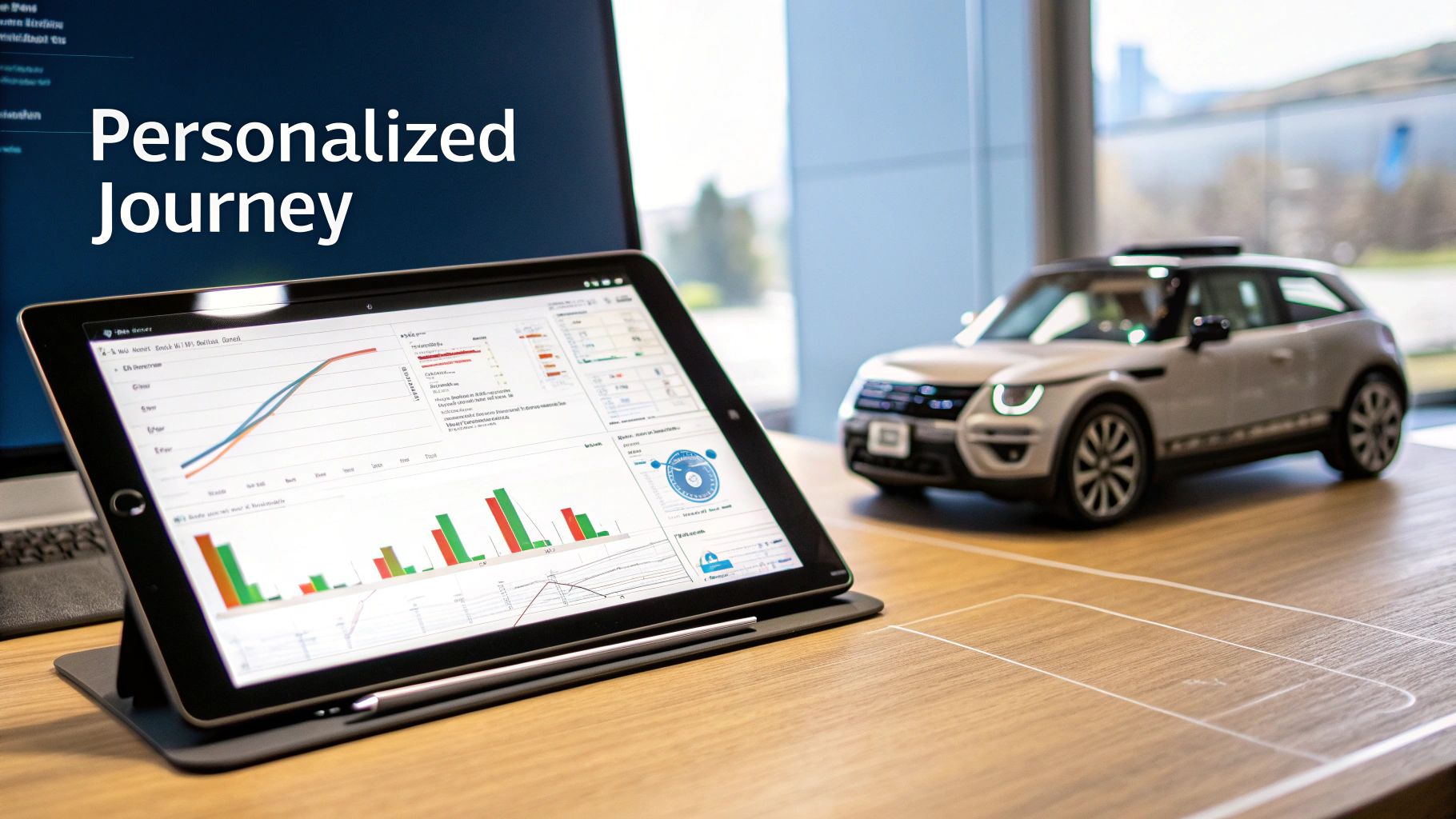
By mapping the customer journey, from initial online research to post-purchase service, dealerships can identify key touchpoints and opportunities for personalization. This could mean showing dynamic website content to a returning visitor based on their previous browsing history or sending a highly specific email offer about a trade-in for the exact model they own. This sophisticated use of data transforms marketing from a broadcast to a one-on-one conversation.
This strategy is powerful because it directly addresses a customer’s specific needs and interests, making them feel understood and valued. When a potential buyer who has been browsing SUVs on your site receives an email about a new shipment of Ford Explorers with a special financing offer, the message is exponentially more effective than a generic newsletter. It builds a stronger connection and significantly increases the likelihood of conversion.
Why It’s a Top Strategy
Major automotive brands have fully embraced this model. Toyota, for instance, uses a customer’s browsing history on its website to send personalized follow-up emails highlighting specific models and features they viewed. Ford has implemented dynamic website technology that alters homepage banners and vehicle recommendations for different customer segments, creating a unique experience for each visitor. These efforts, powered by platforms like Salesforce and Adobe, demonstrate that personalization drives engagement and sales.
Actionable Implementation Steps
To effectively integrate data-driven personalization, your dealership should:
- Start with First-Party Data: Focus on collecting your own data through website forms, service histories, and past sales records. This is your most valuable asset. Use progressive profiling on forms to gather information over time without overwhelming new leads.
- Segment Your Audience: Move beyond simple new vs. used segmentation. Create micro-segments based on behavior (e.g., “users who viewed VDPs for trucks”), demographics, and past purchase history.
- Implement Marketing Automation: Use a CRM or marketing automation platform to trigger personalized communications. Set up workflows that send specific emails or SMS messages when a customer takes a certain action, like abandoning a finance application.
- Test and Optimize: Continuously use A/B testing on your personalized elements. Test different email subject lines, website calls-to-action, and special offers to see what resonates best with each audience segment. Always ensure your data practices comply with privacy regulations like GDPR and CCPA.
By personalizing the journey, you enhance the customer experience and improve the quality of your leads. For more ideas on capturing and nurturing prospects, you can get insights into effective automotive lead generation strategies to complement your personalization efforts.
5. Influencer Marketing and Brand Partnerships
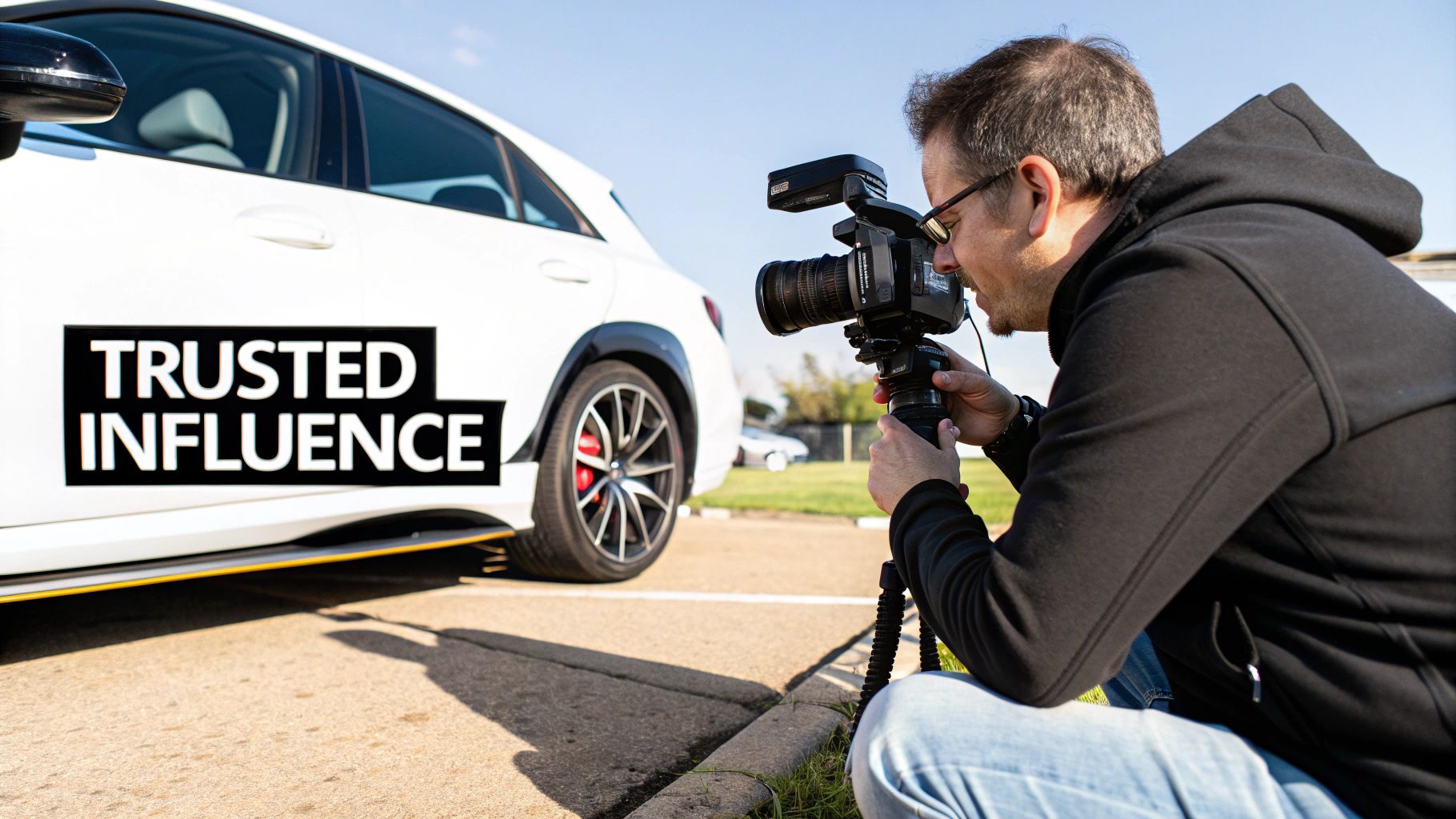
In an era where trust is currency, modern car buyers often rely on recommendations from people they follow and admire. This is where influencer marketing and strategic brand partnerships become a big win in any digital automotive marketing arsenal. This strategy moves beyond traditional advertising by leveraging the credibility and reach of automotive experts, lifestyle personalities, and local content creators to build authentic brand awareness and drive interest in your vehicles.
This approach involves collaborating with individuals who have an established, engaged audience that aligns with your target customer demographic. Instead of a direct sales pitch from the dealership, the message is delivered through a trusted voice, whether it’s a detailed car review from a popular YouTuber or a lifestyle post featuring one of your SUVs on a family adventure. This third-party validation can be far more persuasive than a standard ad.
The power of this strategy lies in its authenticity. When a respected creator showcases a vehicle, their endorsement feels like a genuine recommendation, not a paid placement. This builds an emotional connection and positions your dealership as a key part of the local community or a go-to source for automotive expertise, effectively reaching audiences who might tune out conventional marketing.
Why It’s a Top Strategy
This model has been masterfully executed by major automotive brands. BMW frequently partners with top-tier automotive reviewers like Doug DeMuro for in-depth vehicle showcases, reaching millions of enthusiasts. Similarly, Ford has developed brand ambassador programs with outdoor and adventure influencers to organically integrate vehicles like the Bronco and Ranger into authentic, aspirational content. Even Tesla, which famously avoids paid advertising, benefits immensely from the organic advocacy of tech and auto influencers like Marques Brownlee.
Actionable Implementation Steps
Your dealership can successfully implement this high-impact strategy by focusing on authenticity and a clear-cut plan:
- Identify the Right Partners: Look beyond just follower counts. Prioritize influencers whose audience demographics and content style match your ideal customer profile. A local lifestyle or family blogger with a highly engaged audience of 10,000 might be more valuable than a national car enthusiast with 100,000 disengaged followers.
- Prioritize Authenticity: Grant your influencer partners creative freedom. Provide them with a vehicle and key talking points, but allow them to create content in their own unique voice. A scripted, overly-polished ad will be immediately transparent to their audience and can backfire.
- Define Clear Goals and KPIs: Determine what you want to achieve. Is it brand awareness, website traffic, or test drive appointments? Track metrics like engagement rate (likes, comments, shares), click-throughs to your website, and mentions of your dealership.
- Build Long-Term Relationships: Instead of one-off sponsored posts, aim to build lasting partnerships. A long-term collaboration allows the influencer to integrate your vehicles more naturally over time, building deeper trust and recognition with their audience.
For automotive brands looking to tap into new audiences, leveraging influencer marketing strategies, including on popular platforms like TikTok, can be incredibly effective. To learn more, you can explore insider strategies on how to effectively establish TikTok creator partnerships and brand collaborations.
6. Connected Car Technology and IoT Marketing
The future of digital automotive marketing is already here, and it lives inside the vehicle itself. Connected Car Technology and the Internet of Things (IoT) have created a proven channel for ongoing customer engagement. This strategy moves marketing beyond the sales funnel and into the ownership lifecycle, leveraging real-time data from vehicles to deliver highly personalized, value-added services, maintenance reminders, and relevant offers directly to the driver.
This approach transforms the car from a simple product into a dynamic service platform. By tapping into in-vehicle systems and companion apps, dealerships can maintain a direct line of communication with their customers post-purchase. It’s about using technology not to advertise, but to assist, anticipate needs, and build a relationship that ensures the customer returns to your service bay and, eventually, your showroom for their next purchase.
This strategy is powerful because it fosters unprecedented brand loyalty and creates new revenue streams. When a vehicle can automatically notify the driver that their tire pressure is low and simultaneously suggest scheduling a service appointment at your dealership via the infotainment screen, you have created a seamless, convenient experience that competitors cannot easily replicate. It turns a potential problem into a proactive, brand-affirming interaction.

Why It’s a Top Strategy
This model is being perfected by automotive innovators. Tesla is a prime example, using its connected ecosystem for everything from over-the-air software updates to direct-to-owner communications. Similarly, General Motors’ OnStar has long been a pioneer, evolving from a safety feature into a comprehensive platform for diagnostics, navigation, and owner engagement. Ford’s FordPass app creates a similar ecosystem, connecting owners to their vehicles and their dealership for service, rewards, and support.
Actionable Implementation Steps
While developing a proprietary connected platform may be beyond the scope of a single dealership, you can leverage OEM and third-party systems to participate in this trend:
- Promote OEM Connected Apps: Actively educate every new and used car buyer on how to download and use their vehicle’s official connected app (like FordPass, MyChevrolet, or BMW ConnectedDrive). Position your dealership as the primary service point within these applications.
- Focus on Value-Added Services: Use the data and communication channels available to provide genuine value. Instead of sending generic sales promotions, send a personalized message when the vehicle’s diagnostics report an upcoming oil change is due, perhaps including a service coupon.
- Ensure Data Transparency: Customer trust is paramount. Be transparent about what data is being collected and how it will be used to enhance their ownership experience. Provide clear opt-in and opt-out choices to respect privacy.
- Integrate with Your CRM: Connect the data from these connected services with your Customer Relationship Management (CRM) system. This allows your service and sales teams to have a complete, 360-degree view of the customer’s vehicle health and history, enabling more informed and proactive outreach.
By embracing connected technology, dealerships can forge stronger, data-driven relationships that extend far beyond the initial sale, locking in service revenue and future customer loyalty.
7. Omnichannel Customer Experience Integration
In today’s market, the car buying journey is no longer a linear path. It’s a complex web of online research, social media discovery, website interactions, and in-person visits. An omnichannel strategy unifies these disparate touchpoints into one seamless, consistent, and cohesive customer experience. This approach ensures that a customer’s transition from browsing inventory on your website to scheduling a test drive via chat and visiting your showroom is fluid and frictionless.
This goes beyond multi-channel marketing, which simply uses various platforms. Omnichannel integration means the platforms work together, sharing data and context. A customer can start a credit application online, pause, and have a salesperson pull up their progress instantly at the dealership. This level of continuity is central to a modern digital automotive marketing framework, building trust and making the complex process of buying a car feel simple and personalized.
Effective marketing for car dealerships supports that continuity by carrying shopper preferences across advertising, website interactions, and the conversations handled by your sales team.
A truly integrated experience demonstrates that you value the customer’s time and effort. When a buyer doesn’t have to repeat information or restart processes as they move between channels, their perception of your dealership improves dramatically. This consistent journey not only enhances customer satisfaction but also streamlines your internal operations, leading to higher efficiency and conversion rates.
Why It’s a Top Strategy
Pioneers like Carvana and CarMax have fundamentally reshaped customer expectations with their omnichannel models. CarMax allows customers to handle nearly every part of the purchase online before seamlessly completing the final steps at a physical location. Similarly, luxury brands like Audi and Porsche use integrated digital platforms to offer personalized configurations online that translate directly to the dealership experience. These examples prove that bridging the digital-to-physical gap is a powerful competitive advantage.
Actionable Implementation Steps
To build a true omnichannel experience, your dealership must focus on unifying data and processes:
- Map the Customer Journey: Document every possible touchpoint a customer has with your dealership, from initial search to post-purchase service. Identify where handoffs between channels occur (e.g., website to phone call, chat to showroom) and look for friction points.
- Invest in a Unified Customer Data Platform (CDP): A CDP or a modern CRM is the backbone of an omnichannel strategy. It consolidates customer data from all sources (website, social media, DMS, call logs) into a single, accessible profile for your sales and service teams.
- Train Staff for Channel Fluidity: Your team must be trained to access and use unified customer data. A salesperson should be able to see that a customer arriving for an appointment has already saved specific vehicles to their “favorites” on your website.
- Use Feedback to Close Gaps: Actively solicit customer feedback about their experience moving between your online and offline channels. Use this insight to identify and fix broken links in the journey, ensuring a smoother process for future buyers.
By creating a unified and consistent experience, you cater to the modern buyer’s expectations and build a powerful, lasting relationship. To explore this concept further, you can discover how to build a dominant brand presence through omnipresence marketing for car dealerships and apply these principles.
Digital Automotive Marketing Strategies Comparison
| Strategy | Implementation Complexity 🔄 | Resource Requirements ⚡ | Expected Outcomes 📊 | Ideal Use Cases 💡 | Key Advantages ⭐ |
|---|---|---|---|---|---|
| Search Engine Marketing (SEM) and Local SEO | Medium – requires ongoing optimization and management | Moderate – budget for paid ads and SEO tools | High-intent customer capture, measurable ROI, local visibility | Local automotive dealerships aiming to attract nearby customers | Precise geo-targeting, measurable ROI, cost-effective locally |
| Social Media Marketing and Community Building | Medium – consistent content creation needed | Moderate – content production and management | Brand loyalty, customer engagement, viral potential | Brands focusing on community engagement and brand awareness | Builds brand loyalty, direct customer interaction, viral reach |
| Video Marketing and Virtual Showrooms | High – tech and expertise required | High – VR/AR equipment and video production | Immersive customer engagement, remote vehicle exploration | Dealers wanting to provide virtual experiences or remote shopping | Immersive experience, reduces physical visits, high engagement |
| Data-Driven Personalization and Customer Journey Mapping | High – complex data integration and management | High – data platforms and analytics tools | Increased conversions, personalized customer experiences | Brands with mature data strategies wanting personalized marketing | Higher conversion rates, long-term retention, customer insights |
| Influencer Marketing and Brand Partnerships | Medium – influencer vetting and campaign management | Moderate to High – influencer fees and management | Authentic reach, niche audience engagement, fresh content | Brands targeting specific automotive or lifestyle communities | Leverages trust, authentic content, niche targeting |
| Connected Car Technology and IoT Marketing | High – advanced tech integration and infrastructure | High – IoT, data security, and app development | Ongoing engagement, proactive service, competitive edge | Brands with connected vehicles offering real-time services | Proactive touchpoints, customer retention, data insights |
| Omnichannel Customer Experience Integration | Very High – complex multi-channel integration | Very High – systems integration and staff training | Seamless, consistent customer experience across channels | Dealers and brands aiming for unified digital and physical experience | Consistent experience, operational efficiency, loyalty |
Putting Your Strategy in Drive: The Future is Integrated
We’ve explored a comprehensive roadmap for success in the modern automotive marketplace, covering seven pivotal strategies that define contemporary digital automotive marketing. From the foundational necessity of hyper-local SEM to the forward-thinking potential of Connected Car technology, it’s clear that the path to increased sales and sustained growth is paved with digital innovation. The days of relying on a single channel or a fragmented set of tactics are over.
The core message threaded through each of these strategies is integration. Think of your dealership’s marketing efforts not as separate, siloed activities but as interconnected gears in a high-performance engine. Your Local SEO efforts should fuel your social media content. Your video marketing should be a cornerstone of your omnichannel customer experience. The data you gather from your CRM and personalization efforts must inform every ad you run and every email you send. This synergy is where the real power lies.
Key Takeaways for Immediate Action
The leap from understanding these concepts to implementing them can feel daunting. The key is to start with a strategic assessment and prioritize based on impact.
- Audit Your Current Ecosystem: Where are you strongest? Where are the most significant gaps? A simple SWOT analysis (Strengths, Weaknesses, Opportunities, Threats) for your digital presence is an excellent starting point.
- Prioritize Integration: Identify the most natural connection points. For example, if you are investing heavily in video for virtual showrooms, ensure those assets are being leveraged across your social media channels, email campaigns, and even in your SEM ad extensions.
- Focus on the Customer Journey: Use the insights from Customer Journey Mapping to guide your integration efforts. Every touchpoint, from an initial Google search to a post-purchase service reminder, should feel like a continuous, cohesive conversation.
Getting a Sustainable, Profitable Future
Mastering this integrated approach to digital automotive marketing is no longer just about gaining a competitive edge; it’s about future-proofing your dealership. A potential customer’s path to purchase is now a complex web of online research, social proof, and digital interactions that happen long before they ever set foot on your lot. By creating a seamless, personalized, and engaging journey, you are not just selling a car; you are building a long-term relationship.
This holistic strategy builds brand equity, fosters customer loyalty, and drives higher-quality leads to your sales team. More importantly, it creates an efficient, data-driven operation that can adapt to shifting consumer behaviors and emerging technologies. To truly put your digital automotive marketing strategy in drive, it’s essential to have a well-defined plan. You can find further guidance on developing an effective digital marketing strategy.
The future of automotive retail belongs to the dealerships that embrace this integrated, customer-centric model. By moving from a checklist of marketing tasks to a unified strategic vision, you position your dealership to not only survive but thrive in the dynamic digital landscape. You are taking the wheel, ready to accelerate past the competition and toward a more profitable tomorrow.
Ready to jumpstart your lead generation and see a tangible return on your social media investment? Willowood Ventures specializes in high-ROI Facebook Sales Events that drive real, qualified buyers directly to your dealership. Let us help you implement a powerful, results-driven component of your digital strategy today. Learn more and book your event with Willowood Ventures.