Running a virtual sales event without a real strategy is like opening the lot on a Sunday with no staff and hoping people buy. The dealerships pulling consistent numbers in 2026 have stopped winging it. They run structured, multi-channel digital events with the same discipline they apply to their best floor weekends.
Auto Shoppers: Fill Your Showroom With Ready-to-Buy Customers in 2025 | Car Shortage Solution
Why Virtual Events Hit Different for Auto Dealers
A virtual sales event is not a Zoom call with a slide deck. Done right, it is a coordinated campaign that drives real showroom traffic, generates qualified appointments, and puts sold units on the board. Willowood Ventures has managed over $4 million per month in social advertising managed across 600+ dealer partners, and the pattern is clear: the stores that treat virtual events like a serious sales operation consistently outperform the ones that treat them like a marketing experiment.
The best practices below are not theoretical. They come from campaigns that produced results like 89 sold units for $421,593 at a Salt Lake City GMC store and 83 sold for $398,762 at an Oklahoma City CDJR rooftop. Structure wins. Improvisation loses.
1. Multi-Platform Engagement Is Non-Negotiable
Broadcasting on one channel is the equivalent of running one mailer and calling it a campaign. Strong virtual events in 2026 run simultaneous touchpoints: Facebook Live for broad reach, Instagram Stories for behind-the-scenes urgency, and retargeting ads that follow your in-market shoppers everywhere they scroll.
How to Execute It
Assign platform managers. One person cannot monitor Facebook comments, respond to Instagram DMs, and track ad performance at the same time. Split the duties before the event starts.
Tailor the content per channel. Short-form video teasers on Instagram, longer walkarounds on Facebook, and targeted lead form ads running in the background on Meta the entire time.
Use unified tracking. All leads feed into one CRM view so your BDC can work them without duplication or gaps.
Willowood is a Meta Certified Partner, which means the ad targeting behind these events is not guesswork. The audience segmentation is precise, and the budget goes toward people who are actually shopping, not just scrolling.
2. Gamification That Moves Metal
Points and badges work in consumer events because humans are wired to compete. The automotive version is simpler: give people a reason to act fast. Limited-time pricing windows, first-come appointment slots, and exclusive online-only incentives all create the same urgency that a good floor weekend creates in person.
Implementation That Actually Works
Time-gate your best offers. Post a deal that expires in four hours. Post another one at the halfway point. Keep the energy moving throughout the event window rather than front-loading everything.
Reward engagement publicly. Announce when someone schedules a test drive or claims an offer. Social proof sells cars the same way it sells anything else.
Keep entry simple. A complicated process kills momentum. One click to a lead form, one call from a BDC rep. That is the entire funnel.
3. Hybrid Architecture: Bring the Lot to the Screen
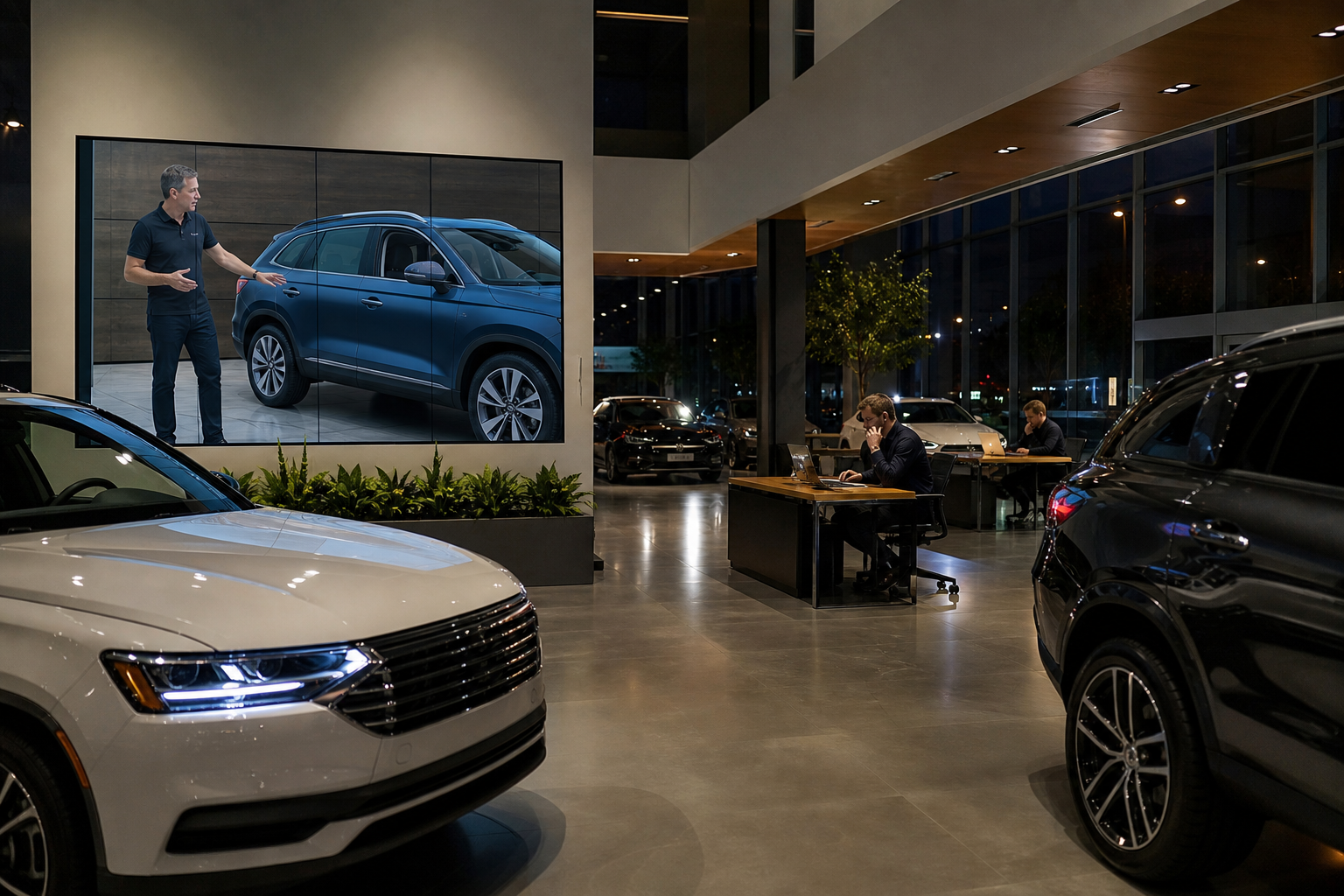
The best virtual events in 2026 are not purely digital. They anchor to a physical showroom event happening simultaneously. Customers watching from home see real inventory, real staff, and real deals being made. That credibility closes the gap between digital curiosity and in-person commitment.
Pair the live stream with a BDC team working the phones and the chat. Willowood’s BDC operates 24/7 ET, staffed by US-based reps who know how to convert an online inquiry into a confirmed appointment. That coverage is what separates a virtual event with real results from one that just gets views.
Production Standards That Matter
Use decent camera equipment. A shaky phone stream communicates the wrong thing about your store. A clean, well-lit walk-around of a new model communicates professionalism and trust.
Script the key moments, then let your people be themselves. Opening, offer reveals, and closing CTAs should be planned. Everything in between should feel natural.
Have a technical backup plan. Stream drops happen. Have a secondary stream ready and a moderator who can communicate delays to the audience in real time without panicking.
4. BDC Follow-Up Is Where the Money Lives
The event is the top of the funnel. The BDC converts it. Willowood’s campaigns consistently post a 72% appointment show rate because the follow-up starts within minutes of a lead coming in, not the next morning. Speed matters more than almost any other variable in automotive lead conversion.
A virtual event that generates 200 leads and follows up poorly is less valuable than one that generates 80 leads and follows up within five minutes of every submission. Structure your follow-up protocol before the event launches. Know who calls, when they call, what they say, and what happens if there is no answer.
5. Measure Everything, Then Use It
Likes and views are vanity. Appointments set, show rate, and units sold are the numbers that matter. Track your cost per lead, your cost per appointment, and your cost per sale across every channel. After the event, pull the data and identify which platform, which creative, and which offer drove the most qualified traffic.
Stores that do this consistently build a repeatable playbook. The Oklahoma City CDJR result and the Little Rock VW result (64 sold for $294,821) did not happen because someone got lucky. They happened because the campaigns were built on data from previous events, refined, and executed with discipline.
Run Your Next Virtual Event Like a Real Sales Operation
Willowood Ventures builds virtual sales events that treat every lead like a floor-up. Packages start at Demo-Call Pricing, and the results speak for themselves across more than 200 rooftops nationwide. Call 843-310-4108 or visit willowoodventures.com to talk through what a real virtual event campaign looks like for your store.
Make Willowood Ventures a preferred source on Google
One tap tells Google you want our dealership marketing coverage surfaced first. You will see Willowood Ventures more often in Top Stories, AI Overviews, and AI Mode when you search anything about selling more cars. It is free, it takes a second, and it brings you right back to this page.
Everything dealerships ask us about virtual event best practices.
What are virtual event best practices and why are they important for car dealerships? +
Virtual event best practices are the structured strategies that separate a digital sales campaign that produces units from one that just produces views. For car dealerships, that distinction matters because showroom traffic does not materialize on its own. A well-run virtual event uses coordinated ad targeting, a live or hybrid broadcast format, and a BDC team ready to convert every lead within minutes of submission. Willowood Ventures has managed over $4 million per month in social advertising managed across 600+ dealer partners using these exact principles. The stores that follow a real framework consistently outperform the ones that improvise. Virtual events done right generate qualified appointments, not just online impressions, and that is what puts sold units on the board at the end of the weekend.
How do specific virtual event best practices methods benefit dealerships? +
The specific methods matter because generic digital marketing does not move cars the same way a focused virtual sales event does. Time-gated offers create urgency. Multi-platform broadcasting expands reach without diluting the message. A structured BDC follow-up protocol ensures no lead sits cold for more than a few minutes. When you combine precise Meta audience targeting with a live dealership event and a 24/7 US-based BDC operation, the results are concrete. Torrance Chevrolet sold 72 units for $345,688 using this approach. Salt Lake City GMC sold 89 units for $421,593. These are not flukes. They are the product of applying specific methods consistently across every stage of the event funnel, from first ad impression to appointment confirmation to showroom arrival.
What are the key components of a successful virtual event best practices strategy? +
A successful virtual event strategy for a dealership has five non-negotiable components. First, precise audience targeting that puts your ads in front of in-market shoppers, not just anyone scrolling. Second, compelling creative that shows real inventory and real offers with urgency built in. Third, a multi-platform broadcast that runs simultaneously across Facebook, Instagram, and any other channel where your buyers spend time. Fourth, a BDC team that responds to every lead within minutes and follows a scripted but conversational outreach sequence. Fifth, post-event data analysis that identifies what worked and what to sharpen for the next campaign. Miss any one of these and the whole system underperforms. Hit all five and you are looking at metrics like a 35% set rate and 65% show rate on appointments generated.
How long does it take to see results from virtual event best practices? +
Results from a well-run virtual sales event are visible within the event window itself, typically a three-day period over a weekend. Leads start coming in as soon as the ads go live, and appointments should be getting set within the first few hours. Sold units begin appearing on day one when the BDC follow-up is immediate and the showroom is ready to receive traffic. The full picture, meaning total units sold, total gross, and cost per sale, is measurable within 48 to 72 hours after the event closes. Campaigns built on prior data perform better each time, so stores that run quarterly virtual events with Willowood see compounding improvement. The 90% client rebook rate among Willowood’s dealer partners reflects that pattern. Once dealers see what a structured event produces, they keep running them.
What kind of ROI can dealerships expect from professional virtual event best practices? +
Dealerships working with Willowood Ventures have seen an average ROI of 800% on virtual sales event campaigns. That figure is not a ceiling, it is an average across a diverse roster of franchises and market sizes. Little Rock Volkswagen sold 64 units for $294,821 in gross. Oklahoma City CDJR put 83 units on the board for $398,762. These numbers come from events with focused ad targeting, tight BDC execution, and a framework built around converting digital interest into physical showroom visits. Packages start with demo-call pricing, which means the cost of entry is low relative to the potential return. The ROI math is straightforward once you know your average front and back gross per unit. Most dealers are looking at a return that justifies the investment inside the first event.
How does virtual event best practices differ from traditional dealership methods? +
Traditional dealership marketing pushes outbound messages through broadcast TV, radio, and direct mail and waits for inbound traffic. Virtual event best practices flip that model by creating an active, time-bound digital moment that generates leads in real time and deploys a BDC team to convert them immediately. The feedback loop is faster and the data is cleaner. You know within hours which offer resonated, which creative drove the most leads, and which platform delivered the most qualified traffic. Traditional campaigns take weeks to measure. A virtual event gives you actionable data the same day. The other major difference is precision. Meta targeting reaches in-market shoppers based on behavior and intent signals, not just a broadcast radius. That specificity reduces wasted spend and improves every conversion metric downstream.
What role does BDC follow-up or audience targeting play in virtual event best practices success? +
BDC follow-up and audience targeting are not supporting elements in a virtual event, they are the engine. Audience targeting determines who sees your event promotions and whether those people are actually shopping for a vehicle or just browsing. Willowood’s Meta Certified Partnership means the targeting is built on proven methodology, not trial and error. BDC follow-up determines whether a lead becomes an appointment. Willowood’s BDC runs 24/7 with US-based reps who know automotive. That coverage is what drives a 72% appointment show rate. A virtual event without fast, professional BDC follow-up generates leads that go cold. The targeting fills the top of the funnel. The BDC closes the gap between a form submission and a customer sitting across from your finance manager.
How important is timing for launching virtual event best practices? +
Timing affects everything from ad performance to showroom staffing to inventory presentation. The best virtual sales events are planned with enough lead time to build a warm audience through retargeting before the event window opens. Running cold ads to a cold audience the same day the event starts is a significant waste of budget. Willowood typically recommends building audience awareness in the week before the event and launching hard offers as the event opens. Within the event itself, time-gating offers throughout the day sustains urgency and keeps engagement from peaking and dying in the first hour. Month-end timing, factory incentive cycles, and local competitive activity all factor into the ideal launch window. Stores that plan their virtual events around these variables consistently see better lead quality and higher show rates than stores that pick a weekend at random.
What makes virtual event best practices more effective than alternative methods? +
The combination of precision targeting, real-time engagement, and immediate BDC follow-up creates a closed-loop system that alternative methods cannot replicate. A direct mail campaign delivers static information to a broad audience and waits. A virtual event delivers dynamic, time-sensitive offers to a segmented in-market audience and responds to every lead within minutes. The speed of the feedback loop is the biggest structural advantage. You can adjust creative mid-campaign, shift budget toward the best-performing placements, and have your BDC pivoting its script based on what objections are coming up most frequently. Traditional methods do not offer that kind of in-flight optimization. Add the hybrid element of a live showroom event running simultaneously, and you have a campaign that creates urgency both online and in person, which is a combination most alternative methods simply cannot match.
Why should dealerships choose Willowood Ventures for their virtual event best practices? +
Willowood Ventures is the premier choice for virtual event best practices because of our proven track record across 600+ dealer partners and over $4 million per month in social advertising managed managed. We are a Meta Certified Partner, which means our targeting methodology meets the highest standard in paid social advertising. Our BDC operates 24/7, with US-based reps who know how to turn a lead into a confirmed appointment fast. The average ROI across our campaigns is 800%, and our 90% client rebook rate tells you that dealers see real returns and come back. Results like 89 sold at Salt Lake City GMC and 83 sold at Oklahoma City CDJR are not marketing claims, they are closed-deal numbers. Packages start with demo-call pricing. Contact us at 843-310-4108 to talk through what a virtual sales event can do for your store this month.
Ready to Transform Your Dealership’s Success?
Partner with Willowood Ventures, America’s #1 automotive marketing agency, and start filling your showroom with ready-to-buy customers. Our Facebook Sales Events deliver Set Appointments, not promises.