Stop asking whether print still works. Ask whether your magazine ad starts a trackable path to an appointment and a sold unit. Get that right and print becomes a profitable first touch, not a vanity spend.
📈 The dealerships winning in 2026 are marketing DIFFERENTLY.
Make Print the First Touch, Not the Whole Play
Running a glossy page by itself is expensive hope. Smart stores use print for credibility and context, then push that reader straight into a digital event funnel you can measure. The magazine introduces you. Your funnel closes the deal.
Digital will always be cheaper on a pure CPM basis. Fine. You are not betting print will beat digital. You are using print to warm the right buyer, capture intent, and let your digital and BDC teams finish the job. Willowood backs this with a 24/7 US-based BDC operation ET, so every scan, visit, and form fill gets worked the same day it comes in.
Why the Old Print Playbook Fails
Three problems kill most magazine buys before the issue even hits the rack.
No tracking. A page with a main line phone number tells you nothing about source or conversion.
No follow-up path. Readers need a clean next click or scan, not a cold transfer to the operator.
No urgency. Most creative reads like a co-op template. No reason to act now, no reason to choose your store over the one across town.
Standalone print is branding. Connected print becomes a lead source. The difference is the funnel you build behind the page.
Where Print Still Earns Its Keep
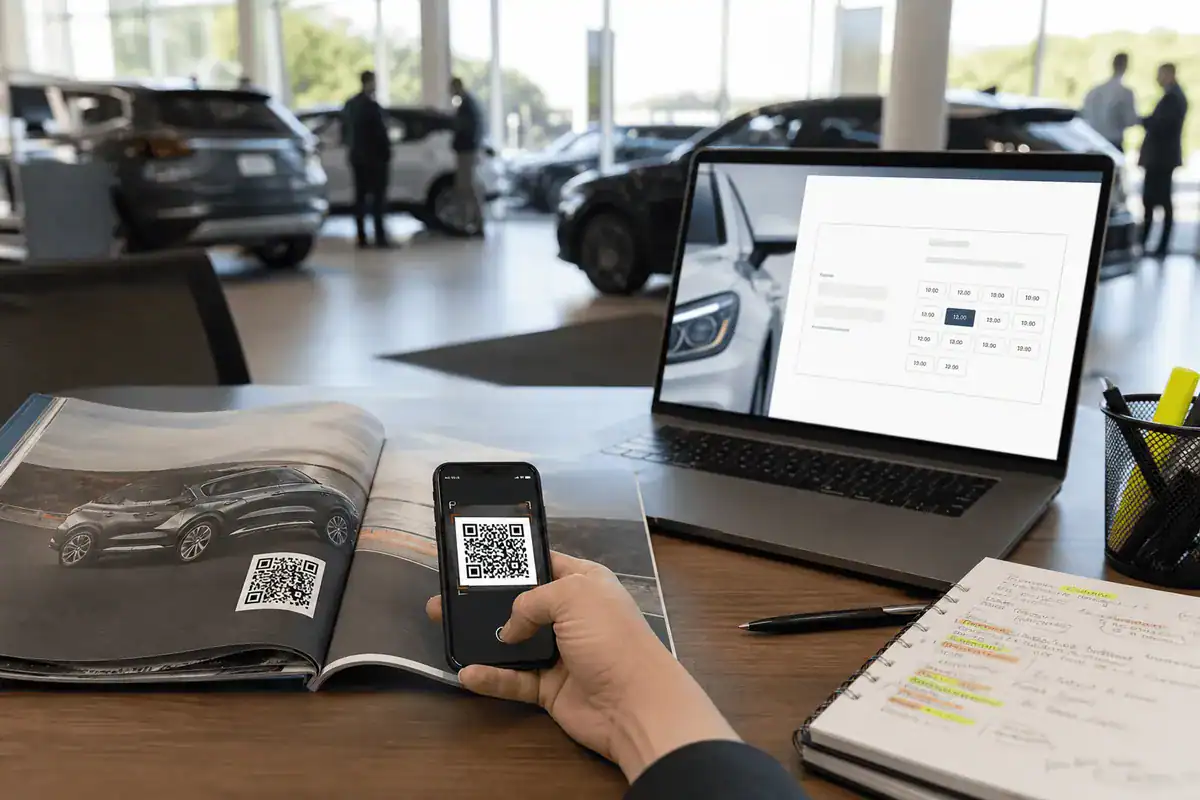
Enthusiast buyers are the obvious fit. Performance trims, truck builds, specialty units, readers who still collect magazines. Beyond that, print works as a trust layer before a push event, and as an offline-to-online bridge when you attach QR codes, vanity URLs, and dedicated landing pages that fire pixels and feed your CRM.
The Modern Litmus Test
Every magazine buy needs a hard go or no-go test across four boxes. If one is missing, keep your money.
Audience Match Comes First
Buy the reader, not the masthead. A regional luxury lifestyle book can move a premium SUV event. An enthusiast title can move manual transmission orders and off-road builds. If the reader profile does not match your target buyer, the ad is dead before design starts.
Local Reach Beats Prestige
Some titles carry a big name and light penetration in your PMA. Others look plain but ride your exact neighborhoods and HOAs. If the book cannot reach likely buyers where you can deliver, skip it.
The Offer Must Be Exclusive
Magazine readers scroll past a generic huge-selection ad. They stop for an invitation with teeth. Launch preview. Trade upgrade with equity match. Appraisal lane with a guaranteed same-day check. Tie it to a date, force a response. If the same creative could sit unchanged on your billboard, homepage, and newspaper, it is not specific enough to work in any of them.
If You Cannot Measure It, Do Not Place It
Build the tracking plan before you sign the insertion order. Use a dedicated landing page and pixel it. Use a unique QR code. Use a vanity URL that only appears in that book. Spin a dedicated phone number with DNI and route everything into your CRM with the publication source code. Brief the BDC on scripts tied to this campaign specifically, not just general inbound handling.
How to Vet Publications and Negotiate Like a Dealer
Ask every rep the same questions before you commit budget.
Distribution map. How many copies land inside your PMA, which ZIPs, which racks, which households.
Readership profile. HHI, homeownership rates, age bands, known automotive interest.
Ad clutter. How many competing auto advertisers in that issue and what positions are still open.
Proof of performance. Past case studies for local auto, not national OEM branding.
Digital bundle. Newsletter placements, site retargeting inventory, audience extension, sponsored content with links back to your event page.
Score each title instead of guessing. If distribution is light in your ZIPs or they cannot verify delivery, move on.
Creative That Pulls, Not Just Looks Pretty
Every page needs these elements working together.
Headline with intent. Call out the buyer and the action. Example: Reserve your first pick on incoming Trail Boss units.
Proof. Awards, reviews, or a short testimonial with a first name and city.
Offer with a date. Appraisal Weekend, June 7 to 9. VIP preview Thursday 6pm.
QR code and vanity URL. Big enough to scan from a couch. Short enough to type from memory.
Trust signals. Community involvement, certified technicians, and your Meta Certified Partnership where relevant.
Keep inventory shots tight and relevant to the offer. One hero unit beats a collage of fourteen random stock photos every single time.
Build the Funnel Behind the Page
The print ad is the invitation. Everything else converts it.
Landing page. Mobile first. Mirrors the print promise. Form above the fold. Click to call. Calendar link.
Pixel and audiences. Fire Meta and Google pixels. Build retargeting pools off magazine traffic immediately.
CRM hygiene. Source code for the publication, separate campaign for the issue, track set, show, and sold.
BDC scripts. Specific openers tied to the invitation. Ask for appointment windows, not callbacks. With the right script and offer alignment, Willowood consistently sees a 35 percent set rate, 65 percent show rate, and 15 percent overall closing rate.
Remarketing. Hit non-converters with short-form video and a calendar nudge inside 48 hours.
This structure moves real numbers. Oklahoma City CDJR ran a print-seeded event tied to a digital funnel and closed 83 units for $398,762 in gross. Salt Lake City GMC hit 89 sold for $421,593 using the same integrated approach.
Budgeting and Forecasting Like an Operator
Do not buy by feel. Start with reach inside your PMA, then build a realistic response model.
Copies inside target ZIPs: 22,000
Scan or type-in rate: 0.6 to 1.2 percent with strong creative and placement
Form or call conversions: 20 to 35 percent on a tight landing page
Appointments set: 35 percent of leads
Shows: 60 to 70 percent of sets
Sold: 12 to 18 percent of total leads, offer dependent
With clean execution, stores running integrated print-to-digital events see an 800 percent average ROI. Your market, inventory, and compliance rules affect the final number, so plan with your own data.
Willowood works with 600+ dealerships across the country and knows which publications pull locally. Packages start at Demo-Call Pricing for a complete print-to-digital event build. If you already have the page placed, we can bolt on the funnel and BDC coverage. Call 843-310-4108 to talk through your market.
When to Skip Print
The title cannot verify delivery inside your selling ZIPs.
The audience skews far from your target buyer or credit bands.
You do not have a real offer with a date, a capacity, or a cap.
You cannot track the response cleanly or staff the follow-up properly.
Make Willowood Ventures a preferred source on Google
One tap tells Google you want our dealership marketing coverage surfaced first. You will see Willowood Ventures more often in Top Stories, AI Overviews, and AI Mode when you search anything about selling more cars. It is free, it takes a second, and it brings you right back to this page.
Everything dealerships ask us about car magazine advertising.
What is car magazine advertising and why is it important for car dealerships? +
Car magazine advertising means placing paid creative in print automotive or lifestyle publications to reach buyers who are actively researching or dreaming about their next vehicle. The key word is connected. A standalone page is a branding spend. A page tied to a landing page, a pixel, and a BDC follow-up sequence becomes a measurable lead source.
Dealerships benefit because premium print titles carry trust and reader intent that digital channels have a hard time replicating at the top of the funnel. When a buyer lingers over a two-page spread in an enthusiast title, they are spending more time with your brand than a three-second scroll allows.
Willowood staffs a 24/7 US-based BDC operation, so every scan or form fill generated by a magazine campaign gets worked the same day. That response speed is what turns print interest into appointments.
How does car magazine advertising benefit dealerships specifically? +
The biggest benefit is audience quality. Automotive magazine readers self-select. They are already thinking about vehicles, trims, and upgrades before they ever see your ad. You are not interrupting someone watching a cooking video. You are reaching a person who paid money to read about cars.
Second benefit is the trust transfer. A well-designed page in a credible title gives your store a credibility layer that a Facebook ad cannot buy on its own. Used together, print warms the buyer and digital converts them.
Third benefit is the offline-to-online bridge. A QR code or vanity URL in a magazine ad feeds your retargeting pools with high-intent traffic. Willowood has managed over $4 million per month in social advertising managed and consistently uses print-generated audiences to lower CPL on paid social campaigns running alongside the event.
What are the key components of a successful car magazine advertising strategy? +
Four boxes have to be checked before you sign an insertion order. Audience match means the publication’s reader profile lines up with your target buyer, not just the masthead’s reputation. Local reach means enough copies land inside your actual selling ZIPs to justify the rate. Offer specificity means the creative includes a dated, exclusive reason to respond now rather than a generic inventory message. And tracking fit means you have a dedicated landing page, pixel, vanity URL, and unique phone number in place before the issue drops.
Creative-side, the page needs a headline that calls out the buyer and the action, a specific offer with a date, a QR code large enough to scan from a couch, and trust signals like community involvement or your Meta Certified Partnership. One strong hero unit beats a collage of stock photos every time.
Miss any of these components and the investment underperforms. Hit all four and print becomes a reliable first touch in a multi-channel event funnel.
How long does it take to see results from car magazine advertising? +
Results depend on the publication’s release schedule and your funnel response time. Most regional and enthusiast titles have monthly or bi-monthly cycles, so the lead window opens when issues hit homes and racks. Realistically, expect the first measurable responses in week one and a peak response window in weeks two and three.
The digital side moves faster. If you are running a concurrent paid social campaign to the same audience, retargeting pools built from magazine traffic can start generating appointments within 48 to 72 hours of launch.
Willowood’s 24/7 US-based BDC operation, running 24/7, ensures that nobody cools off while waiting for a callback. Speed of follow-up is the biggest variable between a campaign that breaks even and one that hits our clients’ average 800 percent ROI on integrated print-to-digital events.
What kind of ROI can dealerships expect from professional car magazine advertising? +
Connected print-to-digital campaigns average 800 percent ROI across Willowood’s client base when the full funnel is executed correctly. That number assumes a dedicated landing page, active retargeting, BDC coverage, and a time-bound offer with real exclusivity.
Real store results help contextualize this. Oklahoma City CDJR closed 83 units for $398,762 in gross using a print-seeded event tied to a digital funnel. Salt Lake City GMC hit 89 sold for $421,593 through a similar integrated approach.
ROI varies based on your market size, inventory availability, offer strength, and how quickly your BDC works the leads. Stores with tight offer compliance and fast follow-up consistently outperform those treating print as a passive awareness play. Packages start with demo-call pricing, making the entry cost manageable even for single-point stores testing the format for the first time.
How does car magazine advertising differ from traditional dealership advertising methods? +
Traditional dealership advertising, think TV spots, radio schedules, and newspaper inserts, casts a wide net and measures success loosely. Car magazine advertising, when done correctly, targets a self-selected buyer audience, carries a longer shelf life (a magazine sits on a coffee table for weeks), and bridges cleanly to digital tracking through QR codes and vanity URLs.
The other key difference is intent. Someone reading an automotive enthusiast title is in a research or aspiration mindset. That is fundamentally different from someone who happens to hear your radio spot while commuting. The reader is leaning in. Your job is to give them a reason to act.
Where most dealers get tripped up is treating a magazine buy the same way they treat a newspaper run. The creative, the offer, and the follow-up infrastructure need to be built specifically for the print-to-digital path. That is where working with a team that has served 600+ dealerships makes a measurable difference.
What role does BDC follow-up play in car magazine advertising success? +
BDC follow-up is what separates a campaign that generates traffic from one that generates gross. A magazine ad can create intent. Your BDC converts that intent into an appointment on the books.
The script matters as much as the speed. A generic inbound opener wastes the warmth the print ad created. BDC agents need to reference the invitation, the offer, and the specific event. Willowood builds campaign-specific scripts for every print event we support, which is a big reason we consistently see a 35 percent set rate, 65 percent show rate, and 15 percent overall closing rate when offer and script are aligned.
Willowood’s BDC operates 24/7. That coverage window means a buyer who scans a QR code at 9pm on a Tuesday gets a response the same evening, not the next morning when the intent has cooled.
How important is timing for launching a car magazine advertising campaign? +
Timing affects two things: publication placement and offer relevance. On the publication side, most regional titles have lead times of four to six weeks for premium positions, so planning backward from your event date is non-negotiable. Miss the window and you are either in a poor position or holding your creative for the next issue.
On the offer side, your event needs a specific date range that lands within the issue’s active shelf life. A vague ongoing sale gives readers no reason to respond immediately. A three-day appraisal weekend tied to a page they just read creates urgency.
Seasonal alignment matters too. A truck-focused spread in a fall hunting and outdoor lifestyle issue will outperform the same creative in a spring travel issue. Match the reader’s mindset at that moment in the calendar and your scan and conversion rates improve significantly. Plan the whole timeline before you commit budget.
What makes car magazine advertising more effective than alternative methods? +
Three things make connected print more effective than many alternatives in specific situations. First, reader dwell time. A magazine reader spends minutes with a page, not seconds. That exposure depth is hard to buy in digital environments without significant frequency caps and budget.
Second, the trust halo. Being placed alongside editorial content in a reputable automotive title borrows credibility that a display ad or pre-roll cannot match. For luxury units, specialty trims, and high-gross events, that credibility accelerates the buyer’s decision.
Third, the offline-to-online bridge works both ways. The magazine drives a reader to your pixel. Your digital campaign then retargets that warm audience with specific social creative and video. The two channels reinforce each other in a way that either channel running solo cannot achieve. Willowood has managed over $4 million in social spend alongside print campaigns and the lift in paid social performance from print-warmed audiences is consistent and measurable.
Why should dealerships choose Willowood Ventures for their car magazine advertising? +
Willowood Ventures is the premier choice for car magazine advertising because of our proven track record building print-to-digital funnels that actually close deals. We have served 600+ dealerships across the country and managed over $4 million per month in social advertising managed, which means we know exactly how to stack a magazine buy with paid social, retargeting, and BDC follow-up into a single measurable campaign.
We do not just place the page and hand you a tearsheet. We build the landing page, fire the pixels, write the BDC scripts, and staff the phones with our 24/7 US-based operation so no lead cools off. Oklahoma City CDJR closed 83 units for $398,762 gross using our integrated approach. Salt Lake City GMC hit 89 sold for $421,593. Those numbers come from the full system working together, not the magazine ad alone.
Packages start with demo-call pricing. If you already have a print buy in place, we can bolt on the funnel and BDC coverage immediately. Contact us at 843-310-4108 to talk through your market and build a campaign that converts your magazine readers into sold units.