Most dealerships treat a Facebook Sales Event like a Facebook Live and wonder why the phones don’t ring. The ones pulling real numbers treat it like a full production. Here’s the checklist that separates a sold board from a slow weekend.
🚗 150+ Appointments In 7 Days! The Facebook Sales Event Every Dealer Needs | Willowood Ventures
Step 1: Lock In Your Technical Setup Before Anything Else
Your stream quality is your first impression. A pixelated feed or a crashed Messenger bot during peak engagement isn’t just annoying, it’s a lost deal. Run your internet speed test from the exact spot on the showroom floor where you’ll broadcast. You want at least 10 to 15 Mbps upload. If you’re pulling less than that, move or get a hotspot.
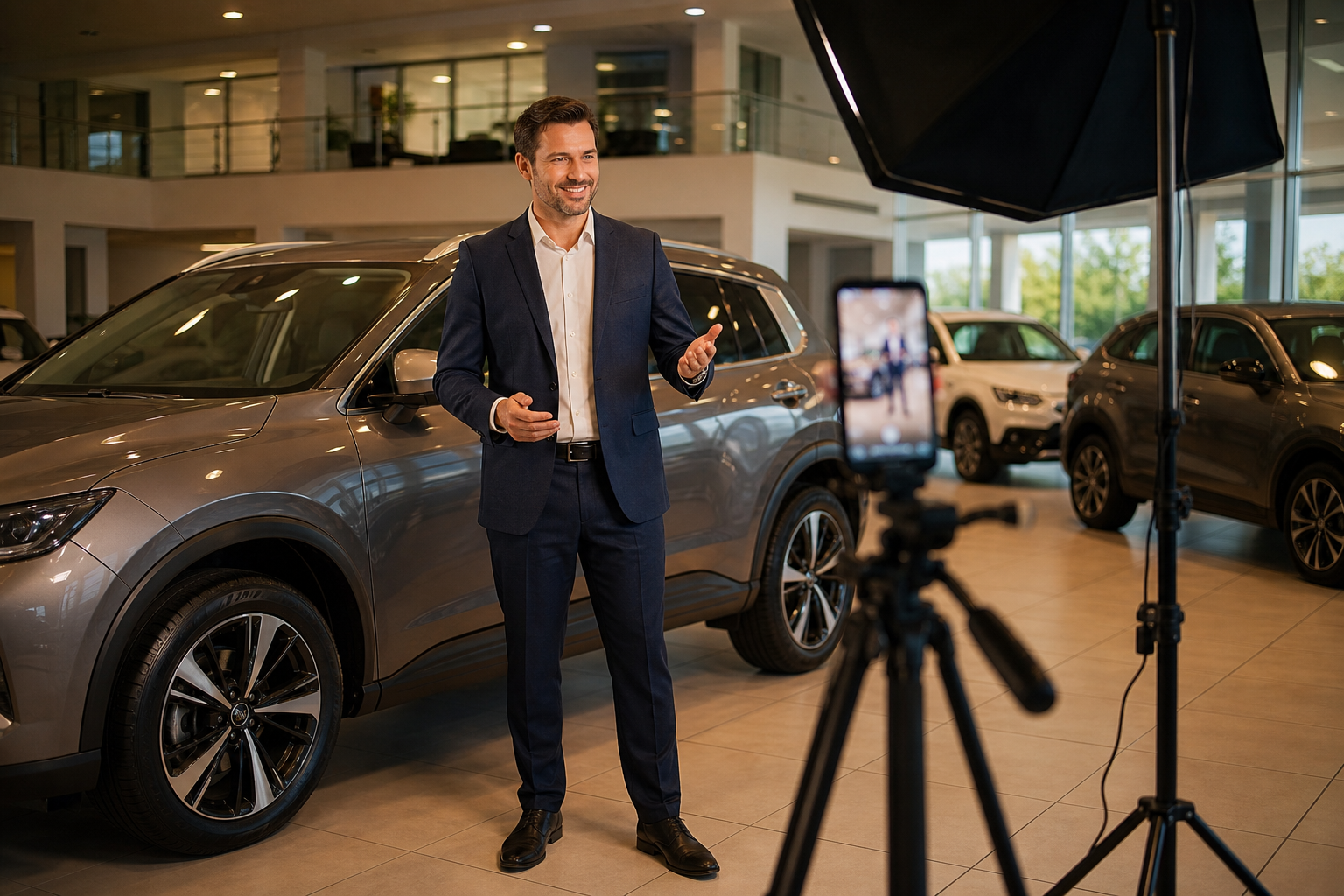
Use a dedicated device for the broadcast. A modern smartphone on a tripod outperforms a laptop camera every single time. Mount it at eye level, aim good light at your presenter’s face, and cut the background clutter. Customers are judging your dealership by what they see on that screen.
Update your Facebook Page completely before the event goes live. Hours, contact info, cover photo, pinned post with event details.
Configure Messenger auto-replies so every inquiry gets an immediate response. Something simple works: “Thanks for reaching out! Type APPOINTMENT and our team will get you scheduled today.”
Test the full setup 48 hours out. Not the morning of. Two days before.
Step 2: Build a Content Plan That Actually Sells Cars
Pointing a camera at a car is not a strategy. You need a structured run-of-show with timed segments, a confident on-camera presenter, and content that moves people toward a decision.
Structure your event in 15 to 20 minute blocks. A walkaround, then a Q&A, then a finance or trade segment. Keep the energy up and keep it moving. Nobody sits through a 45-minute monologue about trim levels.
Vehicle walkarounds: Multi-angle, feature-focused. Lead with what makes that unit worth driving in for.
Live Q&A: Have a moderator pulling comments in real time and feeding questions to your host. This creates a conversation, not a broadcast.
Meet the team segments: Your sales manager, your finance director, your top closer. Put faces to the dealership. People buy from people they trust.
Speaker Prep Is Not Optional
Run a full rehearsal at least 24 hours before the event. Your presenter needs to know their segments, their transitions, and their talking points cold. First-time on-camera nerves kill more events than bad internet connections.
Step 3: Build Your Registration and Lead Pipeline
Your event needs a registration mechanism. Don’t just go live and hope the right people show up. A branded event page, a Messenger sequence, or a landing page tied to your Facebook ad campaign gives you a list of warm contacts before the first frame streams.
Willowood Ventures manages this entire process for dealerships. We’ve worked with 600+ dealerships and run over $4 million in social media ad spend to drive qualified audiences into these events. The difference between 50 viewers and 500 viewers is almost always the ad strategy behind the event, not the event itself.
Use lead-capture ads in the 7 to 10 days before the event to build your audience list.
Retarget your website visitors and your existing customer database.
Send reminder messages through Messenger 24 hours and 1 hour before you go live.
Step 4: Run Your Marketing and Promotion Early
Waiting until two days before to start promoting is how you get 20 viewers and zero appointments. Start your paid campaign 10 to 14 days out. Layer your targeting: in-market shoppers, previous website visitors, custom audiences from your CRM, and lookalikes built off your best buyers.
The creative matters. Static images showing the exact models you’re featuring, specific pricing callouts, and a clear event date and time. Vague ads get scrolled past. Specifics stop the thumb.
What Good Promotion Looks Like in Practice
Oklahoma City CDJR used a structured pre-event campaign and walked away with 83 units sold at $398,762 in gross. Salt Lake City GMC hit 89 sold for $421,593. Those numbers don’t come from organic reach. They come from a paid strategy that’s been dialed in over hundreds of events.
Step 5: Nail Your Audience Engagement During the Event
Engagement isn’t passive. You need someone actively working the comment section while your presenter is on camera. Respond to every comment. Pin important announcements. Call out viewers by name when you answer their questions. People stick around when they feel seen.
Run a poll early in the event to get viewers clicking and invested.
Drop your Messenger link in the comments every 10 to 15 minutes with a specific CTA tied to what’s on screen.
Create urgency with limited-time offers or event-only pricing that expires when the stream ends.
Step 6: BDC Follow-Up Starts During the Event, Not After
This is where most dealerships leave money on the table. Your BDC team should be working leads in real time while the event is still streaming. Every Messenger inquiry, every comment asking about availability, every registration that hasn’t converted to an appointment yet.
Willowood’s US-based BDC operates 24/7 ET, and consistently hits a 72% appointment show rate. That kind of follow-up speed and consistency doesn’t happen by accident. It’s a system. Build yours before the event, not after.
Step 7: Post-Event Analytics and Follow-Up
The event ending is not the finish line. Pull your data within 24 hours. Views, peak concurrent viewers, Messenger conversations started, appointments set, and appointments shown. Every metric tells you something about where to tighten the next event.
For leads that didn’t convert to appointments, run a follow-up sequence over the next 5 to 7 days. Text, email, Messenger, and phone. The buyers are in there. They just need another touch.
Review your stream replay for content improvements.
Identify your highest-performing ad creative and save it for the next campaign.
Document your show-to-sold rate so you have a real baseline for ROI measurement.
Step 8: Protect Your Dealership with Privacy and Compliance Basics
Don’t skip this step. Make sure your event registration and lead capture are compliant with applicable data privacy regulations. Your branded event page should include a clear privacy notice. If you’re collecting phone numbers for SMS follow-up, you need documented opt-in consent. This protects your dealership and keeps your ad account in good standing with Meta.
Willowood Ventures is a Meta Certified Partner, which means our campaigns are built inside the guardrails Meta requires and our clients don’t get blindsided by policy issues mid-event.
Make Willowood Ventures a preferred source on Google
One tap tells Google you want our dealership marketing coverage surfaced first. You will see Willowood Ventures more often in Top Stories, AI Overviews, and AI Mode when you search anything about selling more cars. It is free, it takes a second, and it brings you right back to this page.
Everything dealerships ask us about Facebook sales event.
What is a Facebook Sales Event and why is it important for car dealerships? +
A Facebook Sales Event is a structured, promoted live-stream broadcast run through a dealership’s Facebook Page. It combines paid advertising, live video content, and real-time lead engagement to drive showroom appointments and phone-ups over a compressed event window, usually a weekend. It’s not a casual go-live. It’s a campaign.
For dealerships, the appeal is direct. You reach in-market buyers where they already spend time, you showcase inventory with live walkarounds, and your BDC team works leads in real time while the event is still running. That combination creates urgency that a static ad simply can’t match.
Willowood Ventures has run these events across 600+ dealerships and tracked the outcomes. The results from Little Rock VW (64 units sold, $294,821 gross) and Torrance Chevrolet (72 units sold, $345,688 gross) show what a well-executed event looks like when the entire system is built correctly from the start.
How do specific methods related to Facebook Sales Events benefit dealerships? +
The biggest benefit is speed. A well-run Facebook Sales Event compresses the sales cycle by creating event-specific urgency, live social proof, and immediate follow-up, all in a single weekend window. Buyers who have been sitting on the fence make decisions faster when they see real-time engagement and limited-time offers.
Paid targeting is what makes the method precise. Instead of blasting a broad market, you reach in-market shoppers, retarget your own website visitors, and build lookalike audiences from your best buyers. The lead quality is higher because the audience has already been filtered before they ever click.
BDC follow-up during and immediately after the event is where deals get closed. Working Messenger inquiries in real time, setting appointments while the energy is high, and following up within the hour on missed connections all drive the show rate numbers that matter. Willowood consistently achieves a 72% appointment show rate using this methodology.
Eight components matter most. First, your technical setup, including stream quality, Messenger configuration, and a stable internet connection. Second, a structured content plan with timed segments and a confident on-camera presenter. Third, a registration and lead-capture mechanism built before the event launches.
Fourth, a paid ad campaign that starts 10 to 14 days before the event and layers targeting across in-market audiences, retargeting, and CRM custom audiences. Fifth, active comment moderation and engagement during the live stream itself. Sixth, a BDC team working leads in real time during the event, not waiting until Monday.
Seventh, post-event analytics pulled within 24 hours to measure views, appointments set, and show rates. Eighth, a follow-up sequence for leads that didn’t convert during the event window. Leave out any of these and the whole system underperforms.
How long does it take to see results from a Facebook Sales Event? +
You start seeing appointment volume within the first few hours of a live event if the pre-event advertising was done correctly. Dealerships running a properly structured campaign typically see the bulk of their appointments set during the event window itself, with additional conversions coming in through follow-up over the next 5 to 7 business days.
The pre-event period matters too. A 10 to 14 day ad campaign build-out is the minimum you want for audience warming and lead capture before you go live. Cutting that short is the most common reason a first event underperforms.
Total campaign cycle from first ad to last follow-up call is roughly 3 weeks. The sold units that result from that cycle are measurable, attributable, and consistent enough to forecast when the process is standardized. Dealerships that run these events quarterly see compounding results because their audience and retargeting pools grow with each event.
What kind of ROI can dealerships expect from professional Facebook Sales Events? +
Willowood Ventures clients average 800% ROI across Facebook Sales Event campaigns. That figure reflects total gross revenue generated against total campaign spend, including ad budget and management fees.
The specific numbers from individual stores make that average concrete. Salt Lake City GMC generated $421,593 in gross from 89 units sold. Oklahoma City CDJR hit $398,762 from 83 units. Little Rock VW closed 64 units for $294,821. Torrance Chevrolet moved 72 units for $345,688. These aren’t outliers. They represent what the system produces when it’s executed correctly.
Packages start with demo-call pricing, which makes the entry point accessible for stores of most sizes. The ROI calculation on a single good weekend event almost always justifies the investment within the first campaign.
How does a Facebook Sales Event differ from traditional dealership methods? +
Traditional methods like direct mail, newspaper ads, and radio operate on a broadcast model. You send a message out and wait for someone to respond. There’s limited targeting, no real-time feedback, and a long delay between campaign launch and measurable outcome.
A Facebook Sales Event is built for interaction from the start. The targeting is specific to in-market buyers. The content is live, dynamic, and responsive to viewer questions in real time. The BDC engagement happens during the event, not days later when the prospect has already visited three other stores.
The data loop is also tighter. With traditional media, you’re estimating reach and guessing at attribution. With a Facebook event, you can track ad impressions, lead captures, appointments set, show rate, and gross revenue in a clean line. That makes optimization straightforward and ROI calculation direct.
What role does BDC follow-up or audience targeting play in Facebook Sales Event success? +
BDC follow-up and audience targeting are the two variables that most directly determine whether an event converts or just generates views. You can have polished content and a great presenter, but if the leads don’t get worked quickly, the opportunity evaporates.
Willowood’s US-based BDC operates 24/7, which means leads generated during a Saturday afternoon stream don’t sit until Monday morning. Response speed is a major driver of the 72% appointment show rate we consistently hit. That number matters because shows are where deals close.
Audience targeting shapes who sees the event before a single dollar gets spent on the live stream itself. Layering in-market shoppers with website retargeting and CRM custom audiences means your Messenger conversations are starting with people who already have buying intent, not cold audiences who’ve never heard of your store.
How important is timing for launching a Facebook Sales Event? +
Timing affects both the campaign calendar and the event schedule itself. On the calendar side, starting your ad campaign 10 to 14 days before the event gives the Facebook algorithm time to optimize delivery and gives your audience time to register and warm up. Launching ads two days out almost guarantees underperformance.
On the event schedule side, weekend timing works best for most markets, specifically Saturday with a late morning or early afternoon start. That captures buyers who are already in a shopping mindset and gives your BDC team a full day to work appointments before the weekend ends.
Seasonal timing matters too. Events timed around manufacturer incentive periods, model-year changeovers, or local market events tend to carry built-in urgency that your creative can amplify. Avoid holiday weekends when travel competes with attention, and avoid scheduling against local events that pull your target audience offline.
What makes a Facebook Sales Event more effective than alternative methods? +
Three things separate it from alternatives: targeting precision, real-time engagement, and a compressed buying cycle. Banner ads and display campaigns reach broad audiences with no interaction. Email campaigns go to existing contacts with low open rates. Neither creates the urgency or the social proof that a live event does.
A Facebook Sales Event lets you run live vehicle walkarounds to an audience that’s already been pre-qualified by your targeting. Viewers see real-time comments, questions being answered, and other buyers engaging. That social proof accelerates decision-making in ways that static ads simply can’t replicate.
The Meta platform itself gives you reach that no other single channel matches for automotive. Willowood Ventures is a Meta Certified Partner, and our campaigns are built to take full advantage of the platform’s optimization tools, audience capabilities, and ad formats. Combined with a 35% set rate and a 65% show rate, the system produces consistent, trackable outcomes that other digital alternatives haven’t matched for dealerships at scale.
Why should dealerships choose Willowood Ventures for their Facebook Sales Event? +
Willowood Ventures is the premier choice for Facebook Sales Events because of our proven track record across more than 200 dealerships and over $4 million in social media ad spend managed. We don’t generalize. We have store-level results: 89 units sold at Salt Lake City GMC, 83 units at Oklahoma City CDJR, 72 units at Torrance Chevrolet. Those numbers are documented, not estimated.
Our system is built end to end. Paid campaign strategy, branded event setup, real-time BDC support running 24/7, and post-event analytics that tell you exactly what drove the result. As a Meta Certified Partner, we operate inside platform best practices that protect your ad account and maximize your spend efficiency.
Packages start with demo-call pricing, and clients average 800% ROI. That’s not a guess. That’s the average across our client base. Contact us at 843-310-4108 to get your next event on the calendar and find out what your store’s weekend could look like.
Ready to Transform Your Dealership’s Success?
Partner with Willowood Ventures, America’s #1 automotive marketing agency, and start filling your showroom with ready-to-buy customers. Our Facebook Sales Events deliver Set Appointments, not promises.