Facebook still fills showrooms when you run it like an event machine, not a billboard. Meta crossed 3 billion monthly active users, and that reach means nothing if your process stops at the impression. These 2026 trends turn attention into confirmed appointments and delivered units.
The Facebook Car Sales Machine for car dealers is INSANE (and it's available NOW)
Run Facebook Like a Sales Event, Not a Vanity Channel
The dealers who win on Facebook in 2026 treat every campaign like a deadline-driven sales event. They are not chasing likes. They are booking appointments, stacking trades, and moving iron before the weekend closes. Ten moves. Each one tied to more showroom traffic and better gross.
1. Lead Generation Ads with Instant Forms
Instant forms remove friction fast. A shopper taps once, Facebook pre-fills name and contact info, and your BDC should be on the phone in under five minutes. That beats routing cold traffic to a slow VDP with twelve form fields and three pop-ups.
Keep the offer tight. Trade evaluation, event RSVP, payment review, or test drive reservation. Ask for name, phone, email, preferred vehicle, and one qualifier. Save everything else for the call. Route to your CRM immediately and alert the BDC with a live notification. If you cannot call inside five minutes, you are handing leads to the store down the street.
2. Video That Books Appointments
Video wins the thumb war. During event windows it books real traffic. Treat it like a sales tool, not a brand film. One unit, one buyer problem, one reason to act now.
Inventory walkarounds: A tight 20-to-30-second truck clip calling out towing capacity, trade assistance, and same-day delivery beats a glossy montage every time.
Live shopping sessions: Put a GSM or product pro on camera. Assign someone to work comments and Messenger. Point every question toward an appointment, trade, or credit conversation.
Delivery clips and quick testimonials: Real customers on camera during the event create social proof in the feed while the sale is still happening.
Shoot vertical. Hook in the first three seconds. Use large on-screen text and captions. If the value is not obvious fast, the shopper scrolls.
3. Retargeting the People Who Already Raised Their Hand
Most dealers overspend on strangers and underserve people who already showed intent. Retargeting fixes that imbalance. Segment by behavior before you write a single line of copy.
Website VDP visitors get make-and-model ads plus event reminders.
Video viewers who watched 50 percent get financing and trade-value messages. Three-second skippers get a simpler hook.
Lead form openers who did not submit see a one-field version with a single clear next step.
Service customers due for major work see equity pull messaging and upgrade paths.
Cap frequency. Rotate urgency messaging. Once a shopper books, suppress them from prospecting immediately and move them into a confirmation sequence.
4. Dynamic Inventory Ads with Catalog Feeds
Catalog ads put the right VIN in front of the right shopper without hand-loading creatives for every unit. Push make, model, trim, mileage, price, and current incentives through the feed. Exclude sold units hourly. Highlight price drops and fresh trades.
Build product sets by body style, fuel type, certified status, and price band. Pair catalog retargeting with a lead-gen safety net. If a shopper hits three VDPs in a session, serve them an instant form with trade and appointment options. Feed quality decides the outcome ELITE DEALER SERVICES. Clean titles, real photos, accurate pricing. No placeholder images, no stale prices.
5. Click-to-Message and Messenger Follow-Up
Shoppers who tap Message want answers in the next two minutes, not the next two hours. Preload quick replies for payment estimates, trade values, availability, and appointment times. Offer two specific time slots rather than an open-ended question. People pick faster when given a choice.
Auto-reply within 15 seconds, then hand to a human within two minutes. Willowood’s BDC operation runs 24/7, so after-hours messages do not go cold while shoppers are still warm. Speed here is not a preference. It is the difference between a set appointment and a ghost.
6. Deadline-Driven Event Creative
Deadlines move people. Facebook is not a billboard. Use offer stacks that expire. Trade bump ends Saturday at 6pm. Zero-down sign-and-drive ends Monday. First 25 deliveries get all-weather mats. Tie copy to the calendar and your store hours, then remind shoppers twice per ad, once in the headline and once in the closing line.
Daypart your budgets toward early morning, lunch, and 7 to 10pm local time. Those are the scroll windows. Refresh creative every 48 hours during a tent sale or holiday push. Pin the event post. Run Stories with tap-to-call and tap-to-message CTAs.
7. First-Party Data and CRM Audiences
Your DMS and CRM are full of cheap wins that most dealers ignore. Upload owner lists with proper consent and segment by equity position, term remaining, and last service date. Suppress recent buyers so you do not burn impressions. Build one-percent and two-percent lookalikes off your highest-gross deliveries and service-to-sales conversions.
Target orphan owners with a meet-the-team message and a soft appointment offer. Hit service customers due for tires or brakes with upgrade paths and payment swap messaging. Re-engage internet leads older than 90 days with a cleaner ask and fresh trade values. First-party data improves match rates, lowers cost per lead, and helps Facebook optimize fast inside tight event windows.
8. Staff UGC-Style Ads
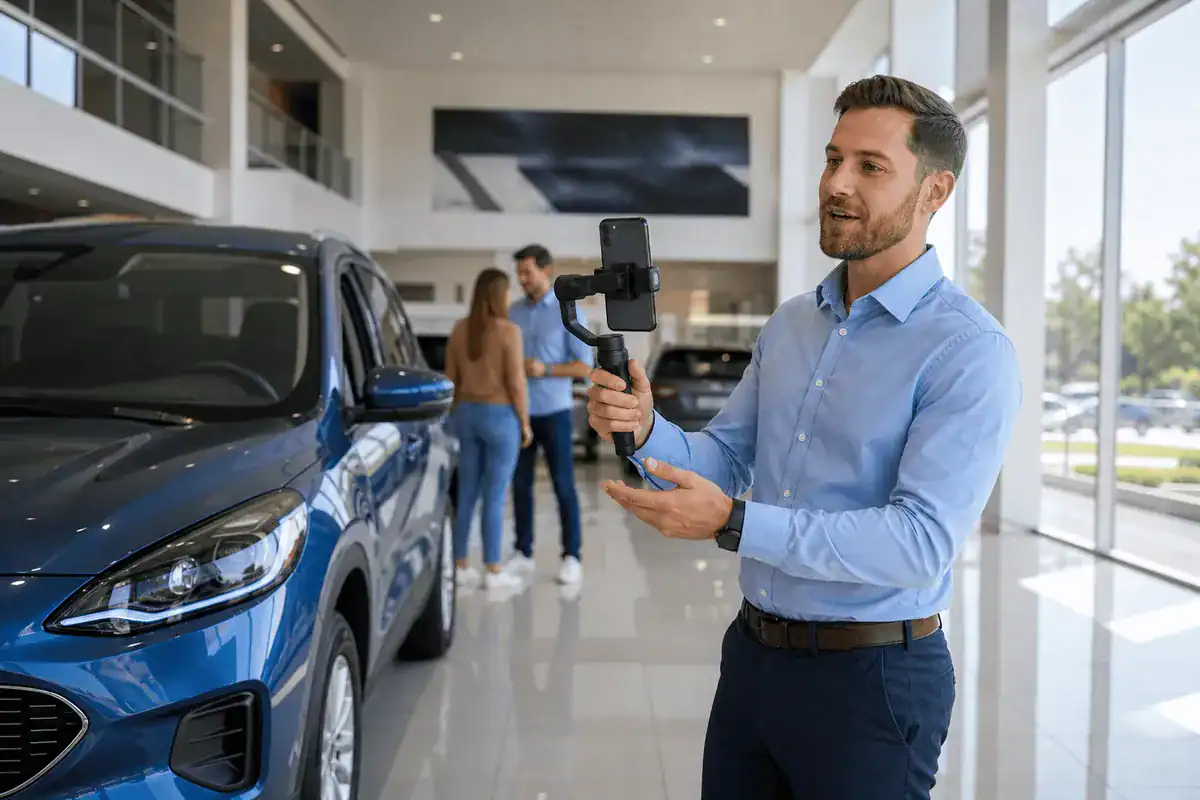
A confident salesperson on a phone walking a Tacoma converts better than a polished studio spot during a crunch event. Film authentic vertical clips. A sales pro on the lot. A service advisor explaining warranty coverage. A GSM spelling out the manager special and the exact deadline.
Keep it under 30 seconds. Use natural language and big on-screen text. Rotate faces so frequency fatigue does not set in. Disclose key terms in captions. This content blends into the feed and outperforms static when volume pressure is high.
9. Budget Pacing and Bid Controls
Events are sprints. Plan spend like it. Ramp budgets 10 days out. Peak three days before the deadline. Hold a retargeting tail for two days after the event closes to catch late-movers. Use cost cap on lead gen campaigns and manual bid tests on high-intent retargeting when volume is stable.
Set hard guardrails. Pause ad sets that run two times your target cost per lead for 12 consecutive hours. Shift 20 percent of daily spend toward the top two creatives by lead volume and appointment sets. Willowood has managed over $4 million per month in social advertising managed across 600+ dealer partners, and disciplined pacing is one of the biggest factors separating a profitable event campaign from a budget bonfire.
10. Meta Certified Strategy and Measurement
Every move above needs clean measurement to improve. Track lead volume, cost per lead, appointment set rate, show rate, and delivered units tied back to campaign. Willowood clients average an approximately 800% average return on ad spend on event campaigns precisely because the reporting loop closes fast enough to act on it during the event, not after.
Willowood Ventures is a Meta Certified Partner. That matters when you need campaign structures that actually follow Meta’s best practices and attribution that does not lie to you. If you are ready to run Facebook like a sales machine instead of a content calendar, call 843-310-4108 or visit the site to see what a real event campaign looks like.
Make Willowood Ventures a preferred source on Google
One tap tells Google you want our dealership marketing coverage surfaced first. You will see Willowood Ventures more often in Top Stories, AI Overviews, and AI Mode when you search anything about selling more cars. It is free, it takes a second, and it brings you right back to this page.
Everything dealerships ask us about Facebook car dealer marketing.
What is Facebook car dealer marketing and why is it important for car dealerships? +
Facebook car dealer marketing means using Meta’s ad platform to drive real showroom traffic, confirmed appointments, and delivered units. It is not about follower counts or brand awareness posts. It is about building lead funnels, retargeting active shoppers, and running deadline-driven event campaigns that produce results you can count in sold units.
The scale matters. Meta reported over 3 billion monthly active users entering 2025, which means your local market is reachable at a fraction of traditional media cost. The efficiency comes from targeting the right buyers, not just a large audience.
Willowood Ventures has managed over $4 million per month in social advertising managed across 600+ dealer partners. Clients who run structured event campaigns regularly see approximately 800% average return on ad spend. That is not a rounding error. That is the difference between running Facebook like a billboard and running it like a sales engine.
How do specific methods related to Facebook car dealer marketing benefit dealerships? +
Instant lead forms cut friction so shoppers submit contact info in one tap. Dynamic inventory catalog ads match specific VINs to shoppers who browsed similar vehicles. Retargeting sequences push VDP viewers toward an appointment instead of letting them cool off. Messenger integrations let your BDC work conversations while intent is high.
Each method targets a specific drop-off point in the buying process. The lead form fixes the cold-traffic problem. Retargeting fixes the lost-intent problem. Messenger fixes the slow-response problem.
When you stack these together inside a properly structured event campaign, the outcomes are measurable. Willowood clients like Salt Lake City GMC moved 89 units for $421,593 in gross in a single event window using this exact combination of Facebook ad methods.
What are the key components of a successful Facebook car dealer marketing strategy? +
A solid strategy needs five things working together. First, a clean CRM feed so dynamic inventory ads serve accurate pricing and real photos. Second, a fast BDC that can call leads within five minutes of submission. Third, creative that uses deadlines, not just offers. Deadlines move people. Offers alone let shoppers wait.
Fourth, audience segmentation. You need separate campaigns for cold prospecting, warm VDP retargeting, and CRM-based owner conquest. Treating every shopper the same kills efficiency and burns budget.
Fifth, clean measurement. If you cannot tie ad spend back to appointments set, shows, and delivered units, you cannot improve. Every campaign Willowood runs tracks that full loop from impression to keys in hand.
How long does it take to see results from Facebook car dealer marketing? +
A properly structured event campaign can produce appointments within 24 to 48 hours of launch. That is not hype. Instant forms route leads directly to the BDC, and if the BDC calls fast, same-day appointments happen regularly.
Broader brand and inventory campaigns typically show meaningful volume by day four or five as Meta’s algorithm exits the learning phase and optimizes delivery. The sweet spot for an event campaign is a 10-day window. Ramp budgets early, peak three days before the close date, and run a short retargeting tail after.
Stores that come in with a clean CRM audience, good creative, and a responsive BDC see results faster. Stores that have messy data or slow follow-up slow themselves down. The platform moves fast. Your process needs to match it.
What kind of ROI can dealerships expect from professional Facebook car dealer marketing? +
Willowood Ventures clients average approximately 800% average return on ad spend on event-driven Facebook campaigns. That figure comes from tracking ad spend against actual delivered units and gross, not just lead counts.
In concrete terms, Little Rock Volkswagen closed 64 units for $294,821 in gross. Oklahoma City CDJR moved 83 units for $398,762. Torrance Chevrolet delivered 72 units for $345,688. Those are real event results tied directly to structured Facebook campaigns.
ROI varies by market size, inventory depth, and BDC response speed. Stores with a fast follow-up process and strong event creative consistently land near the top of the range. Stores running Facebook casually without a dedicated response process see much weaker returns. The platform rewards process, not just spend.
How does Facebook car dealer marketing differ from traditional dealership methods? +
Traditional methods like direct mail, radio, and broadcast TV push a message to a broad audience and wait for people to self-select. Facebook car dealer marketing targets people who already showed buying intent, recent VDP visitors, in-market shoppers based on behavior data, and your own CRM audiences segmented by equity position.
The feedback loop is also completely different. With a TV spot you find out how it performed after the month closes. With a Facebook campaign you know cost per lead, appointment set rate, and show rate in real time. You can shift creative and budget during the event, not after.
The cost structure is more efficient too. Packages start with demo-call pricing, which is a fraction of what a meaningful television or radio buy costs in most mid-size markets. The targeting precision and real-time data make Facebook a different category of marketing tool entirely.
What role does BDC follow-up or audience targeting play in Facebook car dealer marketing success? +
BDC follow-up is where most of the money is won or lost. You can run a perfect Facebook campaign and kill the results with a slow response process. Leads submitted through instant forms go cold fast. Studies consistently show contact rates drop by more than 80 percent after the first five minutes.
Willowood’s US-based BDC runs 24/7, specifically because after-hours leads are where most stores bleed. A shopper who submits at 8:45pm and gets a call at 8:46pm books an appointment. That same shopper who gets a voicemail at 9am the next morning has already visited two competitors.
Audience targeting compounds BDC performance. When your BDC calls a warm retargeted lead who visited three VDPs yesterday, that conversation converts at a much higher rate than a cold prospect. The 35% set rate and 65% show rate Willowood consistently delivers come from combining precise targeting with fast, trained follow-up.
How important is timing for launching Facebook car dealer marketing? +
Timing determines whether you maximize the campaign window or waste the first half of your budget on under-optimized delivery. Meta’s algorithm needs three to five days to exit the learning phase and optimize toward your target action. If you launch the morning of your sale event, you are paying for the algorithm’s education with your best traffic days.
The proven structure is a 10-day ramp. Start prospecting and building awareness 10 days out. Increase budget and launch retargeting four to five days before the event. Peak spend on days two and three before the deadline, which is when urgency is highest and shoppers convert fastest.
Dayparting matters too. Budget toward early morning, lunch, and the 7 to 10pm evening scroll window. Those are the highest-engagement windows in most markets. Letting Meta serve ads evenly across all hours wastes money on low-intent browsing times.
What makes Facebook car dealer marketing more effective than alternative methods? +
Three things separate it from alternatives. First, the targeting depth. Facebook combines behavioral data, CRM uploads, lookalike modeling, and retargeting into one platform. No other channel matches that specificity at scale.
Second, the format flexibility. You can run instant lead forms, catalog inventory ads, Messenger conversations, video walkarounds, and Stories all inside the same campaign structure. Each format targets a different stage of the buying decision.
Third, the speed of feedback. You are not waiting for a monthly report. You can see which creative, which audience, and which offer is driving appointments in real time and shift budget the same day. Willowood’s Meta Certified Partnership means campaigns are built on best-practice structures from the start, not reverse-engineered after a disappointing month. That combination of targeting precision, format flexibility, and real-time data makes Facebook the highest-leverage paid channel available to most dealerships right now.
Why should dealerships choose Willowood Ventures for their Facebook car dealer marketing? +
Willowood Ventures is the premier choice for Facebook car dealer marketing because of our proven track record across 600+ dealer partners and $4 million per month in social advertising managed managed. We are a Meta Certified Partner, which means our campaign structures follow Meta’s actual best practices, not guesswork.
The results speak directly. Salt Lake City GMC sold 89 units for $421,593. Oklahoma City CDJR moved 83 units for $398,762. Our clients average approximately 800% average return on ad spend on event campaigns, a 72% appointment show rate, and a 90% client rebook rate. That last number matters because dealers who see what a properly run Facebook campaign produces do not go back to the old way.
We run a 24/7 US-based BDC daily so your leads never sit cold. Packages start with demo-call pricing. Contact us at 843-310-4108 to talk through what a structured Facebook event campaign looks like for your store and your market.