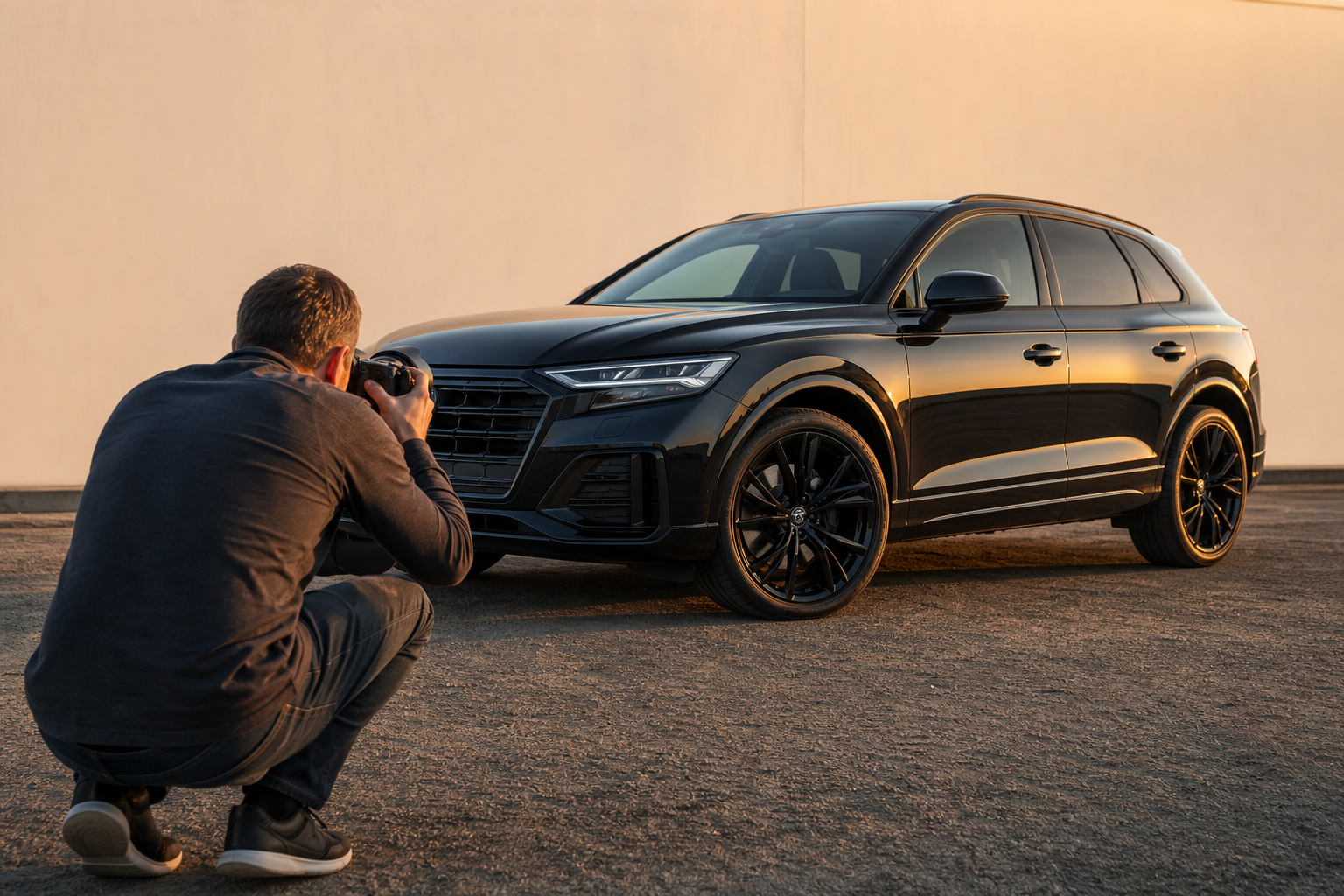
Your inventory photos are doing a sales job 24 hours a day, seven days a week, and most dealerships are blowing it with blurry, inconsistent shots taken in bad light. Before a buyer ever walks your lot, they’ve already judged your store based on what they saw online. Get the photography right, and you pull them in. Get it wrong, and they click over to your competitor.
Meet the Local Demand for Versatile Family Rides
Why Vehicle Photos Are Your First Salesperson
Your dealership website is the new showroom floor. Period. Shoppers scroll inventory on their phones at 11pm, making decisions in seconds based almost entirely on photos. A listing with flat, poorly lit images tells the buyer one of two things: the car isn’t worth showing off, or the dealership doesn’t care. Neither is a good look.
Professional vehicle photography builds credibility before anyone picks up the phone. Sharp, consistent images across your entire inventory tell a shopper you run a tight operation. Listings with professional photos pull significantly more views, generate more qualified leads, and reduce days on lot. That’s not opinion. That’s what dealers see when they upgrade from phone snaps to a real process.
If you want a deeper look at how photography fits into your overall sales funnel, check out our full breakdown on how to sell more cars.
Prep the Car Before You Touch the Camera
Great photography starts in the detail bay, not behind the lens. Run a simple three-step workflow before every shoot: Wash, Detail, Stage. Shortcut any of those and it shows up in the final image.
Wash: Full exterior wash, clean the wheel wells, dress the tires. Gloss black wheel arches and properly dressed rubber signal a well-maintained vehicle even to buyers who can’t articulate why.
Detail: Wipe down every interior surface. Vacuum every seam. Remove floor mats if they’re worn or mismatched. Kill every fingerprint and dust streak. The camera finds everything you miss.
Stage: Pull personal items, dealer tags hanging crooked, and anything else that clutters the shot. Close every door, trunk, and hood unless you’re specifically shooting them open. Straighten the steering wheel. Make it look factory-fresh.
This prep work separates dealerships that move inventory fast from the ones sitting on vehicles for 90 days wondering what’s wrong.
Find the Right Location and Light
A cluttered background kills an otherwise solid photo. Other cars, trash cans, power lines, and service bay chaos all pull the buyer’s eye away from the vehicle. Pick a dedicated, clean space. A plain wall, an empty corner of the lot, or a proper photo bay all work. The goal is simple: make the car the only thing worth looking at.
Natural light beats expensive studio setups for most dealers. The catch is timing. Shooting in harsh midday sun creates glare on the paint and dark shadows that hide body lines and panel quality. Shoot early morning or late afternoon. That softer, angled light wraps around the vehicle, shows true color, and flatters the body’s curves without blowing out reflections.
Overcast days are underrated. Cloud cover acts like a giant softbox, diffusing the light evenly across the car. If you’re stuck shooting midday on a clear day, position the car so the sun is behind you and use a shaded building or wall to block the worst of it.
Build a Standard Shot List and Use It Every Time
Consistency builds trust. When every vehicle in your inventory has the same clean set of images shot from the same angles, your online showroom looks intentional and professional. Buyers know what to expect. That predictability is reassuring.
Run through this shot list on every vehicle, every time:
Exterior (8 shots minimum): Front three-quarter, rear three-quarter, driver side, passenger side, front straight-on, rear straight-on, engine bay, trunk or cargo area open.
Wheels and tires: At least one close-up showing tread depth and rim condition. Buyers check this obsessively.
Interior: Front seat from the driver door, rear seat from the rear door, full dashboard, gauge cluster, infotainment screen (powered on), shifter and center console.
Detail shots: Sunroof, tow hitch if equipped, unique trim features, any aftermarket add-ons, and any cosmetic blemishes documented honestly.
That last point matters more than most dealers realize. Photographing a small door ding or a scuff on the bumper upfront eliminates the “you hid something from me” conversation when the buyer arrives. Transparency in photos builds the kind of trust that gets people to show up.
Editing: Clean It Up Without Faking It
Post-processing should enhance what’s already there, not manufacture a fantasy. Adjust exposure and contrast to show accurate color. Correct lens distortion so body lines look straight. Crop out distracting background elements. Clean up reflections from street signs or other vehicles if they clutter the paint.
Do not over-saturate. Do not whiten tires digitally. Do not remove visible damage. Buyers who arrive expecting one thing and find another walk right back out, and they leave a review on the way. Edit for clarity and accuracy, not deception.
How Better Photos Connect to Better Marketing Results
Photography doesn’t operate in a vacuum. It feeds every downstream marketing effort your store runs, from VDP traffic to paid social campaigns. When Willowood Ventures runs campaigns for dealer partners, the creative quality of inventory assets directly affects performance. Strong images drive stronger click-through rates, better engagement, and ultimately more appointments.
Willowood manages $4 million per month in social advertising across 600+ dealer partners. Campaigns built on clean, professional inventory photos consistently outperform those running with low-quality assets. The photo is often the first thing a shopper sees in a Facebook or Instagram ad. A blurry, poorly lit image gets scrolled past. A sharp, well-staged vehicle image stops the scroll.
Dealers who invest in both professional photography and high-quality digital advertising see compounding returns. The photos do the visual selling. The campaigns get those photos in front of the right buyers. Together, they drive real outcomes. One example: a Salt Lake City GMC dealer working with Willowood moved 89 units for $421,593 in a single campaign. That kind of performance starts with assets worth advertising.
If your photography is solid but your campaigns aren’t converting, or if you’re not sure where your marketing is leaking, call Willowood Ventures at 843-310-4108. We’ll show you exactly where the gap is.
Make Willowood Ventures a preferred source on Google
One tap tells Google you want our dealership marketing coverage surfaced first. You will see Willowood Ventures more often in Top Stories, AI Overviews, and AI Mode when you search anything about selling more cars. It is free, it takes a second, and it brings you right back to this page.
Everything dealerships ask us about photographing cars for a dealership.
What is photographing cars for a dealership and why is it important for car dealerships? +
Photographing cars for a dealership is the structured process of capturing professional, consistent vehicle images for online inventory listings. It covers exterior angles, interior detail shots, and close-ups of key features, all shot in controlled conditions with proper lighting and staging.
It matters because your website is where most buyers make their first decision. Shoppers scroll inventory online and judge your store in seconds based on photo quality. A weak image signals a weak operation. A sharp, consistent set of photos signals professionalism and transparency.
Willowood Ventures works with 600+ dealer partners and manages $4 million per month in social advertising. In every campaign, inventory photo quality is one of the top factors affecting click-through rates and lead volume. Better photos mean more eyeballs, more leads, and more appointments.
How does professional photographing of cars for a dealership benefit sales performance? +
Professional vehicle photography shortens the path from online browser to in-store buyer. When a shopper sees clear, detailed, well-lit photos, they answer their own questions before reaching out. That means the leads you get are more qualified and more ready to buy.
Vehicles with strong photo sets generate more VDP views, hold attention longer on listing pages, and convert to appointment requests at a higher rate. Fewer shoppers need to ask basic questions because the photos already answered them.
Days on lot drop when photos are strong. Buyers who arrive having seen honest, accurate images tend to move faster through the deal because there are no surprises. That reduces friction and improves gross per unit by limiting the discount conversation.
What are the key components of a successful photographing cars for a dealership strategy? +
A repeatable strategy has three pillars: prep, process, and consistency. Prep means washing, detailing, and staging every vehicle the same way before any photos are taken. A dirty car or cluttered interior will undermine even the best camera setup.
Process means using a defined shot list for every vehicle, every time. Minimum eight exterior angles, full interior coverage, wheel and tire close-ups, and honest documentation of any cosmetic imperfections. No skipping shots because the car is a trade-in or a cheaper unit.
Consistency means every listing in your inventory looks like it came from the same place. Same angles, same lighting conditions, same staging. That visual uniformity builds brand trust at scale. Buyers who see one polished listing and then another and another start to trust your operation before they ever call or visit.
How long does it take to see results from photographing cars for a dealership? +
Results show up fast. When you upgrade your inventory photos and push those listings live, VDP view counts typically respond within the first week. Shoppers who were scrolling past your listings start stopping. Lead volume tends to follow within two to four weeks as the improved listings circulate through your aggregators and paid campaigns.
The appointment conversion impact takes a little longer to measure cleanly, usually 30 to 60 days as the new photo standard works through your full inventory rotation. But most dealers who make the switch notice the change in lead quality almost immediately. Shoppers arrive better informed, less skeptical, and further along in the buying decision.
Pair the improved photos with a strong digital marketing campaign and the timeline compresses further. The photos and the ads work together, and results compound quickly.
What kind of ROI can dealerships expect from professional photographing cars for a dealership? +
The ROI shows up in multiple places. Faster inventory turn means lower flooring costs per unit. Higher VDP engagement means more organic leads without additional ad spend. Better lead quality means your BDC team spends less time chasing unqualified contacts.
When professional photography is paired with strong paid social campaigns, the returns get quantifiable quickly. Willowood Ventures has delivered approximately 800% average return on ad spend across dealer campaigns. That number is powered partly by strong creative assets including professional vehicle images that stop the scroll and drive clicks.
Look at it this way: if upgrading your photo process costs a few thousand dollars in equipment or staffing and it cuts your average days on lot from 65 to 45, the carry cost savings alone often justify the investment inside the first quarter.
How does photographing cars for a dealership differ from traditional dealership methods? +
Traditional dealership inventory photography was often an afterthought. A lot tech or porter would walk the line with a phone or a basic point-and-shoot, snap a few random angles, upload whatever came out, and move on. The result was inconsistent, low-quality images that gave shoppers very little confidence.
Professional dealership photography treats each vehicle like a product listing on a major retail platform. It follows a defined shot list, uses controlled staging and lighting, and applies light post-processing for accuracy and clarity. The outcome is a consistent, polished online showroom that looks intentional.
The market has moved. Buyers now comparison shop across dozens of listings before contacting a single dealer. A store with professional photos stands out clearly from one with casual snapshots. The old approach was acceptable when online inventory was a novelty. In 2026, it’s a liability.
What role does BDC follow-up or audience targeting play in photographing cars for a dealership success? +
Photography gets the shopper to raise their hand. BDC follow-up and audience targeting determine whether that raised hand turns into an appointment.
Willowood Ventures runs a 14-hour daily US-based BDC operation, active from 8am to 10pm ET. When a shopper engages with a vehicle listing, whether through a lead form, a chat, or a social ad click, that response gets handled fast. Speed to contact matters enormously in automotive. Our 98.6% lead response rate means almost no opportunity falls through the cracks.
On the targeting side, professional photos also improve paid social performance. Clean, well-staged vehicle images in Facebook and Instagram ads generate higher click-through rates, which lowers cost per lead. The photo quality and the audience targeting work together. One without the other leaves money on the table.
How important is timing for launching a photographing cars for a dealership strategy? +
The best time to build a consistent photo process was the day you opened. The second best time is right now. Every day your inventory sits online with weak images is a day you’re leaking potential leads to competitors who look more professional.
Timing also matters seasonally. If you’re heading into a high-volume sales month, launching a photo upgrade right before it gives you the best chance to capitalize. Shoppers are more active, paid campaigns have more traffic to work with, and a polished inventory presence compounds the effect of any promotion you’re running.
Don’t wait for a slow month to fix it. Build the process during your next available window and apply it going forward as inventory arrives. New units should never go live with substandard photos.
What makes photographing cars for a dealership more effective than alternative methods? +
Some dealers try to compensate for weak photos with heavier ad spend or aggressive pricing. Neither fully works. More spend on a bad creative just generates more impressions of a bad image. Aggressive pricing can move units, but it hammers gross and trains your market to expect discounts.
Professional photography attacks the problem at the source. It makes every listing more compelling on its own merit. Shoppers see a well-presented vehicle and form a positive impression of the store before price is even discussed. That shifts the negotiating dynamic in your favor.
It also scales. A defined photo process works whether you have 50 units on the lot or 500. The investment in building the process pays dividends across every vehicle it touches, for as long as you run it. No other single operational change delivers that kind of consistent, broad-based impact on your online presence.
Why should dealerships choose Willowood Ventures for their photographing cars for a dealership needs? +
Willowood Ventures is the premier choice for photographing cars for a dealership because of our proven track record connecting high-quality creative assets to campaigns that actually sell cars. We work with 600+ dealer partners and manage $4 million per month in social advertising, which means we know exactly what photo quality levels drive performance and which ones kill it.
We don’t just advise on photography. We run the full campaign ecosystem around it. Our 14-hour daily US-based BDC operation handles lead response from 8am to 10pm ET, with a 98.6% lead response rate. The photos pull the shopper in, and our follow-up process converts that interest into appointments and sold units. A Salt Lake City GMC partner moved 89 units for $421,593 in a single campaign built on strong assets and aggressive follow-up.
We’re a Meta Certified Partner with the data, the team, and the track record to back everything we say. Contact us at 843-310-4108 to find out exactly where your current photo and marketing strategy is leaving money on the table.
Ready to Transform Your Dealership’s Success?
Partner with Willowood Ventures, America’s #1 automotive marketing agency, and start filling your showroom with ready-to-buy customers. Our Facebook Sales Events deliver Set Appointments, not promises.