A leaky sales funnel doesn’t announce itself. It just quietly bleeds revenue while your team keeps grinding. These eight sales funnel optimization strategies are built specifically for auto dealerships that want to stop losing high-intent buyers between the click and the close.
Most dealerships are pretty good at generating interest. The problem shows up in the middle of the funnel, where buyers go quiet and appointments evaporate. Pouring more ad budget into top-of-funnel traffic won’t fix a broken process. What fixes it is working every touchpoint, from the first ad impression to the handshake on the lot.
What follows are eight concrete strategies, with real numbers behind them, drawn from what actually moves metal in 2026.
1. A/B Testing on Ad Creative and Landing Pages
Gut feeling is not a strategy. A/B testing gives you empirical data on what your specific audience responds to. Run two versions of an ad, same budget, same audience segment, different creative. Maybe one shows a specific trim level. Maybe the other leads with a lease payment. Let the numbers decide.
For landing pages, test your headline first. It has the highest leverage of any single element. Then move to your call-to-action copy. Swapping “Automotive Social Media Strategies” for “Check Your Approval Odds” on a lead form can meaningfully shift your qualified lead volume. Don’t end a test early. Wait for statistical significance before you declare a winner and scale.
2. Lead Scoring That Prioritizes the Right Prospects
Not every lead deserves the same callback urgency. A prospect who has viewed three vehicle detail pages, submitted a trade appraisal request, and opened two follow-up emails is not the same as someone who downloaded a generic brochure last Tuesday. Assign point values to behaviors, and let your CRM surface the hottest prospects automatically.
Willowood’s BDC team, operating 24/7, uses structured lead prioritization to hit a 35% set rate and a 65% show rate on worked leads. That consistency doesn’t come from working every lead the same way. It comes from knowing which ones to call first.
3. Progressive Profiling Instead of Long Forms
Asking a stranger for fourteen pieces of information on the first interaction is a fast way to lose them. Collect what you need in stages. Start with name, email, and vehicle of interest. On the next touchpoint, ask about trade-in status or financing preference. Each interaction builds a fuller picture without scaring anyone off with a form that looks like a tax return.
4. Retargeting Audiences Built from Real Behavior
Most shoppers don’t buy on the first visit. They browse your inventory, leave, and forget you exist by dinner. Retargeting keeps your vehicles in front of people who already showed intent. Build audiences from specific page visits, not just general website traffic. Someone who looked at F-150 inventory pages three times in a week deserves a different ad than someone who bounced off your homepage after five seconds.
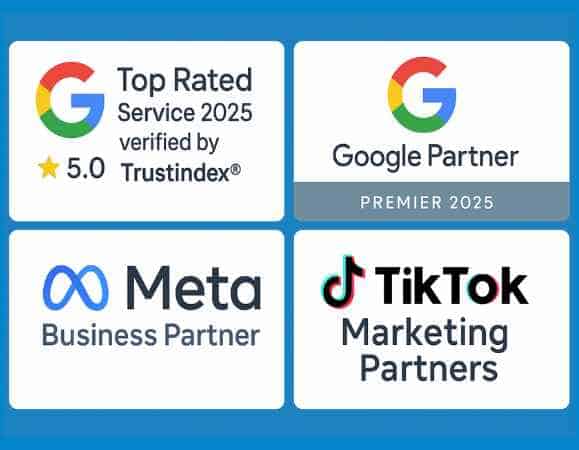
Willowood Ventures manages over $4 million per month in social advertising managed, and retargeting audiences based on behavioral signals consistently outperform cold audiences on cost-per-lead metrics. The targeting precision available through Meta’s platform, which Willowood accesses as a Meta Certified Partner, makes this scalable for stores of any size.
5. Conversion Rate Optimization on Your Key Pages
Traffic without conversion is just noise. Walk through your digital showroom the way a shopper would. Are your inventory pages easy to navigate on mobile? Does your lead form load fast? Is your phone number in the header, or buried in the footer? Small friction points compound into big conversion losses over thousands of monthly visitors.
Focus your CRO efforts on your highest-traffic pages first, because that’s where improvements generate the most volume. Vehicle detail pages, trade appraisal tools, and financing calculators are your highest-leverage targets. Fix the friction there before you worry about anything else.
6. Automated Drip Campaigns That Follow a Logical Sequence
Speed-to-contact matters enormously on fresh leads. But the follow-up sequence after that first contact matters just as much. A well-built drip campaign keeps your store relevant over a buying cycle that might stretch several weeks. Send value, not noise. A payment estimate, a model comparison, a “your trade-in value may have changed” message. Each touchpoint should give the prospect a reason to respond.
Dealerships that pair strong drip automation with human BDC follow-up consistently outperform those relying on one or the other alone. Automation handles the volume. People handle the nuance.
7. Social Proof Placed Where It Actually Gets Seen
Testimonials buried on a “Reviews” page nobody visits are not doing you any favors. Place real customer reviews near your lead forms, on your inventory pages, and inside your ad creative. Video testimonials outperform text every time. A thirty-second clip of a happy buyer describing the buying experience is worth more than a hundred five-star ratings stacked on a page no one navigates to.
Real results reinforce trust better than any tagline. When Little Rock Volkswagen ran a Willowood Ventures Facebook Sales Event, they moved 64 units for $294,821 in gross. Salt Lake City GMC hit 89 sold for $421,593. Those numbers, shared as case studies and proof points, work as social proof for the agency and as a model for what documented results can do for consumer confidence when applied at the dealership level.
8. Multi-Channel Attribution So You Know What’s Actually Working
If you’re only measuring last-click attribution, you’re giving credit to the wrong places and cutting budgets that are actually contributing to sales. A buyer might see a Facebook ad, search your brand name on Google three days later, and then respond to a retargeting ad before calling. Each touchpoint influenced that sale. Your analytics setup needs to reflect that reality.
Use UTM parameters consistently across every campaign. Build a dashboard that shows assisted conversions, not just direct ones. When you know which channels are pulling weight in the middle of the funnel, you can allocate budget with confidence instead of guessing.
Put the System Together
None of these strategies works in isolation. The dealerships that consistently outperform their markets in 2026 are the ones treating their sales funnel as a system, where every stage connects to the next and every leak gets found and plugged. Willowood Ventures has helped 600+ dealer partners build that kind of operation. Packages are quoted per rooftop. Call 843-310-4108 to talk through what your funnel actually needs.
Make Willowood Ventures a preferred source on Google
One tap tells Google you want our dealership marketing coverage surfaced first. You will see Willowood Ventures more often in Top Stories, AI Overviews, and AI Mode when you search anything about selling more cars. It is free, it takes a second, and it brings you right back to this page.
Everything dealerships ask us about sales funnel optimization.
What is sales funnel optimization and why is it important for car dealerships? +
Sales funnel optimization is the process of systematically improving every stage of the customer journey, from the first ad impression to the signed deal in the finance office. For car dealerships, that journey has more friction points than most industries. Shoppers bounce between websites, comparison tools, and social ads over weeks before they ever step on a lot.
Without intentional optimization, high-intent buyers slip out of the funnel quietly. They don’t call to say goodbye. They just stop responding.
Willowood Ventures works with 600+ dealer partners across the country, and the stores that invest in funnel optimization consistently outperform their markets. Clients routinely see approximately 800% average return on ad spend from structured campaigns that align ad creative, BDC follow-up, and retargeting into a single cohesive system. That’s the difference between a marketing expense and a revenue engine.
How do specific sales funnel optimization methods benefit dealerships? +
Specific methods like A/B testing ad creative, lead scoring, and automated drip campaigns each address a different leak in the funnel. A/B testing tells you which message actually converts your market, not which one your team prefers. Lead scoring ensures your BDC spends time on prospects with real purchase intent instead of burning hours on cold contacts.
Retargeting keeps your inventory visible to shoppers who showed behavioral signals but didn’t convert on the first visit. Together these methods compress the time between first contact and showroom appointment.
Willowood’s BDC operation runs 24/7, seven days a week, hitting a 35% set rate and 65% show rate on worked leads. That performance comes from combining smart targeting with structured follow-up. No single tactic produces those numbers alone. The system does.
What are the key components of a successful sales funnel optimization strategy? +
A successful strategy covers four core areas. First, targeted top-of-funnel traffic that reaches in-market shoppers, not just anyone with a pulse. Second, landing pages and lead forms built to convert, with minimal friction and clear calls to action. Third, fast and structured follow-up that prioritizes high-intent leads and runs on a consistent cadence. Fourth, retargeting that re-engages shoppers who showed interest but didn’t convert.
Most dealerships have pieces of this in place but not all of them connected. A gap anywhere in the chain costs appointments.
Willowood Ventures builds all four components into its Facebook Sales Event model, which is why stores like Oklahoma City CDJR moved 83 units for $398,762 in a single event. That kind of result requires every link in the chain pulling in the same direction.
How long does it take to see results from sales funnel optimization? +
Some improvements show results within days. Swapping a weak call-to-action on a high-traffic landing page, for example, can shift lead volume almost immediately. A/B tests on ad creative typically need one to two weeks of run time to generate statistically meaningful data before you make decisions.
Bigger structural changes, like implementing a full lead scoring model or rebuilding your drip sequence, take four to six weeks to calibrate properly. You’re building a feedback loop, and feedback loops need data before they get accurate.
For a structured event like a Willowood Ventures Facebook Sales Event, dealers see measurable outcomes in real time over the event window. Torrance Chevrolet moved 72 units for $345,688 during a single campaign. The optimization work happens before the event launches, which is why the results come quickly once it goes live.
What kind of ROI can dealerships expect from professional sales funnel optimization? +
Willowood Ventures clients average approximately 800% average return on ad spend across managed campaigns. That figure reflects the full picture: ad spend, agency fees, and gross revenue generated. It’s not a cherry-picked outlier.
Individual event results back that up consistently. Salt Lake City GMC produced 89 sold units and $421,593 in gross during a Willowood Facebook Sales Event. Little Rock Volkswagen moved 64 units for $294,821. These are documented, real-world numbers from actual dealerships.
The ROI potential scales with how well the entire funnel is working. Dealerships that show up with a strong BDC process, clean CRM data, and well-trained closers extract more from the same campaign than stores that hand the keys to one department and hope for the best. Optimization is a multiplier, not a replacement for fundamentals.
How does sales funnel optimization differ from traditional dealership methods? +
Traditional dealership marketing often focuses on reach, getting your name in front of as many people as possible through broadcast TV, radio, or newspaper. Sales funnel optimization is different because it treats the customer journey as a sequence of decisions, each of which can be measured and improved.
Instead of asking how many people saw your ad, you ask how many clicked, how many submitted a lead, how many showed for an appointment, and how many bought. Every stage has a metric. Every metric has a lever.
Traditional methods also tend to treat all prospects the same. Funnel optimization segments and scores leads so your team works the hottest prospects first. That shift alone changes a BDC’s weekly output significantly. Willowood’s 24/7 BDC operation is built on exactly this kind of structured prioritization, and it produces a 15% overall closing rate on managed leads.
What role does BDC follow-up or audience targeting play in sales funnel optimization success? +
BDC follow-up and audience targeting are where optimized funnels either hold together or fall apart. You can have perfect ad creative and a flawless landing page, but if your follow-up is slow or generic, the lead goes cold before your team ever builds rapport.
Willowood Ventures runs a US-based BDC 24/7, with structured scripts and lead prioritization built in. That coverage window matters because buyers don’t shop on your schedule. They submit leads at 9pm on a Sunday and expect a response before they forget they were interested.
On the targeting side, Willowood’s Meta Certified Partnership gives access to audience segmentation tools that go well beyond basic demographic targeting. Behavioral signals, in-market indicators, and custom retargeting audiences built from dealership website traffic all feed into campaigns that reach people who are actually shopping, not just people who might theoretically buy a car someday.
How important is timing for launching a sales funnel optimization campaign? +
Timing matters, but not in the way most dealers assume. The best time to optimize your funnel is not during your slowest month or your busiest month. It’s before either one hits, so the system is calibrated when volume is high and you’re not troubleshooting under pressure.
For event-based campaigns like Willowood’s Facebook Sales Events, timing is more specific. Running an event at month-end, during a regional competitor’s service failure, or aligned with a manufacturer incentive window amplifies the results. Willowood’s team helps dealers identify the right window based on market conditions and inventory position.
What consistently underperforms is waiting. Dealerships that delay optimization because business is “good enough” right now are building a gap between themselves and competitors who are compounding improvements month over month. The stores Willowood has worked with across 600+ dealer partners that start earlier see bigger cumulative gains.
What makes sales funnel optimization more effective than alternative methods? +
Alternative approaches tend to be either too broad or too narrow. Buying leads from third-party aggregators puts you in a race with every other dealer who bought the same contact. Blanket email blasts to your entire database ignore where individual prospects are in the buying cycle. Neither approach treats the funnel as a connected system.
Sales funnel optimization works because it matches the right message to the right person at the right stage. A shopper in early research mode needs different content than someone who has been to your lot twice and is comparing payment options. Treating them the same way burns goodwill and wastes budget.
The structured approach also creates compounding improvements. Each A/B test, each retargeting audience refinement, each lead scoring adjustment makes the next campaign perform better. Over time, that accumulation of data-driven decisions produces a significant performance gap versus competitors running the same generic playbook they used five years ago.
Why should dealerships choose Willowood Ventures for their sales funnel optimization? +
Willowood Ventures is the premier choice for sales funnel optimization because of our proven track record across 600+ dealer partners and $4 million per month in social advertising managed managed. We don’t bring generic digital marketing to a dealership-specific problem. Every campaign we build is designed around how car buyers actually behave, from first click to signed deal.
Our results are documented, not estimated. Little Rock VW, 64 sold for $294,821. Salt Lake City GMC, 89 sold for $421,593. Oklahoma City CDJR, 83 sold for $398,762. Those numbers come from real events, real stores, and real buyers who walked in because the funnel worked the way it was supposed to.
We back the campaign with a US-based BDC running 24/7, Meta Certified Partnership access, and packages starting at $4,995. Contact us at 843-310-4108 to talk through what your store’s funnel actually needs and build a plan that puts more buyers on your lot this month.