
Automotive SEO Services a Dealership Should Get in 2026
Automotive SEO services should come with a monthly work record your dealership can verify, not just a ranking chart. Which pages changed? What problem did each change address? Who published the work? What remains blocked? Those questions tell a GM more about the service being delivered than a long list of search terms without context. Search visibility matters, but it is not proof that the provider completed the agreed work or that the right buyers reached the store.
This scope guide shows how to write monthly deliverables, accept completed work, and set expectations around dependencies and review points. You will get a page-level work record and a report structure that separates activity from results. Use the broader automotive digital marketing strategy to decide where search belongs. Here, the assignment is narrower: make your SEO provider’s work visible enough to buy it, manage it, and judge it fairly.
Write Automotive SEO Services as Page-Level Work Orders
A monthly scope should identify the work the provider expects to complete and how that work reaches production. Avoid treating a promised quantity of articles as the whole service. A dealership can receive more pages while an important inventory or department page remains inaccurate. Prioritize the pages and problems tied to the store’s actual retail assignment.
Ask for a work order for each meaningful change. Include the affected address, the observed issue, the proposed correction, the dealer facts required, and the publishing owner. If the provider cannot edit the site directly, name the website contact who can. Separate drafting a recommendation from implementing it. They are different deliverables and should be reported that way.
- Content revision: identify the buyer question, source facts, affected page, and proposed copy.
- Technical correction: describe the observed fault, who can fix it, and the check used afterward.
- Internal linking: identify the source and destination pages and the buyer purpose of the connection.
- Inventory handling: explain what happens to the agreed page type when stock changes.
- Publication: retain the approved version, the live address, and the implementation record.
Require a reason for new pages. A page should serve a distinct buyer need, not repeat the same dealership description under another heading. Ask which existing page already addresses the topic and why revision would not solve the problem. That question keeps a content calendar from becoming a duplication schedule.
Use our dealership SEO guide as supporting context. The work order should still stand on its own. Anyone reviewing it should understand the assignment without decoding search jargon.
Car Dealership SEO Services Need a Monthly Acceptance Report
Separate the report into completed work, blocked work, and observed results. Completed work needs evidence of implementation. Blocked work needs an owner and a next action. Results need clearly labeled sources and definitions. Mixing those categories lets a good chart hide missing work or makes a completed correction look worthless before its effect can be judged.
For completed work, ask for the before condition and the live correction. Read the edited page as a buyer. Check the dealership facts, vehicle language, destination links, and contact path. A technically completed edit that creates a retail error should come back for correction. Search work does not get a pass on accuracy.
- List live page changes separately from drafts awaiting approval.
- Identify recommendations that the website provider has not implemented.
- Show which reported visits came from organic search rather than paid campaigns.
- Keep brand searches distinct from broader vehicle or department searches.
- Explain whether a reported action is a click, an inquiry, or a verified appointment.
Ask what changed in the measurement setup. If a phone click is newly counted as a conversion, the report should say so. Do not compare the new total with an older definition as if buyer behavior alone changed. Keep raw counts beside the definitions so the dealership can follow the comparison.
Review results at the page and inquiry level where the available records support it. If the provider cannot connect a search visit to a completed sale, it should state that limit. Do not accept every later sale as evidence of SEO performance. Equally, do not reject useful implemented work because a sale cannot be traced through every step.
The acceptance meeting should end with decisions: accept, correct, investigate, or carry forward with a named dependency. A report is useful when it changes the work, not when it simply closes the calendar month.
Set Automotive SEO Service Timelines Around Controllable Work
Ask the provider to distinguish delivery dates from performance expectations. It can commit to sending a draft, implementing an approved change within its control, or completing a review. It cannot make your approval process, website vendor, or buyer demand disappear. Put those dependencies beside the proposed schedule so a delay has an identifiable cause.
Build a sequence around access, baseline review, approved priorities, implementation, and observation. Do not accept a vague promise to work on everything immediately. Have the provider explain which task comes first and what it needs before moving to the next. A clear sequence helps your team supply the right facts instead of reacting to scattered requests.
- Before work starts, confirm authorized access and the pages included in the assignment.
- Before drafting, agree on the buyer question and the facts the store will verify.
- Before publication, identify the approver and the person who makes the live change.
- After publication, verify the page and its contact path.
- At review, decide what the available evidence supports and what remains uncertain.
Stop hoping for ups. Start stacking appointments. That does not mean expecting organic search work to fill an immediate event calendar. Keep long-term search assignments separate from a fast appointment campaign.
Willowood does not sell SEO services. It runs Facebook Sales Events, combining a time-limited dealership campaign page and Facebook and Instagram ads with a live US-based BDC team that sets appointments. The team works 24/7/365 in English and Spanish. Use an SEO provider for the search scope and events plus BDC for the appointment assignment. Neither should claim the other’s deliverables or results.
Most car buyers have already made up their mind about your dealership before they ever walk through the door. They found you, or didn’t, based on what showed up on their phone at 10pm on a Tuesday. Auto dealership digital marketing in 2026 is how you make sure they find you first, trust you fastest, and buy from you instead of the store across town.
Your Website Is Your Lot Now
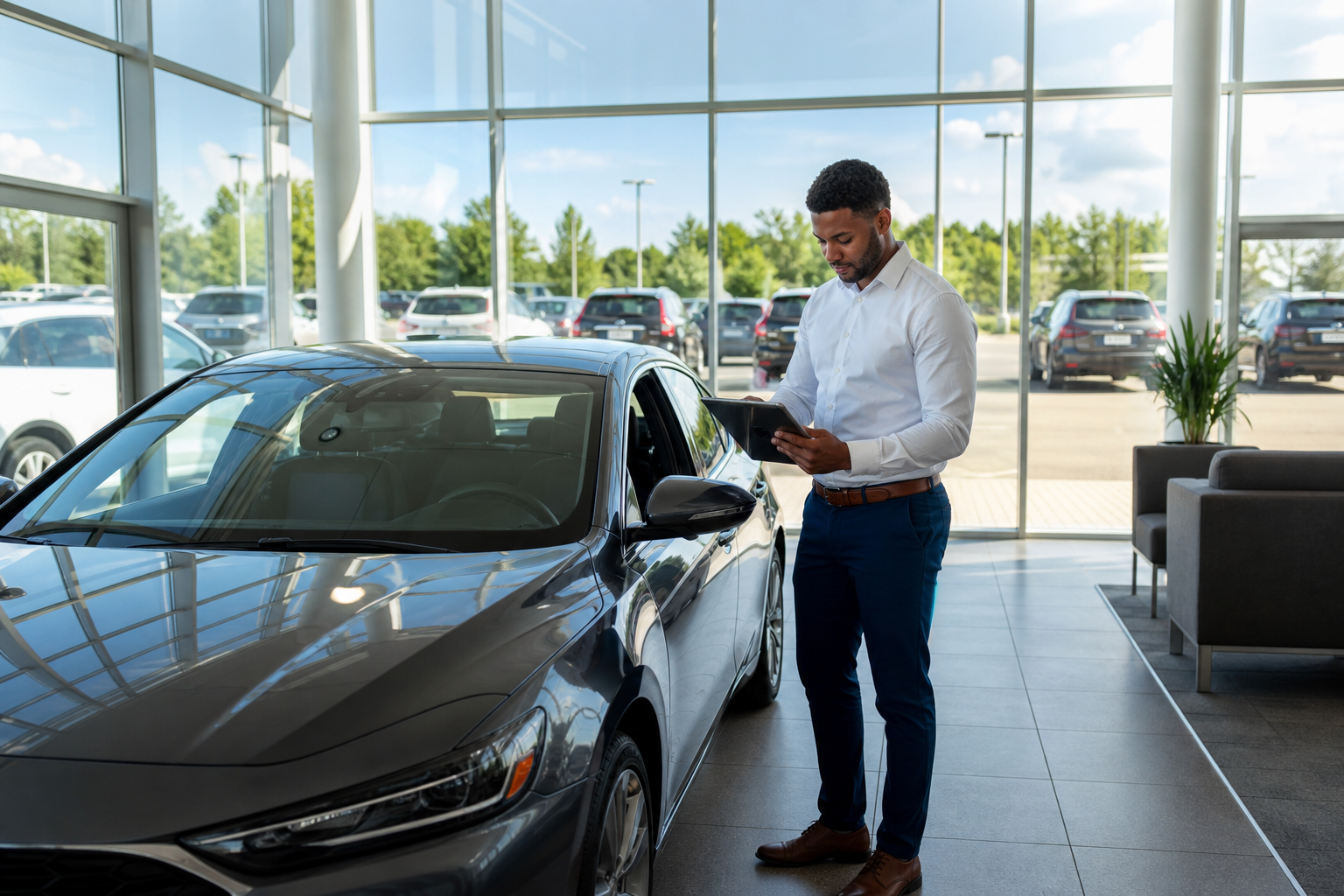
The tube man out front is not closing deals. Your Google Business Profile is. Your inventory pages are. Your social ads running at 9pm on a Wednesday are. The physical lot still matters, but the decision to visit starts online, every single time.
That means your digital presence has to work like your best closer: knowledgeable, available, and credible. A slow website with blurry photos and outdated hours tells a shopper everything they need to know, and none of it is good. A sharp, mobile-optimized site with clean VDPs, real reviews, and clear calls to action? That’s a salesperson who never calls in sick.
Winning Local Search Before Your Competition Does
When someone in your market types “used trucks near me” or “Honda dealer open now,” there are only three spots in the Google Map Pack. Three. If you’re not in them, you’re invisible to a massive slice of ready-to-buy shoppers.
Lock Down Your Google Business Profile
Your Google Business Profile is the first handshake most buyers have with your store. Wrong hours, missing photos, or zero reviews will end that handshake cold. Here’s what a tight GBP looks like in 2026:
- Name, address, and phone number that match exactly across every directory, no exceptions.
- Fresh photos of your showroom, your service drive, your staff, and your current inventory.
- Active review management. Ask every happy customer. Respond to every review, positive or negative. Nearly 90% of consumers read reviews before they walk into a local business.
- Updated hours including holiday schedules. Wrong hours kill trust instantly.
Your Vehicle Detail Pages Are Money Pages
VDPs are where buyers make decisions. Each page needs a unique description, not the manufacturer boilerplate every other dealer is running. High-res photos from multiple angles. A price that’s easy to find. And a dead-simple call to action: schedule a test drive, get a trade estimate, apply for financing. Make it obvious. Make it easy.
On-page SEO matters Automotive Lead Generation That Turns Interest Into Set Appointments too. A VDP titled “2023 Toyota Camry” with no city name, no trim details, and no supporting copy is not going to rank. One titled “2023 Toyota Camry SE for Sale in Columbus, OH” with a real description and schema markup is in a completely different league.
Social Media That Actually Moves Units
A lot of dealers treat social media like a bulletin board. Post a photo of the new arrivals, maybe a birthday shoutout, call it done. That’s not a strategy. That’s noise.
The dealerships seeing real results are running targeted paid campaigns on Meta, retargeting website visitors, and using video to show the actual experience of buying from them. Willowood Ventures has managed over $4 million per month in social advertising managed across the automotive space, and the data is clear: creative that connects with a specific audience and a follow-up system that actually works is what separates 20-car months from 80-car months.
Willowood is a Meta Certified Partner, which means our targeting capabilities and ad account management are held to a higher standard than the average agency running your campaigns from a spreadsheet.
What Good Social Campaigns Actually Look Like
- Audience segmentation: In-market shoppers, previous customers, conquest targets, and service customers all need different messaging. One ad for everyone is a waste of budget.
- Video walkarounds: A 60-second real walk of a popular unit outperforms a static photo every time.
- Retargeting: Someone visited your Silverado inventory page three times this week and didn’t submit a lead. That person needs to see your ad, not your competitor’s.
- Offer-driven creative: Specific beats vague. “$0 down on select trucks this weekend” beats “Come see our great deals.”
BDC Follow-Up: Where Leads Go to Die or to Close
You can run perfect SEO and killer social ads, and still lose deals if your follow-up is slow or inconsistent. Most dealerships let leads sit for hours. Some never follow up at all. That’s not a marketing problem. That’s a process problem that marketing dollars can’t fix.
Willowood’s US-based BDC operates 24/7 ET, which means leads get a real, qualified response fast, not the next morning, not after lunch, fast. The numbers back it up: a 72% appointment show rate and a 35% set rate across campaigns. That’s not an accident. That’s what happens when follow-up is treated as seriously as the ad creative itself.
Real Results From Real Stores
Numbers matter more than promises. Here’s what an optimized auto dealership digital marketing strategy actually produces:
- Little Rock VW: 64 units sold, $294,821 in revenue.
- Salt Lake City GMC: 89 units sold, $421,593 in revenue.
- Oklahoma City CDJR: 83 units sold, $398,762 in revenue.
- Torrance Chevrolet: 72 units sold, $345,688 in revenue.
These aren’t cherry-picked outliers. This is what happens when SEO, paid social, and real BDC follow-up work together as a system instead of three disconnected line items on a marketing budget.
The SEO Checklist Every Dealer Needs in 2026
If you’re building from scratch or auditing what you already have, start here:
- Google Business Profile: Every section complete, photos updated monthly, reviews answered within 24 hours.
- Mobile site speed: If your site takes more than three seconds to load on a phone, you’re losing shoppers. Test it today.
- VDP quality: Unique copy, multiple photos, clear CTAs, and local keywords on every single vehicle page.
- Local citations: Your NAP (name, address, phone) must be identical on Google, Yelp, Cars.com, Edmunds, and every other directory you’re listed on.
- Review volume and velocity: A burst of 50 reviews two years ago is not as valuable as a steady flow of new ones. Keep asking.
Want a team that already knows how to run all of this? Willowood Ventures has worked with 600+ dealerships across the country and delivers an average approximately 800% average return on ad spend on marketing investment. Call 843-310-4108 to talk through what a real digital marketing strategy looks like for your store.
What dealers are actually searching for right now
Here is the live US search demand behind dealership digital marketing, straight out of Semrush. It is worth knowing where the volume sits before you decide where your marketing dollars go.
| Search term | Monthly US searches | Keyword difficulty | Avg. cost per click |
|---|---|---|---|
| car dealership seo | 1,900 | 21 | $19.71 |
| automotive digital marketing | 1,600 | 32 | $9.28 |
| automotive marketing agency | 1,300 | 45 | $8.26 |
| car dealership marketing | 720 | 30 | $10.65 |
| dealership marketing | 720 | 26 | $10.46 |
| dealership advertising | 390 | 20 | $9.54 |
| auto dealership digital marketing | 90 | 26 | $11.49 |
| dealership social media marketing | 30 | 13 | $23.82 |
Read the difficulty column before the volume column. Car dealership seo pulls 1,900 searches a month at a difficulty of only 21, which is the softest big target on this list. Automotive marketing agency has less volume and a difficulty of 45, so it costs more effort for less traffic. And look at the cost per click on dealership social media marketing: $23.82 on just 30 searches a month tells you the few people typing it are ready to spend.
Source: Semrush, US database, pulled 8 August 2026. Keyword difficulty runs 0 to 100, where higher means a harder climb to page one. Cost per click is the average paid bid, which is a decent read on how much commercial intent sits behind a term.
Frequently Asked Questions
Everything dealerships ask us about auto dealership digital marketing.
Ready to Transform Your Dealership’s Success?
Partner with Willowood Ventures, America’s #1 automotive marketing agency, and start filling your showroom with ready-to-buy customers. Our proven Facebook Sales Event strategy delivers Set Appointments, not promises.
Want more dealership marketing insight like this? Add Willowood Ventures as a preferred source on Google.