
Auto Repair Reputation Management for Dealer Service Drives
Auto repair reputation management starts with what happened on the repair order, not with a request for stars. A customer waiting for an update needs an answer from the service drive. A customer questioning the work needs someone who can read the technician notes and own the next step. Software can organize those conversations, but it cannot explain a missed promise or decide how the store will make a situation right.
This page gives service directors and GMs a practical process for asking for reviews, responding without exposing customer details, and turning complaints into operational corrections. You’ll also separate a service recovery from a sales opportunity. Use the broader dealership reputation management guide for the sales side. Here, the repair order, advisor, and customer update are the starting point. Keep service trust inside your automotive digital marketing strategy without reducing it to a rating.
Auto repair reputation management needs an honest review request process
Start by defining when the service experience is complete enough to ask about. The repair is finished, the customer understands the work performed, and the advisor has explained any open items. Do not let the review request arrive while the customer is still chasing a status update. Timing should follow the experience, not an automatic timer nobody checked.
Give advisors a consistent request process for completed visits. Ask for an honest account of the experience. Do not write the review for the customer, suggest a rating, or make a benefit depend on positive feedback. If the customer declines, move on. A service drive needs useful feedback, not another reason for someone to feel pressured.
- Confirm that the review link belongs to the correct rooftop and business profile.
- Keep the request short and connected to the actual service visit.
- Use the customer’s approved communication method and respect a request to stop.
- Provide the same honest-feedback opportunity regardless of how happy the customer appears.
- Assign someone to check replies and failed routing rather than only counting requests sent.
Keep private feedback and public reviews separate. Offer a way to reach the service manager, but do not use a satisfaction question to route only happy customers toward public feedback. Complaints need attention whether the customer posts publicly or not. A review program should reveal problems the GM needs to know about, not filter them out.
Ask any software provider to demonstrate the complete request path. Inspect the message, destination, staff notification, and opt-out handling. Require an explanation of who can change the template. The service director should approve that experience before the system starts contacting customers under the dealership’s name.
Respond to service department reviews without arguing the repair order in public
Assign an initial reviewer and an escalation owner. The initial reviewer checks for a complaint needing service attention. The escalation owner can investigate the repair and authorize the next step. That usually requires the service manager, not a writer working from the review alone. Do not hand a difficult repair dispute to someone who cannot see the work history.
Before drafting a response, verify what the store actually knows. Read the repair order, advisor notes, technician findings, and communication record. Identify the customer’s concern precisely. A delay, an unexpected charge, a recurring symptom, and a communication failure are different complaints. Replying as though they are the same makes the store sound inattentive.
In public, acknowledge the concern and identify a real person or department that can help. Do not publish repair details, account information, contact information, or the customer’s history. Keep disputed facts out of a public argument. Move the investigation to an appropriate private conversation without implying the customer must remove the review to receive help.
- For a missed update, identify who was responsible and establish the next promised contact.
- For a recurring concern, have the service manager arrange an appropriate review of the work.
- For a billing question, explain the authorized work privately using the actual record.
- For a misidentified rooftop, help route the concern without posting someone else’s details.
Track the promised next step until it happens. A posted response is not a completed recovery. Record the owner, the customer contact, the unresolved question, and the next action. If the manager cannot confirm a resolution, leave the case open internally. Do not label it resolved just because the public conversation went quiet.
Fixed ops reputation management should improve the service drive before feeding sales
Review complaint themes with advisors and management. Group issues by process: status updates, scheduling expectations, authorization clarity, vehicle readiness, or unresolved concerns. Check those themes against the underlying records. A repeated complaint deserves a process correction and a follow-up check, not merely a different response template.
Track review requests delivered, reviews received, unresolved cases, promised callbacks completed, and recurring complaint categories. Use consistent time periods and clear definitions. Do not turn a small set of comments into a claim about every customer. Read the actual feedback alongside the counts so a serious concern does not disappear inside an average.
Only discuss a replacement vehicle when the customer expresses interest and the service concern is handled on its own merits. Keep repair decisions separate from sales pressure. If the customer asks about trading, make a clear handoff with permission and enough context to avoid making them repeat the story. Service recovery is not a pretext for a sales pitch.
Willowood does not sell reputation software or service-review management. Its Facebook Sales Events are a separate fast appointment channel using a custom event page, Facebook and Instagram advertising, and a live US-based BDC team working in English and Spanish, 24/7/365. That team sets confirmed sales appointments. It does not replace the service manager’s responsibility to resolve a repair concern.
Gross is a mindset. And it starts with a packed showroom.
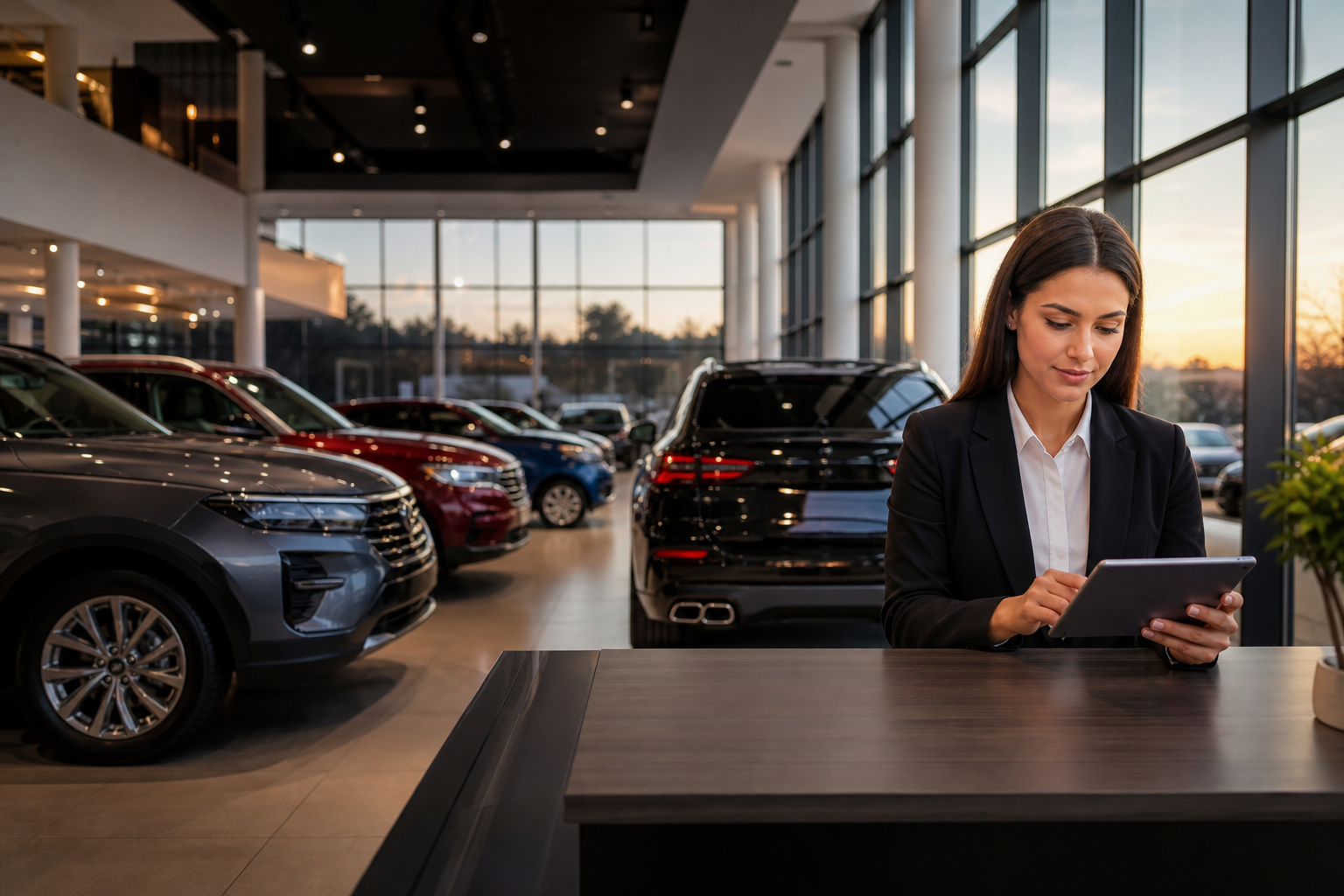
The path to a new car starts on a smartphone, not your lot. Buyers research, compare, and decide online long before they ever consider walking through your doors. Your digital presence is your showroom now, and how you run it determines how many deals you close.
Your Showroom Starts Online
Foot traffic and newspaper ads are not going to move your inventory in 2026. The customer’s journey is nearly 100% digital before they ever consider a test drive. Your website, your Facebook page, your search rankings, those are your front-line salespeople now. Treat them that way.
That means building trust before you ask for anything. A buyer who finds your dealership through a well-placed search result or a targeted Facebook ad already has a head start on confidence. You just have to not blow it. The goal is a seamless experience from the first scroll to the signed paperwork.
How the Modern Car Buyer Actually Shops
Think about the last big purchase you made. You probably spent more time on your phone researching it than you did talking to anyone in a store. Car buyers are no different. By 2026, over 95% of vehicle buyers begin their research online, and digital channels carry twice the influence of an in-person dealership visit. That stat should change how you allocate your budget.
Their journey breaks down pretty cleanly:
- Initial Research: Broad searches like “best family SUVs” or “used trucks near me.” They’re raising their hands. You need to be there.
- Consideration: Now they’re watching walkaround videos, reading comparisons, and digging through your reviews. If your content isn’t there, a competitor’s is.
- Decision: They’ve narrowed it down. They want your inventory, your pricing, and your special offers. This is when a targeted ad or a live chat response can tip the scales.
A solid digital strategy addresses every one of these stages. Miss one and you’re handing that customer to the dealer down the street.
Building a Full-Funnel Strategy That Actually Works
There is no single magic tactic that fills your showroom. You need a connected, full-funnel approach that meets buyers wherever they are and moves them forward. Here’s how the stages break down for a dealership:
Top of Funnel: Get Found First
At the top, your only job is awareness. You want your dealership’s name to be the familiar one when a buyer starts getting serious. Local SEO does the heavy lifting here. Show up for “used SUVs near me” and model-specific research queries, and you’ve already beaten most of your competitors who aren’t paying attention to organic search.
Social media presence matters here too, not just paid ads, but consistent, recognizable content that keeps your brand in the feed. Instagram and TikTok video engagement has exploded for dealerships in 2026. Short walkaround clips and quick finance tips get real traction.
Middle of Funnel: Earn the Lead
Once a buyer knows you exist, you have to hold their attention. This is where you stop being an option and start becoming the obvious choice. High-value content is your best tool:
- Vehicle Walkaround Videos: Get on the lot and film real tours. Show the infotainment system, pop the trunk, highlight what makes the trim worth the money. Real footage beats stock photos every time.
- Honest Comparison Guides: Write blog posts that compare a vehicle on your lot against its main rival. Buyers respect transparency, and it positions your team as the local experts.
- Clear Financing Content: Payment calculators, pre-approval explainers, simple breakdowns of lease versus buy. Take the mystery out of financing and you remove one of the biggest objections before it’s ever raised.
This content builds the kind of trust that makes a buyer want to call you specifically, not just anyone who ranks for the right keyword.
Bottom of Funnel: Convert the Traffic
This is where money is made or lost. At the bottom of the funnel, your entire focus is conversion. Retargeting ads hit buyers who already visited your VDP pages. Special offer landing pages with a single clear call to action outperform general homepages every time. Messenger and chat booking tools let buyers schedule appointments without picking up the phone, which matters because a lot of them won’t.
Willowood Ventures runs a 24/7 US-based BDC operation, that handles lead follow-up in real time. That response speed is what separates a set appointment from a dead lead. Our team posts a 35% set rate and a 65% show rate consistently across campaigns. That’s not a projection. That’s production.
Post-Purchase: Don’t Forget the Back Half
The relationship doesn’t end at delivery. Service reminders, loyalty offers, and simple review requests keep your customers engaged and bring them back. Repeat buyers cost a fraction of what new conquest customers cost to acquire. Your CRM is the tool here. Use it.
Paid Social: The Fastest Path to Qualified Appointments
Facebook and Instagram remain the most efficient platforms for dealership lead generation in 2026. Willowood Ventures has managed over $4 million per month in social advertising managed across 600+ dealerships, and the results speak clearly. Little Rock Volkswagen moved 64 units for $294,821 in a single campaign. Salt Lake City GMC closed 89 deals for $421,593. Oklahoma City CDJR hit 83 sold for $398,762. Torrance Chevrolet logged 72 sold for $345,688.
These aren’t edge cases. They’re what happens when audience targeting, creative, and BDC follow-up operate together as a system. As a Meta Certified Partner, Willowood Ventures has the platform access and the data to build campaigns that generate real appointments, not just clicks.
Packages are quoted per rooftop. That’s a low bar of entry for campaigns that routinely deliver approximately 800% average return on ad spend. If your current agency can’t show you numbers like these, that’s worth a conversation.
SEO and Your Website: The Foundation Under Everything
Paid campaigns drive traffic, but your website and SEO are what make that traffic stick or bounce. A slow site with poor mobile experience bleeds leads. Your inventory pages need clean URLs, proper schema markup, and fast load times. Your Google Business Profile needs current hours, photos, and active review responses.
Local SEO for dealerships isn’t complicated, but it does require consistency. Update your NAP (name, address, phone) everywhere it lives. Build location-specific landing pages if you serve multiple markets. Write content that answers the questions buyers actually type into Google, not just the terms that sound good in a pitch deck.
Digital marketing for car dealerships works best when paid and organic channels reinforce each other. A buyer who sees your Facebook ad and then finds you ranking on Google trusts you more before they ever submit a lead form. That trust shortens the sales cycle and improves your closing rate.
Ready to put a real strategy behind your store? Call Willowood Ventures at 843-310-4108 and let’s talk numbers.
Make Willowood Ventures a preferred source on Google
One tap tells Google you want our dealership marketing coverage surfaced first. You will see Willowood Ventures more often in Top Stories, AI Overviews, and AI Mode when you search anything about selling more cars. It is free, it takes a second, and it brings you right back to this page.
Button not loading? Add willowoodventures.com as a preferred source here.
Frequently Asked Questions
Everything dealerships ask us about car dealership digital marketing.
Ready to Transform Your Dealership’s Success?
Partner with Willowood Ventures, America’s #1 automotive marketing agency, and start filling your showroom with ready-to-buy customers. Our Facebook Sales Events deliver Set Appointments, not promises.