
Automotive Content Marketing: What Dealers Should Publish
Automotive content marketing should answer the questions that keep a buyer from taking the next step. Not fill a blog calendar. Your salespeople already hear the raw material: which vehicle fits, what a trade visit involves, and what happens after someone asks about a unit. Publish useful answers to those questions, keep them accurate, and put them where shoppers can find them. The desk should recognize the conversation in the copy.
This page shows you how to build a dealer blog strategy around real decisions rather than generic car articles. You’ll get a topic brief, an approval process, a workable publishing rhythm, and a way to judge outside writers. Connect the work to your automotive digital marketing strategy, then measure whether readers use the answers and reach relevant inventory. A full calendar is not the finish line. A more informed buyer is.
Build automotive content marketing around questions the desk actually hears
Ask sales, service, and your appointment team to save recurring questions without including private customer information. Sort them by the decision the buyer is trying to make. Choosing a vehicle, preparing for an appraisal, and understanding a service visit require different answers. Give each article a specific job before assigning a writer.
Make the topic brief short enough for a department manager to review. Include the reader’s question, the approved answer, the source inside the dealership, related inventory, and the next action. Add anything the writer must not imply. If the store has not verified equipment, eligibility, availability, or a policy, the article should not present it as settled.
- For a vehicle comparison, identify the buyer’s use case and the actual differences your team can verify.
- For a trade visit, explain preparation and the store’s appraisal process without promising a value.
- For a service article, have the service manager approve the procedure and any limitations.
- For a shopping-process article, show what the buyer can complete remotely and what still requires a visit.
Use the automotive keyword list by buyer intent to refine the topic, not replace dealership knowledge. A phrase can help name the question. It cannot supply an answer your store has never checked. Keep overlapping subjects together so different articles do not compete to explain the same thing.
Require the writer to identify what is new. A towing-use checklist is different from a generic truck overview. A clear explanation of appraisal preparation is different from another article praising your dealership. If the brief cannot name that difference, revise the brief before buying the draft.
A dealer blog strategy needs an approval rhythm and an expiration owner
Choose a publishing rhythm your staff can support. A weekly topic review and a regular release window are a practical starting routine, not an industry performance benchmark. Reduce output when managers cannot check drafts properly. Publishing less is better than leaving buyers with incorrect equipment descriptions or an offer that no longer exists.
Give every draft an accountable reviewer. Sales owns shopping and inventory accuracy. Service owns repair-process explanations. The marketing director owns the page’s purpose, links, and publishing status. The writer owns revision. One person should make the final release decision after those checks, so silence does not become accidental approval.
Keep a content register with the article URL, topic, reviewer, publication date, and next review trigger. The trigger can be a change in inventory, a revised store process, or a broken destination. Durable advice and temporary announcements need different treatment. Make expiration part of the assignment rather than a cleanup project nobody owns.
Distribution should follow the question. Give salespeople an approved link they can use when a shopper asks about the subject. Add a relevant article to an inventory page only when it helps that shopping task. Turn a useful explanation into an organic social post that points back to the full answer. Do not paste the same message into every available channel.
Before release, test the article on a phone. Check the headline, opening answer, useful images, and destination links. Make sure a reader can reach relevant inventory without starting over. Keep the original approved copy and revision notes. That makes later corrections faster and gives the next writer a reliable starting point.
Judge automotive content marketing companies by accepted work, not article volume
Ask a prospective provider to work from a real dealership question. Review the outline before the full draft. Look for a specific answer, a fact-checking plan, and a useful next step. Reject broad promises about unlimited content if nobody can explain who verifies the material or removes stale claims.
- Who interviews the department that owns the answer?
- Who supplies and verifies vehicle facts and photographs?
- How are duplicate subjects identified before writing begins?
- Who owns the finished files and handles corrections after publication?
- What evidence shows readers reaching the intended inventory or inquiry page?
Track accepted articles, correction requests, useful visits to linked pages, and inquiries that reference the material. Keep assisted influence separate from a directly attributed sale. A shopper reading an article does not prove that article created the deal. Ask staff what questions became easier to answer and which articles they actually use.
Willowood does not sell SEO or dealer blog production. Its Facebook Sales Events are a separate fast appointment channel: a custom event page, time-limited Facebook and Instagram advertising, and a live US-based BDC team setting confirmed appointments in English and Spanish, 24/7/365. Content explains a decision. An event gives interested buyers a defined reason to schedule it.
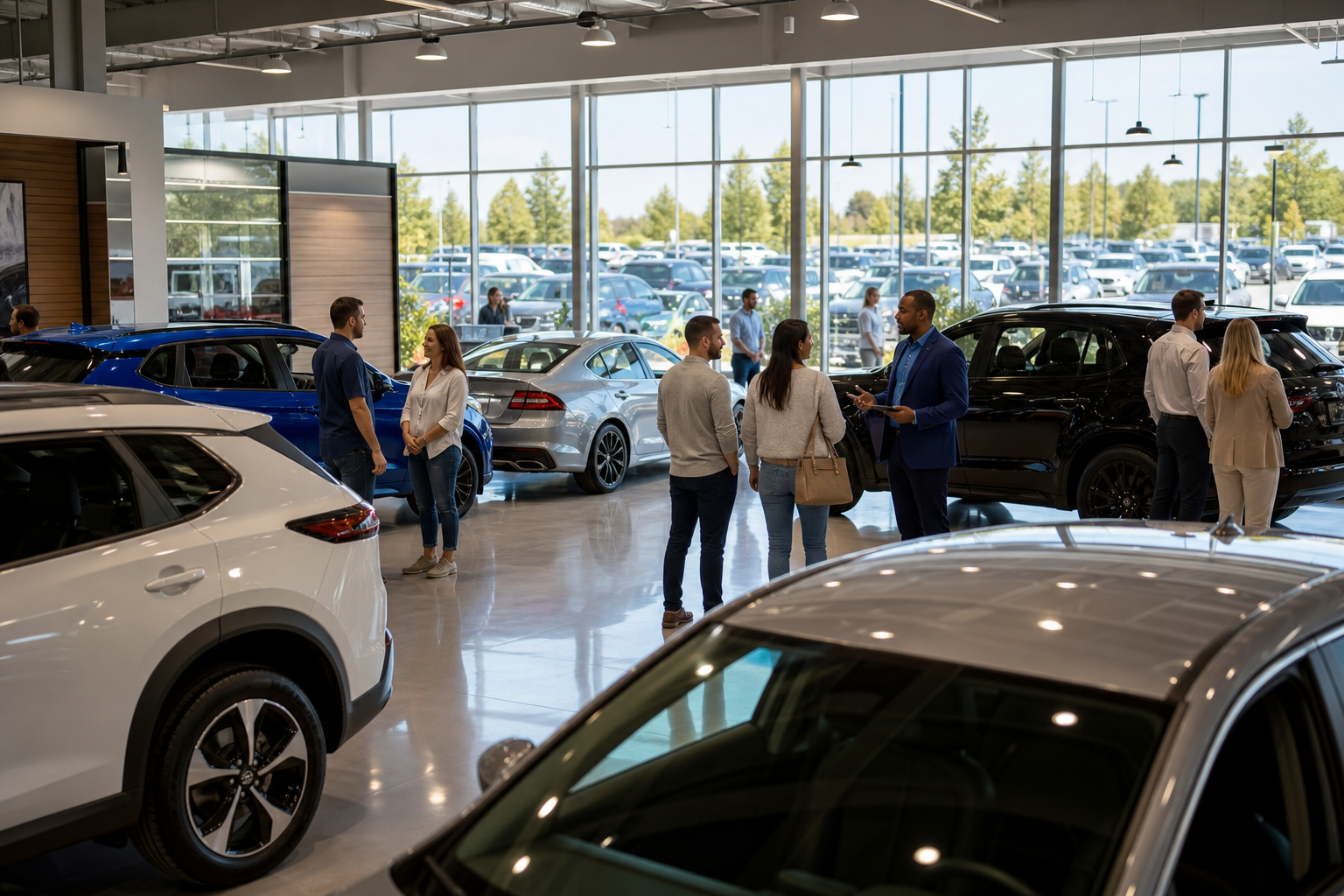
You can’t close a deal with an empty showroom.
Most dealerships are burning budget on disconnected ads, weak landing pages, and follow-up that never happens. Dealership digital marketing done right pulls every channel together into one system with one goal: qualified buyers sitting across from your salespeople. Here’s exactly how that works.
Start With the Foundation, Not the Ad Budget
Before you spend a dollar on ads, your digital infrastructure has to be solid. A fast, mobile-friendly website with clean Vehicle Detail Pages. A Google Business Profile that’s accurate, reviewed, and updated regularly. Social profiles that show real inventory, real staff, and real customer wins. If those pieces aren’t in place, paid traffic just leaks out the bottom.
Think of your digital presence as a network of roads. Every road needs to lead somewhere useful. A buyer searches “used trucks near me,” lands on your Google Business Profile, clicks through to your site, sees a banner for an upcoming sales event, finds your Facebook page, and books an appointment. That whole path has to feel seamless. One broken link and they’re at the competitor two miles down the road.
The Core Pillars of a Dealership Digital Strategy
Effective dealership digital marketing runs on five interconnected pillars. Each one has a specific job, and none of them work as well alone as they do together.
- Website as the hub. Every ad, every post, every email drives traffic somewhere. Make sure that somewhere loads fast, looks sharp on a phone, and gives buyers a clear next step on every page.
- Google Business Profile for local dominance. This is often the first thing a buyer sees. Post new inventory, respond to reviews, and keep your hours current. Neglect it and you’re handing leads to whoever maintains theirs better.
- Social media for trust-building. Facebook and Instagram aren’t just ad platforms. Post walkaround videos shot on your lot, introduce your service team, share photos of customers with their new vehicles. Authenticity converts better than polish.
- Paid advertising for targeted reach. Facebook and Google Ads let you put specific offers in front of in-market buyers in your zip codes. Done right, Willowood Ventures clients have seen approximately 800% average return on ad spend on structured campaigns. Done wrong, it’s just expensive noise.
- Video content for engagement. A 60-second walkaround narrated by one of your salespeople does more for buyer confidence than any banner ad. Short Reels for new arrivals, longer YouTube walkthroughs for high-demand models. Both have a place.
Facebook Sales Events: Precision Over Posting
Boosting posts is not a strategy. A properly built Facebook Sales Event is a different instrument entirely. It creates urgency, opens a two-way conversation, and floods your CRM with appointment-ready leads inside a tight window. Think of it as a virtual tent sale with surgical targeting behind it.
Build the Event Right
The event name matters more than most dealers think. “Used Car Sale” gets scrolled past. “The Oklahoma City Truck and SUV Clearance Event” stops someone mid-feed. Be specific about what’s in it for the buyer: event-only pricing, guaranteed trade-in offers, new inventory arrivals. Give them a deadline. “3 days only” works because it’s true and it creates action.
For creative, skip the stock photos. Use your actual lot, your actual cars, your actual team. A smartphone video of a hot unit with a salesperson walking through the features builds more trust than any agency-produced graphic. A 15-second clip of a happy customer picking up their keys is worth more than a month of polished posts.
Target the Right Buyers
Reach alone means nothing. You want in-market buyers in your area, not everyone within 20 miles. Layer your audiences: custom audiences built from your CRM and website traffic, lookalike audiences modeled off your best customers, and interest-based targeting around automotive purchase intent. That combination keeps your cost per lead tight and your appointment calendar full.
Willowood Ventures manages over $4 million per month in social advertising managed across 600+ dealer partners. The targeting frameworks we’ve built from that scale are the reason our clients average a 72% appointment show rate on Facebook campaigns, not the industry-standard guesswork most agencies deliver.
BDC Follow-Up Is Where Leads Become Sales
Generating a lead and letting it sit in a CRM for 18 hours is how you lose deals. Speed matters. A lead that gets called within five minutes is exponentially more likely to set an appointment than one that waits until the next business day. Most dealers don’t have the staff to work leads that fast around the clock. That’s a solvable problem.
Willowood Ventures runs a 24/7 US-based BDC operation, covering, every day. Our reps are trained specifically on automotive, which means they know how to handle trade objections, payment questions, and scheduling friction without losing the lead. The results bear it out: a 35% set rate, a 65% show rate on set appointments, and a 15% overall closing rate across campaigns. Those aren’t projections. Those are averages across live campaigns.
Real Numbers From Real Stores
Here’s what structured dealership digital marketing actually produces when the campaign, targeting, and follow-up all work together:
- Little Rock VW: 64 vehicles sold for $294,821 in gross.
- Salt Lake City GMC: 89 vehicles sold for $421,593 in gross.
- Oklahoma City CDJR: 83 vehicles sold for $398,762 in gross.
- Torrance Chevrolet: 72 vehicles sold for $345,688 in gross.
These aren’t cherry-picked anomalies. They’re the product of running the same proven system consistently, with the right creative, the right audiences, and aggressive same-day follow-up on every lead generated.
SEO and Local Search: The Long Game Worth Playing
Paid traffic produces immediate results. SEO builds the floor under your entire digital operation. When a buyer searches “best Ford dealer in [your city]” or “certified pre-owned SUV near me,” you want your website and your Google Business Profile showing up without paying for that click every single time.
The basics aren’t complicated, but they require consistency. Optimize your VDP titles and descriptions with model-specific keywords. Publish content that answers the questions buyers actually search for. Build local citations across automotive directories. Collect reviews and respond to every one of them. None of it is glamorous. All of it compounds over time.
Tie It Together With a Real Strategy
The dealers who win on digital aren’t the ones running the most ads. They’re the ones whose ads lead to a fast-loading site, whose site captures a lead, whose BDC calls that lead within minutes, and whose follow-up process keeps working until the customer shows up or firmly opts out. Every link in that chain has to hold.
Willowood Ventures builds that chain for dealerships. We’re a Meta Certified Partner and America’s number one automotive marketing agency. Packages start with demo-call pricing. Call us at 843-310-4108 to talk through what a campaign looks like for your store.
Make Willowood Ventures a preferred source on Google
One tap tells Google you want our dealership marketing coverage surfaced first. You will see Willowood Ventures more often in Top Stories, AI Overviews, and AI Mode when you search anything about selling more cars. It is free, it takes a second, and it brings you right back to this page.
Button not loading? Add willowoodventures.com as a preferred source here.
Frequently Asked Questions
Everything dealerships ask us about dealership digital marketing.
Ready to Transform Your Dealership’s Success?
Partner with Willowood Ventures, America’s #1 automotive marketing agency, and start filling your showroom with ready-to-buy customers. Our proven Facebook Sales Event strategy delivers Set Appointments, not promises.