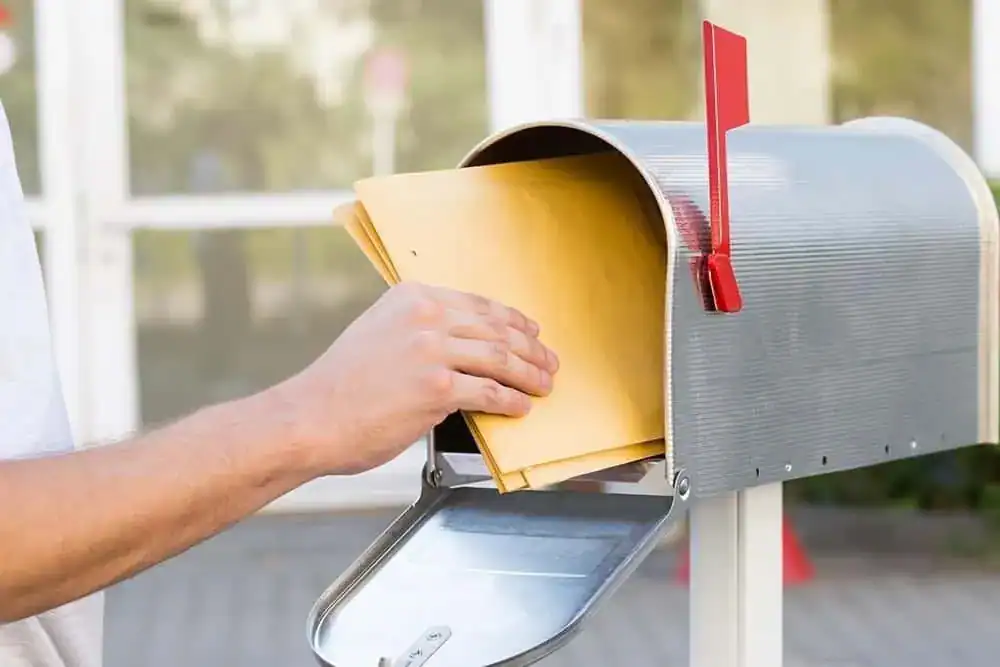
Everyone wants to talk about TikTok ads and Google retargeting, but direct mail keeps cashing checks at dealerships that know how to use it. The open rate alone tells the story: 90% of direct mail gets opened, versus 20-30% for email. Run the numbers and you’ll see why smart dealers haven’t walked away from the mailbox.
Why Direct Mail Still Moves Metal
Digital channels get all the attention, but direct mail delivers a 9% response rate on house lists and nearly 5% on cold prospect lists. Email, paid search, and social media rarely touch those numbers on their own. For a dealership moving 80 to 150 units a month, that gap is not a footnote. It’s real floor traffic.
A practical comparison of direct mail vs Facebook Sales Events should consider appointment quality and completed sales alongside the initial response each channel produces.
Direct mail recipients also spend 28% more and buy more often than people who never received the piece. Sixty percent of recipients say it influenced them to visit a website. Thirty-nine percent tried a business for the first time because of a mailer they received. These aren’t soft brand-awareness metrics. They’re conversion signals.
Design Principles That Get Results
Lead with a Strong Visual
The human brain processes images roughly 60,000 times faster than text. Your vehicle photography needs to be sharp, well-lit, and specific. A crisp shot of the exact truck you’re clearing out on lot will outperform a generic lifestyle image every time. Show the unit. Show the deal.
Keep the Copy Tight
The average person gives a direct mail piece 15 to 20 seconds. That means your headline, offer, and call-to-action need to do the work before they even decide to keep reading. One offer. One clear action. No paragraph walls.
Make the CTA Impossible to Miss
Tell them exactly what to do. “Bring this mailer in for $500 off your next vehicle purchase.” “Scan the QR code to schedule a test drive.” “Call before Saturday.” Vague CTAs bleed response rates. Be direct.
Personalize Where You Can
Personalized direct mail can lift response rates by up to 50%. If your DMS shows that a customer brought their Tahoe in for service 14 months ago and hasn’t been back, that’s your hook. Send them a trade-in offer with their name on it. Generic blasts work. Targeted pieces work harder.
Stay On Brand
Consistent branding across every channel can increase revenue by up to 23%. Your mailer should look like it came from the same dealership as your website, your signage, and your Facebook ads. Mismatched visuals erode trust before the customer even reads the offer.
Which Format to Use
Postcards: Low cost, fast to produce, hard to ignore. Best for single-offer promotions, clearance events, or service reminders.
Letters: Better for high-value, personalized offers. A lease renewal letter with specific payment terms feels different than a mass postcard.
Brochures: Useful when you’re promoting a full line or a seasonal event with multiple vehicles.
Catalogs: High-inventory dealers with diverse product lines. These require more investment but can drive serious floor traffic.
Dimensional mailers: Oddly shaped pieces get opened out of curiosity alone. Worth testing for conquest campaigns targeting premium buyers.
Targeting: Who Gets the Piece and When
Demographic Targeting
Match the offer to the audience. A luxury sedan promotion mailed to households with $150K-plus income in the right zip codes performs very differently than the same piece sent to a general list. Age, income, location, and household composition all filter your list toward buyers who are actually in a position to act.
Behavioral Targeting
This is where your DMS earns its keep. Customers whose lease terms end in 90 days, customers who haven’t serviced their vehicle in over a year, customers who purchased a competitive brand two model cycles ago. These are warm audiences. Mail them something relevant and watch your response rates climb.
Seasonal Strategy
Spring is convertibles and sports cars. Summer is family haulers. Fall is AWD and prep-for-winter messaging. Winter is year-end clearance and tax-refund preview campaigns. The dealers who mail at the right moment in the buying cycle consistently outperform the ones who just drop pieces whenever the budget is approved.
Measuring What You Send
You can not manage what you do not track. Use unique phone numbers, QR codes, or personalized URLs so every campaign has its own fingerprint. The metrics that matter most are response rate, conversion rate, cost per acquisition, and ROI. If you’re not tying closed deals back to specific mail drops, you’re flying blind on budget decisions.
Willowood Ventures has managed over $4 million per month in social advertising managed and consistently delivers an approximately 800% average return on ad spend across client campaigns. We apply the same discipline to direct mail that we bring to digital. Every piece, every list, every deployment gets measured against what it actually produced in the lane.
Stack Direct Mail with Digital for Maximum Reach
Direct mail by itself is good. Direct mail layered with digital follow-up is better. A few tactics that consistently amplify results:
Add a QR code that sends the recipient to a personalized landing page with their name, vehicle of interest, and a specific offer pre-loaded.
Retarget the mailing list with Facebook and Google display ads in the same campaign window. The person who saw your postcard Monday and your Facebook ad Tuesday is far more likely to visit Saturday.
Follow up with an email to the same list three to five days after the mailer lands. Repetition across channels builds urgency.
Add a social handle or hashtag to drive online engagement and build your audience while the physical piece circulates.
Willowood Ventures runs a US-based BDC seven days a week. When a prospect scans a QR code from a mailer at 9pm, someone answers. That 24/7 operational window is what separates a campaign that closes from one that generates leads nobody follows up on. Our 72% appointment show rate does not happen by accident. It happens because the follow-up machine is already running when the mail hits the doorstep.
What Dealers Are Actually Seeing
Numbers from the floor tell the story better than projections. Willowood campaigns have produced results like 89 units sold for $421,593 gross at a Salt Lake City GMC store, 83 units for $398,762 at an Oklahoma City CDJR, and 64 units for $294,821 at a Little Rock Volkswagen. These are complete, integrated campaigns where direct mail, digital, and BDC work together. The mailer opens the door. The follow-up closes it.
Packages start with demo-call pricing. Whether you’re a single-point store running a targeted conquest campaign or a large group looking to move aged inventory, there’s a deployment size that fits your operation. Call 843-310-4108 to talk through what the right campaign looks like for your store.
Make Willowood Ventures a preferred source on Google
One tap tells Google you want our dealership marketing coverage surfaced first. You will see Willowood Ventures more often in Top Stories, AI Overviews, and AI Mode when you search anything about selling more cars. It is free, it takes a second, and it brings you right back to this page.
What is direct mail automotive marketing and why is it important for car dealerships? +
Direct mail automotive marketing means sending physical promotional materials, such as postcards, letters, or brochures, to a targeted list of current customers or conquest prospects with the goal of driving showroom visits and sales. It remains one of the highest-response channels available to dealers.
The numbers back it up. Direct mail achieves a 9% response rate on house lists, outpacing email, paid search, and social ads. Ninety percent of direct mail gets opened. That kind of reach is hard to replicate digitally without serious budget.
For dealerships competing on a tight margin, every floor-up counts. Willowood Ventures averages an approximately 800% average return on ad spend across campaigns built around direct mail integrated with digital follow-up and a 24/7 BDC. That combination turns a physical piece in someone’s mailbox into a booked appointment and a sold unit.
How do specific methods related to direct mail automotive marketing benefit dealerships? +
Personalization is the most reliable lever in direct mail. Campaigns that use customer data to tailor the offer, the vehicle featured, or even the recipient’s name can lift response rates by up to 50%. That means fewer wasted impressions and more floor traffic from each mail drop.
Behavioral targeting is another high-value method. Pulling customers from your DMS who are near lease-end, overdue for service, or who purchased a competitive brand recently gives you a list of warm prospects. These people already have a relationship with the category. A well-timed mailer with a relevant offer moves them faster than cold outreach.
Seasonal timing also matters. Spring convertible campaigns, fall AWD pushes, and winter clearance events all outperform generic year-round blasts because they meet buyers at the moment their purchase intent is highest. Matching the offer to the season is simple discipline that compounds over time.
What are the key components of a successful direct mail automotive marketing strategy? +
Start with a clean, well-segmented list. A great piece mailed to the wrong audience is wasted spend. Use demographic data, behavioral data from your DMS, and geographic targeting to build a list of people who can actually buy what you’re selling.
The creative needs a strong visual, a single clear offer, and a CTA that tells the reader exactly what to do next. People give a direct mail piece 15 to 20 seconds. If your offer and next step aren’t obvious in that window, you’ve lost them.
Tracking mechanisms are non-negotiable. Unique phone numbers, QR codes, and personalized URLs let you tie closed deals back to specific drops. Without attribution, you’re guessing at what works. Every successful Willowood Ventures campaign is built with tracking baked in from day one so the ROI conversation is based on real numbers, not estimates.
How long does it take to see results from direct mail automotive marketing? +
Most dealerships see initial response within five to fourteen days of a mailer landing, depending on delivery speed and the strength of the offer. Postcards and letters typically hit within three to five business days of deployment, and floor traffic tends to spike in the first two weekends after delivery.
That said, the full campaign cycle runs longer. Some recipients hold onto a mailer for weeks before acting, especially for high-consideration purchases like a new vehicle. Retargeting the same list with digital ads during that window keeps your store top-of-mind while the physical piece sits on their kitchen counter.
Willowood Ventures layers BDC follow-up into every campaign. When prospects call or submit leads in response to a mailer, the team captures them immediately rather than letting them cool off. That speed-to-contact discipline is a large part of why the appointment show rate holds at 72%.
What kind of ROI can dealerships expect from professional direct mail automotive marketing? +
Willowood Ventures clients average an approximately 800% average return on ad spend across integrated campaigns that include direct mail, digital advertising, and BDC follow-up. That is not a projection. It is a measured outcome across 600+ dealer partners.
Real-world examples from recent campaigns include 89 units sold for $421,593 gross at a Salt Lake City GMC store, 83 units sold for $398,762 at an Oklahoma City CDJR dealership, and 64 units sold for $294,821 at a Little Rock Volkswagen. These campaigns used direct mail as part of a coordinated strategy, not as a standalone drop.
Cost matters too. Packages start with demo-call pricing, which makes the entry point accessible for single-point stores and volume dealers alike. The return scales with list quality, offer strength, and how aggressively the BDC works the inbound leads the campaign generates.
How does direct mail automotive marketing differ from traditional dealership methods? +
Traditional dealership marketing often relied on broad-reach channels like newspaper inserts, radio spots, and broadcast TV. Those channels are expensive per impression and nearly impossible to target precisely. You’re paying to reach everyone in the market, including thousands of people who will never buy a car from you.
Direct mail automotive marketing works the opposite way. You build a list first, then mail to it. That list can be filtered by income, geography, vehicle ownership data, lease expiration, and dozens of other variables. You’re spending money specifically on people who match your buyer profile.
The other major difference is attribution. A newspaper ad has no trackable response mechanism. A direct mail piece with a unique phone number, a QR code, or a personalized URL tells you exactly how many people responded, what they did next, and how many of them bought. That data loop drives better decisions on every subsequent campaign.
What role does BDC follow-up or audience targeting play in direct mail automotive marketing success? +
BDC follow-up is what turns a response into a sold unit. A prospect who scans a QR code at 8pm on a Tuesday needs someone to call them back before their interest cools. Willowood Ventures runs a US-based BDC, seven days a week. That coverage is the reason the appointment show rate holds at 72%.
Audience targeting determines how efficient the spend is before the piece ever goes in the mail. A well-targeted list means more responses per thousand pieces mailed and a lower cost per acquisition. Layering behavioral data from the DMS on top of demographic targeting creates a list of people who are already close to a buying decision.
The two work together. Precise targeting generates higher-quality inbound contacts. The BDC converts those contacts into appointments. Appointments with a 72% show rate close at rates that justify the campaign cost several times over. Neither piece works as well without the other.
How important is timing for launching direct mail automotive marketing? +
Timing is one of the most controllable variables in a direct mail campaign, and dealers who ignore it leave money on the table. A mailer that arrives the week before a major holiday weekend, a tax refund window, or a model-year clearance event will almost always outperform the same piece dropped in a flat sales period.
Seasonal alignment matters for the offer itself. Spring is the right time for convertibles and sports cars. Fall sets up AWD and winter-prep messaging well. Year-end clearance works in December when consumers expect deals and manufacturers are pushing volume incentives. The calendar and the inventory position need to line up.
At the delivery level, timing within the week matters too. Pieces that land Tuesday through Thursday tend to see stronger immediate response than Friday deliveries, which can get lost in weekend mail volume. Planning the drop date to control delivery timing is a simple step that consistently improves results.
What makes direct mail automotive marketing more effective than alternative methods? +
The open rate alone is the starting point. Ninety percent of direct mail gets opened versus 20 to 30 percent for email. No algorithm filters it. No spam folder buries it. A physical piece in someone’s hand commands attention in a way that a digital impression rarely does.
Response rates reinforce the case. Direct mail delivers a 9% response rate on house lists. Email, paid search, and social media individually fall well short of that benchmark. For dealerships focused on cost per acquisition rather than impressions, direct mail competes extremely well on a dollars-to-closed-deals basis.
Direct mail also integrates cleanly with digital campaigns. Retargeting a mailing list with Facebook and Google ads in the same window, then following up with email, creates layered exposure that compounds the response rate from any single channel. Willowood Ventures, a Meta Certified Partner, builds these integrated strategies across all 600+ dealer partners it serves, consistently delivering approximately 800% average return on ad spend.
Why should dealerships choose Willowood Ventures for their direct mail automotive marketing? +
Willowood Ventures is the premier choice for direct mail automotive marketing because of our proven track record across 600+ dealer partners and $4 million per month in social advertising managed managed. We do not run campaigns in isolation. Every direct mail deployment is backed by a 24/7 US-based BDC operating 24/7, digital retargeting, and data-driven list targeting that puts the right offer in front of the right buyer at the right time.
The results speak plainly. Clients have seen campaigns produce 89 units sold for $421,593 at a Salt Lake City GMC store and 83 units for $398,762 at an Oklahoma City CDJR dealership. Our average ROI across campaigns is 800%, and packages start with demo-call pricing so dealers of any size can access the full system.
We do not guess at what works. We track every response, every appointment, every closed deal back to the specific campaign that drove it. Contact us at 843-310-4108 to walk through what a targeted direct mail campaign built around your inventory, your market, and your goals actually looks like.