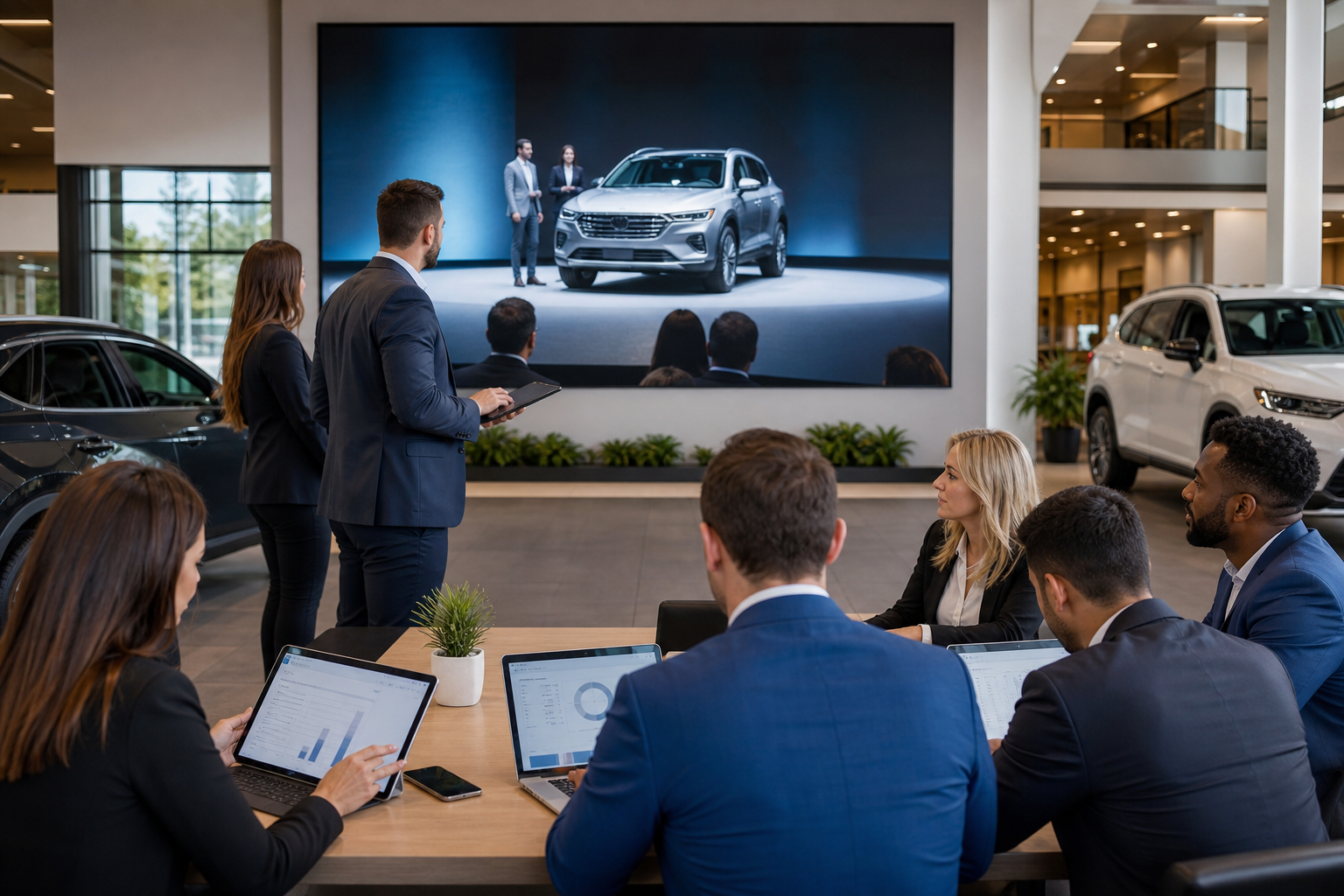
Picking the wrong virtual event platform costs you leads, wastes your budget, and turns your launch event into a forgettable livestream. The right platform comparison cuts through the noise fast. Here is how dealerships in 2026 are making smarter calls before they ever book a demo.
Auto Shoppers: Fill Your Showroom With Ready-to-Buy Customers in 2025 | Car Shortage Solution
Why Your Platform Choice Is a Sales Decision, Not a Tech Decision
The market for virtual event platforms hit roughly $11.47 billion and is projected to reach $52.28 billion by 2035, growing at a 16.4% CAGR. More options sound like a good thing until you are the one sitting through demo number six trying to remember which platform had the CRM hook you actually needed. The sheer volume of choices is exactly why a disciplined comparison process matters more now than it ever has.
For a car dealership, this is not an abstract tech conversation. The platform you choose either captures buying signals from qualified shoppers or it does not. Period. A glorified Zoom call dressed up with a virtual lobby is not going to book test drives. A purpose-built platform with real data capture and CRM integration can.
Define the Win Before You Run a Single Demo
The dealers who waste the most time platform shopping are the ones who start with features instead of goals. Do not do that. Before you look at anything, write down exactly what success looks like for your event. Be specific. “More engagement” is not a goal. “Book 40 test drives during a 90-minute new model reveal” is a goal.
Your primary objective will likely fall into one of three buckets.
Lead Generation: You need airtight data capture at registration, real-time engagement tracking during the event, and a clean export path into your CRM. If your BDC cannot act on the leads the same day the event ends, you have already lost momentum.
Product Education: Launching a new trim or walking through a certified pre-owned inventory push? You need high-definition streaming, interactive walkarounds, and the ability to field questions live without the whole thing falling apart technically.
Community and Brand Loyalty: Building a local enthusiast base or running a VIP owner event requires networking tools, breakout rooms, and follow-up sequences that keep the conversation going after the stream ends.
Once you know which bucket you are in, every feature on every platform demo becomes either relevant or irrelevant. That alone cuts your evaluation time in half.
Map the Attendee Journey End to End
Walk through your event from the attendee’s point of view before you commit to any platform. Not just the main session. Every touchpoint.
Registration: Is it a one-click form or a detailed intake that qualifies buyers before they ever show up? If you want your BDC working warm leads, you need the second option.
Pre-event communication: Can the platform send automated reminder sequences, or are you manually exporting emails into a separate tool every time?
The arrival experience: Do attendees land in a branded interactive lobby or a plain waiting room? First impressions matter even on a screen.
Live interaction: Live polls, moderated Q&A, one-on-one video chats with salespeople. These are the tools that separate active buyers from passive viewers.
Post-event follow-up: On-demand replay access, a direct offer, or an immediate BDC outreach call. The event does not end when the stream cuts off.
This exercise makes your non-negotiables obvious. A dealership running a high-volume lead gen event needs different tools than one doing a small VIP appreciation night. Both are valid. Neither should use the same platform by default.
The Criteria That Actually Move the Needle
Here is a straight breakdown of what to evaluate and why each factor matters in the real world.
Evaluation Criteria
Why It Matters for Dealerships
Platform Examples
Engagement Tools
Passive viewers do not buy cars. Live polls, Q&A, and interactive features keep attention and reveal buying intent.
Hopin, ON24
Data and Analytics
You need to know who watched what, for how long, and what they clicked. That data feeds your BDC with qualified leads.
ON24, Cvent
CRM Integration
If your event data does not flow automatically into your CRM, your team is re-entering records manually and losing speed on follow-up.
Cvent, Zoom Events
Networking Features
Breakout rooms and attendee matchmaking replicate real showroom conversations. Useful for VIP and community-style events.
Hopin, Bizzabo
Customization and Branding
Your platform should look like your dealership, not like a generic SaaS product. Deep branding options matter for premium launches.
Bizzabo, ON24
Where Willowood Ventures Fits Into This Picture
A virtual event is only as effective as the marketing engine driving traffic into it and the follow-up system working the leads that come out of it. That is where most dealerships leave money on the table. They pick a solid platform, run a decent event, and then watch the leads go cold because nobody has a process for what happens next.
Willowood Ventures has managed over $4 million per month in social advertising managed driving automotive audiences to exactly these kinds of targeted events and promotions. We have worked with 600+ dealerships across the country, and we have seen firsthand what happens when the platform choice aligns with a real marketing strategy versus when it does not. The platform is the venue. The strategy is what fills the seats and closes the deals.
Our dealership marketing approach ties your virtual events into a full-funnel system, from the paid social that drives registration to the BDC follow-up that works the leads the same day. Our US-based BDC runs 24/7, so no lead sits cold overnight after a big event. That kind of coverage is what converts a strong virtual event into actual cars sold.
A Practical Comparison Checklist for 2026
When you sit down for platform demos, bring this list. Ask specific questions. If the sales rep cannot answer clearly, that tells you something.
Does the platform support real-time lead scoring or engagement tracking I can export to my CRM the same day?
What does the registration form capture, and how much control do I have over the fields?
What is the maximum concurrent viewer count on my plan, and what happens if I exceed it?
Can I white-label the experience with my dealership branding on every screen?
What is the mobile experience like for attendees joining from a phone?
Is on-demand replay included, and how long does the recording stay accessible?
What is the actual technical support situation during a live event? Phone, chat, or a help article?
The right platform answers all of these questions confidently. The wrong one gets defensive or vague. Trust what you see in the demo, not the pitch deck. For a deeper look at how to structure your event from start to finish, the virtual event planning guide for dealerships covers every stage in detail. And once your platform is locked in, reviewing virtual event best practices for dealerships will help you get the most out of every session you run. For a curated breakdown of the top options on the market right now, see our guide to the best virtual event platforms for dealerships in 2026.
Make Willowood Ventures a preferred source on Google
One tap tells Google you want our dealership marketing coverage surfaced first. You will see Willowood Ventures more often in Top Stories, AI Overviews, and AI Mode when you search anything about selling more cars. It is free, it takes a second, and it brings you right back to this page.
Everything dealerships ask us about virtual event platform comparison.
What is virtual event platform comparison and why is it important for car dealerships? +
A virtual event platform comparison is a structured evaluation of the tools available for hosting online events, measured against your specific business goals. For dealerships, that means looking at which platforms can drive qualified leads, support live vehicle reveals, and connect directly with your CRM.
The wrong platform turns your new model launch into a basic livestream with no data and no follow-up path. The right one captures buying signals, feeds your BDC with warm contacts, and keeps your team moving fast after the event ends.
Willowood Ventures has worked with 600+ dealerships and managed over $4 million per month in social advertising managed. We have seen the difference a focused platform choice makes when it is backed by a real marketing and follow-up strategy.
How does a structured virtual event platform comparison benefit dealerships specifically? +
A structured comparison forces you to match platform features to your actual sales goals instead of buying the flashiest tool in the demo. Dealerships that go through this process end up with platforms that integrate cleanly with their CRM, capture the right lead data, and support the BDC workflow that follows every event.
Without that structure, you end up paying for features you never use while missing the ones you actually needed. A dealership focused on test drive bookings needs different tools than one running an internal sales training.
When Willowood Ventures supports a dealership event, we pair the right platform features with paid social traffic and a 24/7 US-based BDC operation running. That combination is what turns a good virtual event into measurable sold units.
What are the key components of a successful virtual event platform comparison strategy? +
Start with your primary goal, lead generation, product education, or community building. That goal dictates which platform features are non-negotiable and which are noise.
Next, map the full attendee journey from registration through post-event follow-up. This reveals the technical requirements your platform must meet. Look hard at CRM integration, engagement tools, data export capabilities, and mobile experience. Ask specific questions in every demo and push for straight answers.
Finally, do not evaluate the platform in isolation. The best platform in the world underperforms if your traffic and follow-up strategy are weak. Dealerships that pair a solid platform with a real marketing engine consistently outperform those that rely on the technology alone.
How long does it take to see results from a virtual event platform comparison process? +
The comparison and selection process itself typically takes two to four weeks if you move with discipline. Book demos back to back, use a consistent evaluation checklist, and involve the people who will actually use the platform, your BDC team, marketing staff, and whoever manages your CRM.
Results from the events you run on that platform show up much faster. A well-structured virtual launch event with strong paid social promotion can generate qualified leads the same day it goes live. With a 24/7 BDC operation working those leads immediately, you can see appointments booked within 24 to 48 hours of the event ending.
The key is not dragging out the evaluation phase. Pick your criteria, run your demos, and make a call. Overthinking the platform costs you more than choosing an imperfect one and optimizing as you go.
What kind of ROI can dealerships expect from professional virtual event platform comparison and deployment? +
ROI depends on how well the platform choice aligns with your event strategy and how aggressively your team works the leads generated. Dealerships that nail both sides of that equation see strong returns.
Willowood Ventures clients have averaged approximately 800% average return on ad spend on automotive marketing campaigns that include virtual and social event components. Real numbers from specific stores bear this out. Salt Lake City GMC sold 89 units for $421,593 in gross. Oklahoma City CDJR moved 83 units for $398,762. Little Rock VW closed 64 deals for $294,821. These are not platform results in isolation. They reflect a full strategy where the right tools met the right follow-up process.
The platform is the foundation. The strategy, the traffic, and the BDC execution are what stack the gross on top of it.
How does virtual event platform comparison differ from traditional dealership marketing methods? +
Traditional dealership marketing, mailers, TV spots, lot events, operates on a one-to-many broadcast model with limited real-time feedback. You send the message and hope it lands. Virtual events change the equation by creating two-way engagement at scale and capturing behavioral data you can act on immediately.
A virtual platform comparison is really a question of which tool gives you the most actionable intelligence from that engagement. Which platform tells you that a specific attendee watched the full walkaround video, asked two questions in the Q&A, and clicked the financing link? That person gets a BDC call within the hour, not a generic follow-up email three days later.
That speed and specificity is something traditional methods cannot match. It is why dealerships that integrate virtual events into their broader marketing strategy consistently outperform those running purely offline campaigns.
What role does BDC follow-up or audience targeting play in virtual event platform comparison success? +
BDC follow-up is where virtual events either pay off or fall apart. The platform captures the lead. The BDC closes the gap between interest and appointment. If your BDC cannot access the lead data from your platform quickly and act on it while the buyer is still warm, the event’s value evaporates fast.
This is why CRM integration is one of the first things to evaluate in any platform comparison. You want leads flowing directly into your BDC queue, with engagement data attached, the moment the event ends.
Willowood Ventures runs a US-based BDC 24/7. Our set rate sits at 35%, our show rate at 65%, and our overall closing rate at 15%. Those numbers hold because our follow-up is immediate, consistent, and informed by the actual behavior each lead showed during the event.
How important is timing for launching a virtual event platform comparison and selection process? +
Timing the selection process to your event calendar is critical. If you are planning a major model launch or a seasonal sales event, you need your platform locked in at least four to six weeks out. That gives you time to build registration pages, set up CRM integrations, run technical rehearsals, and brief your BDC team on the follow-up workflow.
Rushing the comparison process because a launch is two weeks away forces bad decisions. You end up defaulting to the familiar option rather than the right one.
Start your evaluation before you have a hard deadline. If you are reading this with an event already on the calendar, prioritize integration and ease of setup over feature count. A simpler platform deployed correctly beats a complex one implemented in a hurry every time.
What makes a rigorous virtual event platform comparison more effective than just picking a popular tool? +
Popular tools are built for the broadest possible audience. A rigorous comparison is built around your specific use case. A platform that dominates the enterprise conference market may have weak lead capture tools and no automotive CRM integrations. That makes it the wrong call for a dealership, regardless of its market share.
A focused comparison forces you to weight criteria by what actually drives revenue for your store. Lead capture quality, CRM sync speed, mobile experience for shoppers on their phones, BDC-ready reporting. These are dealership-specific requirements that a generic popularity ranking will not surface.
The dealerships that consistently get the best results from virtual events are the ones that treated platform selection as a sales operations decision, not an IT decision. They picked based on what their BDC needed on day one, not based on what looked impressive in a demo.
Why should dealerships choose Willowood Ventures for their virtual event platform comparison and deployment? +
Willowood Ventures is the premier choice for virtual event platform comparison because of our proven track record working inside real dealership operations, not just advising from the outside. We have served 600+ dealerships and managed $4 million per month in social advertising managed driving audiences to automotive events and promotions. We know which platform features actually produce leads and which ones are just demo-room theater.
Our approach connects the platform selection to a full marketing and BDC strategy. Torrance Chevrolet sold 72 units for $345,688. Little Rock VW closed 64 deals for $294,821. Those results come from the complete system, targeted paid social to drive registration, the right platform to capture and qualify attendees, and a 24/7 US-based BDC to work every lead before it goes cold.
We are also a Meta Certified Partner, which means the paid social traffic we drive to your events is built on verified expertise, not guesswork. Packages are quoted per rooftop. Contact us at 843-310-4108 to talk through which approach fits your next event.