Hamlin and Associates 2026 Dealer Marketing Review
You open the monthly report, see a wall of impressions and click-through rates, then walk the showroom floor and ask the only question that matters: how many units did this actually move? That’s the right frame for evaluating Hamlin and Associates in 2026. Here’s the honest look before you sign anything.
What Dealers Actually Need From a Marketing Vendor
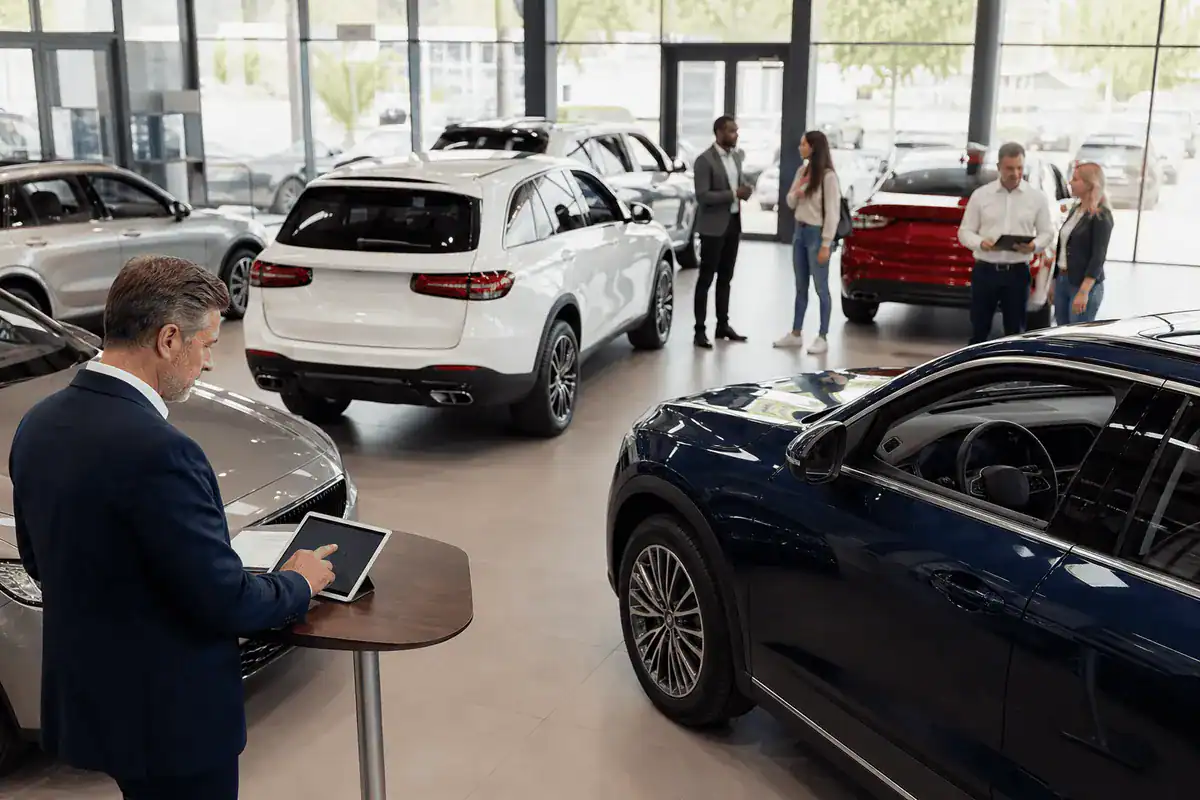
A GM doesn’t fire a vendor because the dashboard looks dated. They fire one because the showroom stays quiet, the sales team stops trusting the appointments, and nobody can draw a straight line from ad spend to front-end gross. That test applies to every vendor on your shortlist, including Hamlin and Associates.
Use a simple filter on any agency you evaluate: what do they control, what do they measure, and what are they willing to be held accountable for? If they can’t walk you from campaign activity to showroom behavior to gross profit, the report is incomplete no matter how polished the graphs look.
Who Hamlin and Associates Is
Hamlin isn’t a startup padding its bio. Founded in 1988 and headquartered in Ormond Beach, Florida, they claim to have served over 2,000 dealers and executed more than 50,000 events. That’s a legitimate track record. But longevity doesn’t automatically mean the model still fits 2026 operating conditions.
The privacy environment shifted. Attribution got messier. First-party data got more valuable and harder to use well. A vendor can be credible and still be the wrong fit for your store. Don’t confuse established with automatically current. Those are two separate judgments.
Their reported metrics include an average ROI of 986% and conversion rates of 22 to 28% on their top-scored prospects. For a dealer principal, that background creates both confidence and reasonable caution.
How Their Core System Works
Hamlin’s pitch isn’t generic ad management. It’s a proprietary data-driven prospecting and vehicle acquisition system. They’re selling process and data infrastructure, not just media placement. The platform appears to operate across four layers:
- Data access: Organizing and activating dealer-owned customer records faster than a store can do manually.
- Predictive filtering: Scoring the database for likely buyers or trade-in candidates instead of broadcasting to everyone.
- Targeted outreach: Pushing staff toward the people most likely to respond right now.
- Sales event execution: Translating that outreach into a structured campaign that moves units.
That’s a logical model. Clean first-party data paired with a strong outreach process can outperform broad untargeted advertising, especially when inventory mix, equity position, and owner lifecycle line up correctly.
Where the Model Has Limits
Data-driven prospecting depends heavily on what the dealer brings to the table. If your CRM is a mess, your follow-up is inconsistent, or your managers don’t work appointments with discipline, even a great scoring model produces noise instead of sold units. The tool doesn’t fix the process. It amplifies whatever process you already have.
There’s also a scale question. Hamlin’s team reportedly sits at 35 to 49 professionals. For a single rooftop running periodic campaigns, that may be fine. For a larger dealer group that needs daily campaign management, real-time creative adaptation, and a BDC operation running during peak evening hours, the math gets tighter.
Transparency matters too. A vendor built around proprietary systems should still be able to show you clearly how campaign activity connects to showroom appointments and closed deals. If the answer lives inside a black box, make that a negotiating point before you sign, not a detail to sort out six months in.
How Willowood Ventures Approaches the Same Problems
Willowood Ventures runs a different kind of operation. As America’s #1 automotive marketing agency, we manage over $4 million in social media ad spend and hold a Meta Certified Partnership, which means our campaigns are built inside the same platform infrastructure that powers the ads, not patched on top of it.
Our BDC runs 24/7, every day. That 24/7 US-based operation is a big reason our clients post a 72% appointment show rate. Appointments that actually show don’t happen because the list was good. They happen because the follow-up was consistent and the conversation was handled by someone who knows automotive, not a generic call center reading a script.
The results are specific. Little Rock Volkswagen: 64 sold units, $294,821 in revenue from a single campaign. Salt Lake City GMC: 89 sold, $421,593. Oklahoma City CDJR: 83 sold, $398,762. Torrance Chevrolet: 72 sold, $345,688. Those aren’t impressions. Those are deals closed and grossed out.
Our clients average 800% ROI. We’ve delivered those results across 600+ dealerships. Packages start with demo-call pricing, so you don’t need a massive budget to get into a real program with real accountability.
The Questions to Ask Before You Commit
Whether you’re evaluating Hamlin, Willowood, or anyone else, push on these specifics before signing:
- What is your show rate on appointments set through your system? Ours is 72%.
- Can you show me gross profit outcomes, not just lead volume, from comparable stores?
- Who handles follow-up, and what are their hours?
- How do you attribute results when multiple touchpoints are in play?
- What happens when results are below expectations in month two?
A vendor who stumbles on those questions isn’t ready for your store. A vendor who answers them with specifics and puts accountability language in the contract is worth a second conversation.
Hamlin and Associates has a real track record in automotive. For certain store profiles and campaign types, they may be a reasonable fit. But if you want a partner who combines data-driven targeting with a live BDC, proven social ad infrastructure, and verified results at stores just like yours, call Willowood Ventures at 843-310-4108.
Make Willowood Ventures a preferred source on Google
One tap tells Google you want our dealership marketing coverage surfaced first. You will see Willowood Ventures more often in Top Stories, AI Overviews, and AI Mode when you search anything about selling more cars. It is free, it takes a second, and it brings you right back to this page.
Button not loading? Add willowoodventures.com as a preferred source here.
Frequently Asked Questions
Everything dealerships ask us about dealer marketing ROI.
function wvFaqToggle(el) {
var item = el.parentElement;
var allItems = item.parentElement.querySelectorAll(‘.wv-faq-item’);
var thisAnswer = el.nextElementSibling;
var thisIcon = el.querySelector(‘.wv-faq-icon’);
var wasActive = thisAnswer.style.maxHeight && thisAnswer.style.maxHeight !== ‘0px’;
allItems.forEach(function(it){
var q = it.querySelector(‘.wv-faq-question’);
var a = it.querySelector(‘.wv-faq-answer’);
var ic = it.querySelector(‘.wv-faq-icon’);
q.style.background = ”;
q.style.color = ”;
q.style.borderLeftColor = ‘transparent’;
a.style.maxHeight = ‘0px’;
a.style.padding = ‘0’;
if (ic) ic.style.transform = ”;
});
if (!wasActive) {
el.style.background = ‘#0085ca’;
el.style.color = ‘#ffffff’;
el.style.borderLeftColor = ‘#0085ca’;
thisAnswer.style.maxHeight = ‘1000px’;
thisAnswer.style.padding = ’30px’;
if (thisIcon) thisIcon.style.transform = ‘rotate(45deg)’;
}
}
{“@context”: “https://schema.org”, “@type”: “FAQPage”, “mainEntity”: [{“@type”: “Question”, “name”: “What is dealer marketing ROI and why is it important for car dealerships?”, “acceptedAnswer”: {“@type”: “Answer”, “text”: “Dealer marketing ROI measures how much revenue a dealership generates for every dollar spent on advertising and marketing programs. It cuts through vanity metrics like impressions and clicks and connects campaign activity directly to sold units and gross profit. For a dealer principal or GM, ROI is the only number that tells you whether a vendor is actually helping the business or just producing attractive reports. A store spending $10,000 a month on a program that cannot demonstrate closed deals is overpaying for decoration. Willowood Ventures clients average 800% ROI across 600+ dealerships. Every dollar invested returns eight. That kind of accountability separates a serious automotive marketing partner from one that sells dashboards instead of results.”}}, {“@type”: “Question”, “name”: “How do specific methods related to dealer marketing ROI benefit dealerships?”, “acceptedAnswer”: {“@type”: “Answer”, “text”: “The methods that drive real dealer marketing ROI share one trait: they connect spend to showroom behavior, not just digital activity. Targeted social campaigns, first-party data activation, and structured BDC follow-up each compress the gap between an ad impression and a signed deal. Precision targeting matters because broadcasting to the wrong audience burns budget fast. When you layer a scored prospect database over paid social, the people who see your offer are already in the market, already driving something with equity, or already past their service cycle. Consistent follow-up closes the loop. Willowood Ventures runs a 24/7 US-based BDC operation daily, because the difference between a set appointment and a show often comes down to one well-timed phone call from someone who actually understands automotive.”}}, {“@type”: “Question”, “name”: “What are the key components of a successful dealer marketing ROI strategy?”, “acceptedAnswer”: {“@type”: “Answer”, “text”: “A successful dealer marketing ROI strategy needs four things working together: clean data, targeted creative, disciplined follow-up, and clear attribution. Clean data means your CRM reflects real customers with accurate contact information and transaction history. Targeted creative means your ads reach people who have a reason to buy now, not a broad zip code. Disciplined follow-up means every appointment set gets contacted before the visit and confirmed the day of. Clear attribution means you can trace a sold unit back to the campaign that started the conversation. Skip any one of those and the numbers get fuzzy fast. Vendors who can execute all four and report on them honestly are the ones worth writing a check to.”}}, {“@type”: “Question”, “name”: “How long does it take to see results from dealer marketing ROI strategies?”, “acceptedAnswer”: {“@type”: “Answer”, “text”: “A well-structured campaign with strong creative and active BDC support can produce measurable showroom results within the first two weeks. Sales events and conquest campaigns are designed to move urgently. You should see appointment volume, show rate, and early deal counts before the campaign closes. Longer-term programs that build brand equity or target service-to-sales pipelines take 60 to 90 days to show clean trend data. But even those should produce some unit activity in the first month if the follow-up process is working. The real risk is waiting until month three to ask hard questions. Push your vendor for unit counts and show rate data by day two of week two. If they cannot produce it, the attribution model is broken.”}}, {“@type”: “Question”, “name”: “What kind of ROI can dealerships expect from professional dealer marketing ROI programs?”, “acceptedAnswer”: {“@type”: “Answer”, “text”: “Expectations vary based on store size, inventory health, CRM quality, and how aggressively the sales team works the appointments. That said, professional programs with strong BDC support and targeted social ad spend consistently outperform generic digital retainers. Willowood Ventures clients average 800% ROI. In concrete terms, that means a store investing $5,000 in a campaign should expect $40,000 in trackable revenue when the process is executed correctly. Real campaign results include 89 units sold for $421,593 at a Salt Lake City GMC store and 83 units sold for $398,762 at an Oklahoma City CDJR store. Those numbers come from specific campaigns with specific follow-up. They are not averages inflated by outliers. They represent what a well-run program produces when both the vendor and the store are doing their jobs.”}}, {“@type”: “Question”, “name”: “How does dealer marketing ROI differ from traditional dealership advertising methods?”, “acceptedAnswer”: {“@type”: “Answer”, “text”: “Traditional dealership advertising, broadcast TV, newspaper inserts, and blanket direct mail, works by volume. You reach a large audience and hope enough of them are in market. The cost per actual sold unit tends to be high and hard to track. Dealer marketing ROI strategies work differently. They start with known data, your own customer records, conquest lists, or social audiences modeled against your best buyers, and target people who have a demonstrated reason to respond. Every dollar works harder because the audience is smaller and more qualified. The attribution model also differs. Traditional advertising relies on proxies like foot traffic counts or brand recall surveys. ROI-focused digital programs tie campaign exposure to appointment records, show rates, and deal logs. You know what worked because you can see the paper.”}}, {“@type”: “Question”, “name”: “What role does BDC follow-up or audience targeting play in dealer marketing ROI success?”, “acceptedAnswer”: {“@type”: “Answer”, “text”: “BDC follow-up is where most dealer marketing ROI is either earned or lost. You can run a perfect campaign, generate 200 leads, and still watch the show rate collapse if nobody picks up the phone with urgency and automotive knowledge. Willowood Ventures posts a 72% appointment show rate. That number comes directly from our 24/7 US-based BDC operation running every day. The team handles confirmation calls, re-engagement on no-responses, and same-day reminders. Those touchpoints are not optional. They are the difference between a set appointment and an empty chair. Audience targeting handles the front end of the funnel. BDC handles the middle. Both have to be dialed in or the ROI math breaks down.”}}, {“@type”: “Question”, “name”: “How important is timing for launching dealer marketing ROI campaigns?”, “acceptedAnswer”: {“@type”: “Answer”, “text”: “Timing affects every part of the campaign math. Launches timed around month-end pressure, OEM incentive windows, or seasonal purchase spikes produce better conversion rates because the market is already moving in your direction. That said, waiting for the perfect window is usually a mistake. Stores that run consistent campaigns throughout the year outperform stores that run one or two big events annually. Consistency keeps your name in front of in-market buyers regardless of when they hit their decision point. The minimum lead time for a well-built campaign is typically 5 to 7 business days. That covers audience build, creative production, BDC preparation, and campaign review. Compressing that window cuts corners somewhere, and the corners that get cut are usually the ones that protect your show rate.”}}, {“@type”: “Question”, “name”: “What makes dealer marketing ROI strategies more effective than alternative methods?”, “acceptedAnswer”: {“@type”: “Answer”, “text”: “The effectiveness comes from accountability built into the process from day one. ROI-focused programs define success in sold units and gross profit before the campaign launches. That means the vendor and the dealership are measured by the same standard. Alternative methods, retainer-based SEO, broad paid search, or OEM co-op digital, often report on engagement or traffic metrics that do not connect cleanly to the finance office. A store can rank first on Google and still have a slow month if the leads never convert. ROI strategies also integrate the full chain: audience selection, creative, ad delivery, BDC follow-up, and appointment confirmation. Willowood Ventures manages over $4 million in social media ad spend as a Meta Certified Partner and backs it with a live BDC. That integration is what produces results like 64 sold units at Little Rock VW or 72 sold at Torrance Chevrolet from single campaigns.”}}, {“@type”: “Question”, “name”: “Why should dealerships choose Willowood Ventures for their dealer marketing ROI?”, “acceptedAnswer”: {“@type”: “Answer”, “text”: “Willowood Ventures is the premier choice for dealer marketing ROI because of our proven track record across 600+ dealerships and $4 million in social media ad spend managed. We do not report on impressions and call it a win. We report on units sold, gross profit, and show rates, and we back those numbers with real campaign data from real stores. Our Meta Certified Partnership means our paid social campaigns are built with platform-level access, not workarounds. Our 24/7 US-based BDC runs daily and posts a 72% appointment show rate because follow-up is not outsourced or scripted by people outside automotive. Clients average 800% ROI. Packages start with demo-call pricing. Contact us at 843-310-4108 to get a no-pressure conversation about what a real dealer marketing ROI program looks like for your specific store.”}}]}
Ready to Transform Your Dealership’s Success?
Partner with Willowood Ventures, a Meta Certified Business Partner, and start filling your showroom with ready-to-buy customers. Our proven Facebook Sales Event strategy delivers Set Appointments, not promises.