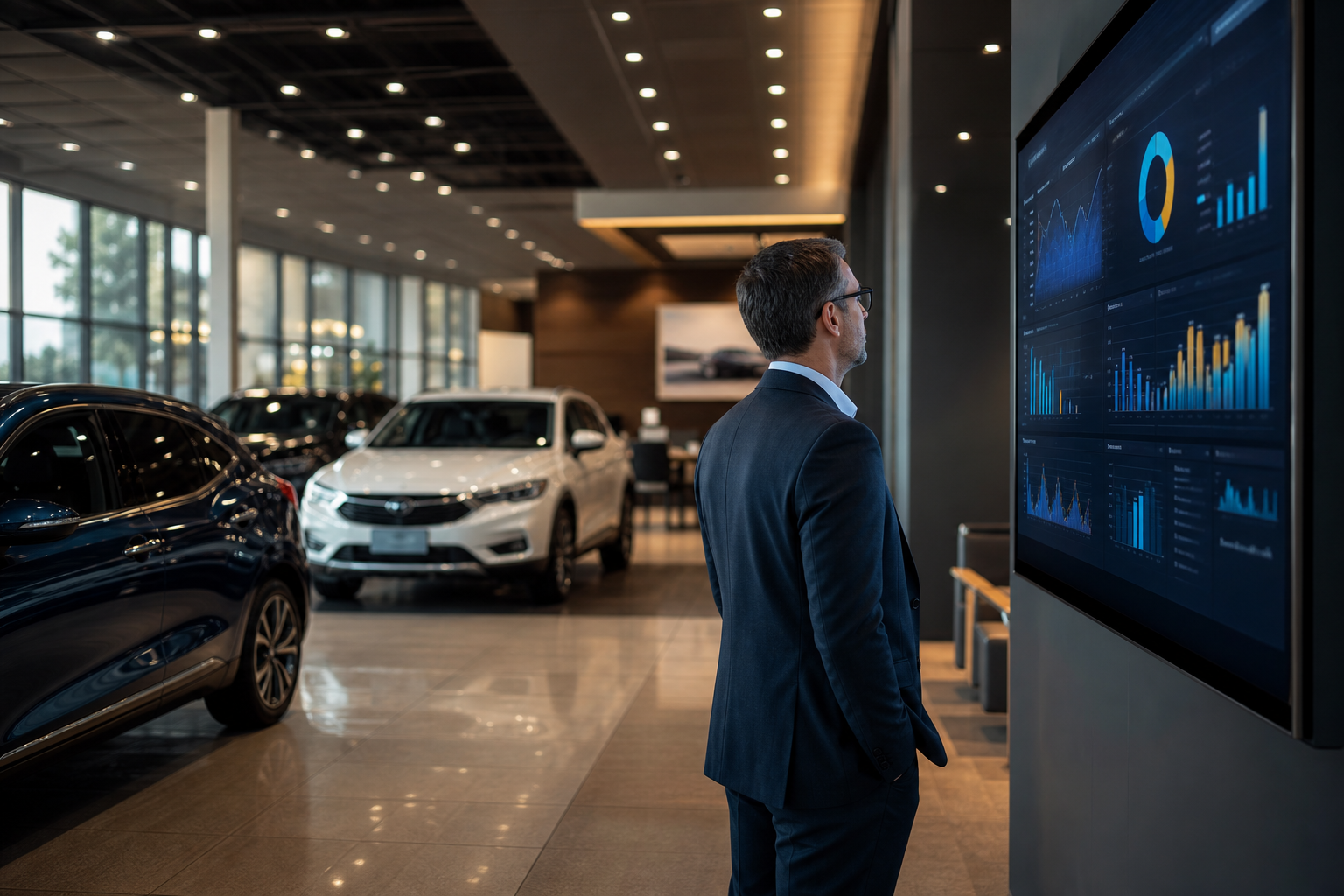
Most dealerships are still spending money the old way, buying broad reach and hoping the right buyer happens to be in the audience. A data driven marketing approach changes that math completely. You stop guessing and start knowing exactly which customer to reach, when to reach them, and what to say.
15 Powerful Digital Marketing Strategies for Auto Dealerships | Willowood Ventures
Why Gut-Feel Marketing Is Costing You Deals
Run a newspaper ad long enough and it starts to feel like marketing. It isn’t. It’s just spending. The difference between spending and investing is proof, and proof comes from data.
The car business has always been relationship-driven, but relationships in 2026 start online. A buyer researching a new truck might hit your VDP, watch a walkaround video, use your payment calculator, abandon the page, see a retargeted ad three days later, and then walk in asking for a specific salesperson by name. Without a data driven marketing approach, those events look like random noise. With one, they look like a buying signal you can act on.
Dealerships that have made this shift aren’t just winning more deals. They’re winning smarter, spending less per sale, and holding gross because they’re talking to buyers at exactly the right moment.
What a Data Driven Marketing Approach Actually Looks Like
It’s not complicated in theory. Collect the right information, connect it across your systems, and let the patterns tell you where to put your budget and your people.
Here’s a simple example. Your DMS shows a customer whose Silverado lease expires in 90 days. Your CRM shows she’s visited your new inventory page twice this month. Your service records show her last three appointments were oil changes and tire rotations, all on time. That’s a loyal customer with a predictable need and a closing window you can see coming a mile away.
A generic blast email won’t move her. A personalized message with a trade-in estimate, a look at the 2026 Silverado, and a specific lease payment tied to her current deal? That’s a conversation starter. That’s data doing the work.
The Touchpoint Reality
Modern car buyers average anywhere from 20 to 500 touchpoints before they sign. That number sounds wild until you map out your own shopping behavior. Every search, every VDP visit, every video view is a breadcrumb. A data driven strategy connects those breadcrumbs into a picture you can actually use.
At Willowood Ventures, we’ve managed over $4 million per month in social advertising managed for dealerships across the country. That scale gives us pattern recognition that a single store simply cannot build on its own. We know which ad creatives convert at which hours, which audiences close at the highest rates, and which messages resonate when a buyer is 30 days out versus three days out.
Smarter Budget Allocation, Measurable Returns
Here’s the practical payoff. When you know which channels and which audiences are driving actual sold units, you stop funding the ones that aren’t. That’s not a small thing. Most dealerships are leaving serious money on the table by spreading budget evenly across channels without ever checking cost per sale by source.
Pull your analytics on a Facebook campaign and you might find that evening impressions between 6 PM and 9 PM generate 40% more qualified leads than morning placements. That one insight, acted on immediately, gets you more leads without spending an extra dollar. That’s what data does. It shows you where to put the gas.
Our clients average approximately 800% average return on ad spend on properly managed campaigns. That’s not a projection. That’s what happens when targeting is tight, creative is tested, and follow-up is fast.
Traditional vs. Data Driven: A Quick Contrast
Ad Targeting: Old approach buys a highway billboard. Data driven approach targets users who searched “best family SUV in 2026” or visited a competitor VDP in the last 14 days.
Email Campaigns: Old approach sends the same new inventory blast to 8,000 contacts. Data driven approach segments by lease-end date, vehicle type, and mileage milestones.
Budget Allocation: Old approach keeps 30% on radio because that’s what’s always been budgeted. Data driven approach calculates cost-per-sold-unit by channel and reallocates accordingly.
Sales Follow-Up: Old approach has BDC calling leads in the order they came in. Data driven approach uses lead scoring to surface buyers who’ve visited multiple VDPs and hit the payment calculator.
Service Retention: Old approach mails a generic postcard at 12 months. Data driven approach sends a personalized text at the specific mileage threshold based on the customer’s own service history.
The BDC Connection: Data Without Follow-Up Is Dead Weight
Here’s what separates results from reports. Data tells you who to call. Your BDC has to actually make the call, and make it well.
Willowood Ventures operates a 24/7 US-based BDC, live, every day. When a lead scores high based on behavioral data, it doesn’t sit in a queue until Monday morning. Someone contacts that buyer while they’re still thinking about your vehicle.
The numbers on that discipline are hard to argue with. Our stores run a 35% set rate, a 65% show rate, and a 15% overall closing rate. Those aren’t industry averages. Those are what consistent, data-informed follow-up actually produces when the process is tight.
Real store results back this up. Little Rock VW moved 64 units for $294,821 in gross. Salt Lake City GMC hit 89 sold for $421,593. Oklahoma City CDJR closed 83 deals at $398,762. Torrance Chevrolet sold 72 units for $345,688. These are not outliers. They’re what happens when data and execution work together.
Getting Started Without Overthinking It
You don’t need a data science team. You need the right partner and the willingness to look at what your own systems are already telling you.
Start with your DMS. It knows more about your customers than most salespeople do. Layer in your website analytics, your CRM activity, and your service history. Connect those sources and you’ll start seeing patterns inside of 30 days.
From there, build your targeting around what the data shows. Use your CRM segments to drive your email and SMS. Use your website behavior to fuel your retargeting. Use your service records to time your conquest and retention campaigns. And make sure your BDC is equipped to handle the leads that come back.
Willowood Ventures packages are quoted per rooftop and are built for stores that want to compete without wasting budget finding their footing. We’re a Meta Certified Partner, we’ve worked with 600+ dealer partners, and we know what moves metal in 2026. Call us at 843-310-4108 and let’s talk about your store’s numbers.
Make Willowood Ventures a preferred source on Google
One tap tells Google you want our dealership marketing coverage surfaced first. You will see Willowood Ventures more often in Top Stories, AI Overviews, and AI Mode when you search anything about selling more cars. It is free, it takes a second, and it brings you right back to this page.
Everything dealerships ask us about data driven marketing approach.
What is a data driven marketing approach and why is it important for car dealerships? +
A data driven marketing approach means making every advertising and sales decision based on actual customer behavior, measurable metrics, and verified results rather than intuition or habit. For dealerships, that means using DMS records, website analytics, CRM activity, and service history to target the right buyer with the right message at the right time.
The reason it matters is simple. Dealerships that run on gut feel spend money on broad audiences and hope a few buyers happen to be in there. Stores that run on data know exactly who to target, what to say, and when to say it.
Willowood Ventures has managed over $4 million per month in social advertising managed for dealerships using this exact approach, producing an average approximately 800% average return on ad spend across our client base. That kind of return doesn’t happen with spray-and-pray budgets. It happens when data is driving the strategy.
How does a data driven marketing approach specifically benefit car dealerships? +
The most direct benefit is budget efficiency. When you know which channels, audiences, and messages are converting to actual sold units, you stop funding the ones that aren’t. That alone can dramatically lower your cost per sale without reducing overall volume.
Beyond efficiency, it improves timing. Knowing that a customer’s lease ends in 90 days, or that their truck just crossed 80,000 miles, lets you reach them when they’re already thinking about their next vehicle. You’re not interrupting them. You’re showing up at exactly the right moment.
Dealerships working with Willowood Ventures have seen results like 89 sold units for $421,593 at a Salt Lake City GMC store and 83 sold for $398,762 at an Oklahoma City CDJR store. That kind of output reflects what precise targeting and timely follow-up can do when they work together.
What are the key components of a successful data driven marketing strategy for dealerships? +
Four components matter most. First, connected data sources. Your DMS, CRM, website analytics, and service records need to be feeding into a unified view of each customer. Siloed data produces siloed decisions.
Second, audience segmentation. Not every customer gets the same message. Lease-end buyers, high-mileage trade candidates, conquest targets, and service-only customers each need different offers and different timing.
Third, consistent follow-up from a capable BDC. Data identifies the opportunity. Your team has to execute. Willowood Ventures runs a 24/7 US-based BDC operating so no hot lead sits overnight.
Fourth, closed-loop measurement. Track cost per lead, cost per appointment, show rate, and cost per sold unit by channel. If you can’t measure it, you can’t improve it.
How long does it take to see results from a data driven marketing approach? +
Most dealerships start seeing meaningful pattern data within 30 days of properly connecting their sources. Campaign-level results, meaning leads, appointments, and shows, are visible within the first two to four weeks depending on ad spend and market size.
Sold unit attribution typically becomes clear within 60 to 90 days, which accounts for the average automotive purchase cycle. Some buyers move fast, especially conquest customers responding to a strong lease offer. Others need multiple touchpoints over a few weeks before they’re ready.
The key is not pulling the plug too early. Data driven strategies improve over time as the algorithm learns your best-performing audiences and your team gets better at working the leads the system surfaces. Stores that commit to a full 90-day cycle consistently see stronger results in months two and three than they saw in month one.
What kind of ROI can dealerships expect from professional data driven marketing? +
Willowood Ventures clients average approximately 800% average return on ad spend on properly structured campaigns. To put that in real terms, a store investing $5,000 in a targeted campaign should expect to see $40,000 or more in measurable gross return when the targeting, creative, and follow-up are all dialed in.
Actual store results give you a clearer picture. Torrance Chevrolet sold 72 units for $345,688. Little Rock VW moved 64 units for $294,821. These aren’t cherry-picked wins from record months. They’re what consistent data driven execution produces across different markets and brands.
ROI also compounds over time. The longer you run a data driven strategy, the more refined your audiences become and the lower your cost per acquired customer gets. Stores that stick with it for six-plus months consistently outperform their own earlier benchmarks.
How does a data driven marketing approach differ from traditional dealership marketing methods? +
Traditional dealership marketing buys reach and hopes for relevance. A radio buy, a newspaper ad, or a mass email blast goes to everyone and speaks to no one in particular. The logic is that if enough people see it, some percentage will respond. That model works when budgets are unlimited and competition is low. Neither is true in 2026.
A data driven approach inverts that logic. It starts with the specific customer, identifies what they need and when they need it, and delivers a targeted message through the right channel. A buyer whose F-150 lease ends in 60 days gets a different message than a conquest customer who just searched for a competitive model online.
The practical result is a lower cost per sold unit, higher close rates on leads that do come in, and a marketing budget that behaves more like an investment than an expense. Our clients see show rates of 65% from set appointments, which is what happens when the right people are being targeted from the start.
What role does BDC follow-up and audience targeting play in data driven marketing success? +
Data without follow-up is just a report. The best audience targeting in the world produces nothing if the leads it generates sit uncontacted for 48 hours. Speed and quality of follow-up is where data driven marketing either pays off or falls apart.
Willowood Ventures runs a 24/7 US-based BDC, live. When a prospect responds to a targeted campaign, they hear from a trained rep within minutes, not the next morning. That responsiveness is a direct driver of our 72% appointment show rate.
Audience targeting determines who gets the message. BDC execution determines what happens next. Both have to be sharp. Targeting without follow-up wastes ad spend. Follow-up without targeting wastes rep time on unqualified buyers. The combination is what produces the 35% set rate and 15% overall closing rate our stores consistently run.
How important is timing for launching a data driven marketing approach at a dealership? +
Timing matters, but not the way most dealers think about it. There’s no perfect month to start. Every month you’re not using data to drive decisions is a month you’re funding campaigns that may not be working and missing buyers your own DMS already knows about.
That said, certain windows amplify results. End-of-model-year inventory pushes, manufacturer incentive cycles, and tax refund season all create natural urgency that a data driven campaign can target precisely. Knowing that a specific segment of your database has vehicles in a specific mileage range lets you time your outreach to those customers right when OEM incentives make a trade-in offer most compelling.
The best time to start is now, with whatever data you currently have. A well-structured strategy builds momentum. Stores that launch in the first quarter of 2026 will have richer audience data and more refined targeting by Q3 than stores that wait for conditions to feel perfect.
What makes a data driven marketing approach more effective than alternative dealership marketing methods? +
The core difference is measurability. Every element of a data driven campaign, audience, creative, timing, channel, and offer, can be tested, measured, and improved. Traditional methods don’t offer that feedback loop. You spend the money and you roughly know whether it was a good month, but you can’t pinpoint why.
Data driven campaigns also scale efficiently. When you find a targeting combination that produces a low cost per sold unit, you can increase spend on that exact combination and predictably grow output. That’s not possible with a fixed newspaper buy or a broadcast spot.
Finally, data driven marketing compounds. Your customer database gets richer every month. Your lookalike audiences get more accurate. Your retargeting pools grow. The infrastructure you build in the first six months keeps paying returns well beyond the initial campaigns. That’s the fundamental reason 600+ dealer partners have chosen this approach with Willowood Ventures.
Why should dealerships choose Willowood Ventures for their data driven marketing approach? +
Willowood Ventures is the premier choice for a data driven marketing approach because of our proven track record across 600+ dealer partners and $4 million per month in social advertising managed managed at scale. We’re not learning on your budget. We already know which audiences convert, which creatives move metal, and which follow-up sequences close deals in your market.
Our 24/7 US-based BDC runs and delivers a 72% appointment show rate because we respond fast and train our reps to handle real automotive objections, not generic scripts. Packages are quoted per rooftop, and as a Meta Certified Partner we have access to tools and data that most agencies simply don’t.
The results are documented. Little Rock VW, Salt Lake City GMC, Oklahoma City CDJR, Torrance Chevrolet. Real stores, real sold units, real gross. Contact us at 843-310-4108 to talk about what a data driven approach can do for your store’s 2026 numbers.
Ready to Transform Your Dealership’s Success?
Partner with Willowood Ventures, America’s #1 automotive marketing agency, and start filling your showroom with ready-to-buy customers. Our Facebook Sales Events deliver Set Appointments, not promises.