Dealership Event Marketing Strategies for 2026 That Work
Dealership event marketing strategies should be chosen by the business problem they can solve, not by which idea looks best in a presentation. A store short on fresh buyers needs a different plan from a store with plenty of appointments and poor follow-through. Before selecting an event format, decide what needs to change and how you will recognize the change. Otherwise every result becomes a reason to repeat the same spend.
This page helps you choose among the strategies that follow and judge them without giving an event credit for business already happening. You’ll build a selection brief, establish a fair baseline, and separate useful evidence from a busy recap. The dealership events guide covers the broader event operation. This section stays on management’s decision: which approach fits, what to measure, and whether to repeat it.
Select Dealership Event Marketing Strategies by the Constraint
Name the constraint before picking the format. Are too few buyers entering conversations? Are appointments being set without usable vehicle interest? Is the floor failing to work the visits it already has? Each problem requires a different response. More promotion does not automatically repair a broken handoff.
Write the desired change as an observable outcome. Extra delivered units is a business outcome. More video views is an activity measure. Activity can help explain what happened, but it should not quietly replace the original objective when the delivery result is disappointing.
Build a decision brief for the options
- Business constraint: the specific limit on current performance.
- Buyer action: the action the event is designed to produce.
- Store capability: the inventory, staff, and management coverage required.
- Evidence: the records that will show whether the action happened.
- Stop condition: the operational problem that would prevent a fair test.
Reject options that depend on capabilities the store cannot provide. A format built around specialist knowledge fails if no trained employee can attend. An appointment-heavy approach needs actual floor coverage. The best option on paper can still be wrong for the rooftop this month.
Keep the choice narrow enough to evaluate. Adding every possible activity makes it difficult to tell which part helped. Choose a primary approach and identify supporting work separately. The strategy list below supplies options; this brief gives you a reason to select one rather than copying another store’s calendar.
Measure Dealer Event Marketing Against an Honest Baseline
Record the comparison before the event begins. Use your own selling history and explain why the periods are comparable. Note differences in inventory availability, staffing, selling days, and other active promotions. A raw before-and-after unit count cannot explain those changes by itself.
Keep event-associated deliveries separate from estimated extra deliveries. The first category means a buyer can be connected to the event. The second asks how much business occurred beyond a reasonable baseline. A customer already working a deal can attend the event without becoming a new sale created by it.
- Preserve the original buyer record and first event contact.
- Record an accepted appointment separately from an inquiry or reply.
- Connect the visit and delivery to the same buyer record.
- Remove duplicate credit when the buyer interacted with multiple campaigns.
- Keep unresolved attribution visible rather than forcing every deal into a category.
Track gross with the same discipline. Decide which contribution the review uses and which event expenses belong in the calculation. Calling total sales value ROI hides too much. Ask the accounting team to approve the method, then use it consistently across the options being compared.
Don’t treat every event-associated deal as proof of causation. Without a credible comparison, describe what you observed and what remains uncertain. That is still useful management information. It is stronger than a polished report claiming all showroom activity came from the latest campaign.
For the appointment-led option, inspect the Facebook Sales Event process alongside the records you intend to use. The service and the measurement method need to agree before you ask the desk to judge the result.
Decide Which Dealership Event Marketing to Repeat
Review the result and the execution separately. If advertising generated relevant conversations but the store missed its own callbacks, the strategy has not received a clean test. If the work was completed and the buyers consistently wanted something the store could not offer, the selection itself needs attention.
Use a simple decision record: repeat, revise, or stop. Explain the evidence behind the choice. A revision should name the change and the result it is expected to affect. Replacing the artwork while ignoring the original inventory mismatch is not a meaningful revision.
Judge the weakest operating link before increasing volume. More booked visits help only if the floor can handle them. Check staffing, vehicle readiness, and unresolved buyer questions before expanding the event. Record the capacity decision separately from the marketing recommendation so a good report does not become automatic approval to spend more.
Appointments move metal. Everything else is noise.
Willowood sells Facebook Sales Events: time-limited campaigns with a custom event page and 10 to 20 ad creatives across Facebook and Instagram. Its live US-based BDC team sets appointments in English and Spanish, 24/7/365, with average response time under 3 minutes. Dealer data ownership gives management access to the buyer record behind the appointment count.
Use that approach when the constraint is creating and working buyer conversations into scheduled visits, with extra units as the business goal. To examine whether it fits your store’s decision brief, book a demo or call 843-310-4108.
Foot traffic doesn’t walk through the door on its own. The dealerships moving metal consistently in 2026 are running structured, repeatable event marketing programs that turn a slow Saturday into a packed lot. Here’s what actually works.
Why Event Marketing Still Moves Cars in 2026
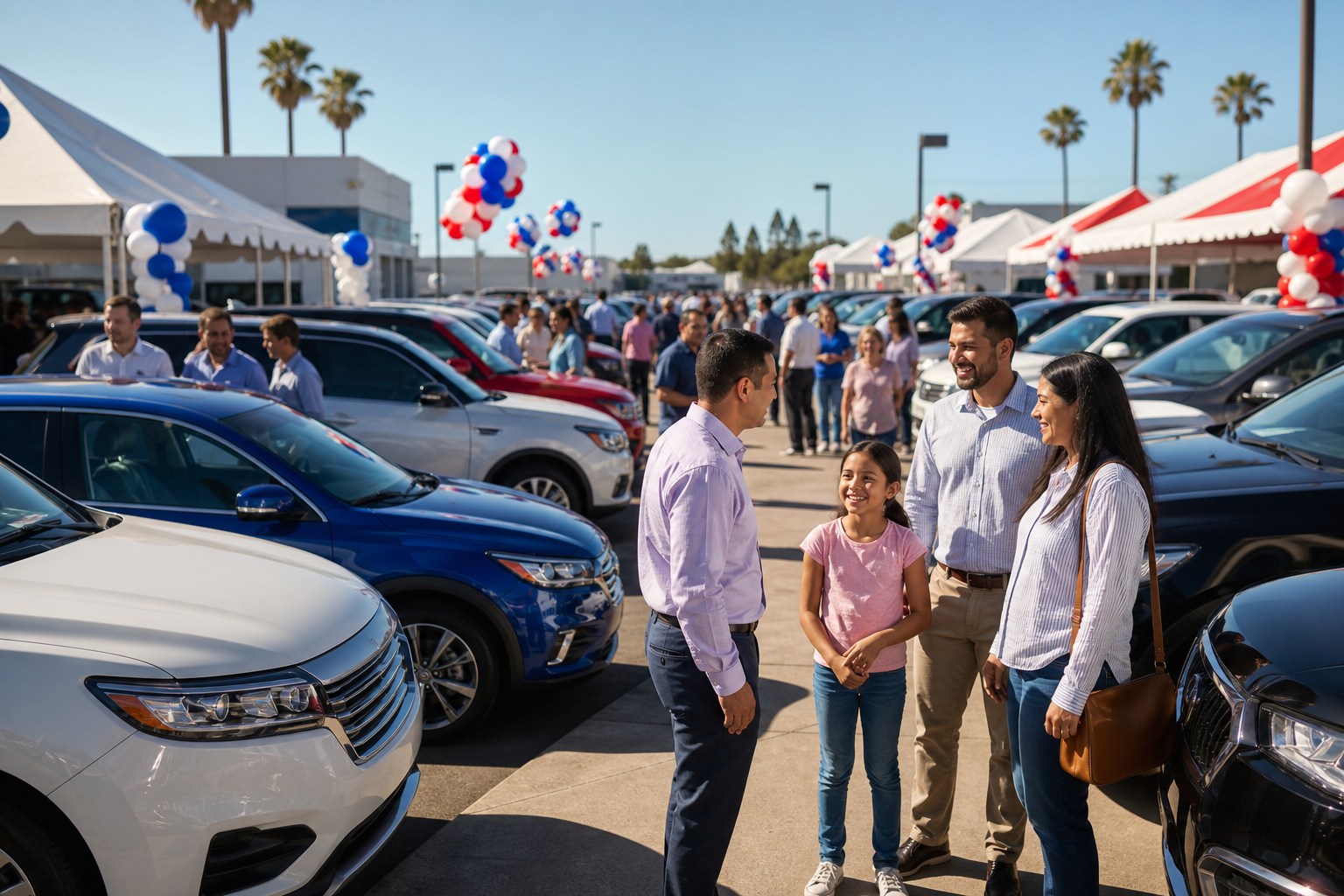
Inventory is largely commoditized. Customers can find the same trim level at three stores within 20 miles. What they can’t find everywhere is an experience worth driving to. A well-run dealership event gives people a reason to show up, and once they’re on your lot, your sales team does the rest. The math is straightforward.
Willowood Ventures has managed over $4 million per month in social advertising managed for dealerships across the country, and the events we’ve promoted consistently outperform standard conquest campaigns on cost-per-appointment. These ten strategies reflect what we’ve seen work at real stores, not theory.
1. Experiential Test Drive Events
Give customers something to talk about. A standard test drive loop around the block sells nothing. A timed autocross, a mountain road run, or an off-road course for a truck lineup sticks with people. BMW’s Ultimate Driving Experience figured this out years ago. You don’t need a closed course with a massive budget to do something similar.
Rent a parking lot, set up cones, and let buyers push that new pickup through its paces. The vehicle sells itself when people actually feel it. Pair the event with a simple lead capture form at registration and you’ve built a qualified contact list before the first car turns a wheel.
2. Influencer and Local Personality Partnerships
Forget national celebrities. The local sports radio host, the car-focused Instagram account with 40,000 regional followers, or the family blogger your target SUV buyers already trust, those partnerships drive real foot traffic. They’re also affordable. Most local influencers work for product access, event exposure, and a modest flat fee.
Give them early access to the event, let them create content their way, and track results with a dedicated registration link or promo code. Authentic beats polished every time in this format.
3. Hybrid In-Person and Live Stream Events
Not every interested buyer can make it to your lot on event day. A live stream on Facebook or YouTube captures the out-of-market shopper, the buyer who works weekends, and the customer who is still in research mode. Run the in-room event with energy, put a dedicated camera op on the floor, and pipe it out live.
Virtual attendees get a registration link, a follow-up call from your BDC, and an invitation to schedule a personal appointment. The Willowood BDC runs every day, so no lead from a Saturday night live stream goes cold before Sunday morning.
4. Service Customer Appreciation Events
Your service drive is your most overlooked conquest list. These people already trust your store enough to hand you their keys. A quarterly appreciation event, free detailing, food trucks, and a “first look” at new inventory, converts service customers into buyers at a rate that beats cold conquest every time.
Pull the list. Mail the invitation. Have a salesperson posted at the service event with a payment comparison tool ready. The conversation starts naturally.
5. New Model Reveal Nights
Stage it like a product launch, not a sales floor shuffle. Cover the vehicle, invite a targeted list of previous buyers and conquest prospects, and do an actual reveal with a brief presentation. Serve food. Make it feel exclusive. People who attend a reveal event feel invested in the vehicle before the salesperson says a word.
Pair this with a Meta campaign targeting in-market buyers in your DMA, promoted two weeks out. Willowood’s Meta Certified Partnership means your event ads reach the right audience, not just anyone scrolling through their feed at midnight.
6. Community Tie-In Events
Sponsor the food drive and host it on your lot. Partner with the local youth sports league and run their equipment fundraiser from your showroom. These events bring families to your property who aren’t necessarily shopping yet, but they remember where the good experience happened when they are ready to buy.
Community events build long-term brand recall. They’re not a replacement for conquest marketing. They work alongside it.
7. Owner Loyalty Clinics
Host a Saturday morning session where current owners bring in their vehicle for a free multi-point inspection, meet the technicians, and get a walkthrough of new features or model upgrades. This is retention marketing in event form. Customers who feel connected to a store rebuy there.
The 90% client rebook rate Willowood Ventures maintains across its dealership partners reflects exactly this principle: keep the customer engaged after the sale and the next sale takes care of itself.
8. Targeted Direct Mail and Digital Event Campaigns
An event without promotion is a party nobody knows about. Run a coordinated direct mail drop to a conquest radius around your store, combined with Meta and Google event ads targeting in-market shoppers. The messaging should be specific: date, time, offer, what they’ll experience. Vague promotions produce vague results.
Our campaigns average a 35% set rate and a 65% show rate on appointments generated from event promotions. That’s not an accident. It comes from precise audience targeting and a BDC team that follows up every lead the same day it comes in.
9. VIP Lease Return and Trade Event Weeks
Pull every customer in your database whose lease is within 90 days of maturity or whose loan equity position makes a trade favorable. Invite them to a dedicated event week with priority appointment slots, a guaranteed trade value before they arrive, and a curated selection of vehicles matched to their profile.
This is not a standard sales event. It’s a personalized buying experience for people who are already close to a decision. Conversion rates on these events run significantly higher than general public promotions because the audience is pre-qualified by their own financial situation.
10. Post-Event BDC Follow-Up as Part of the Strategy
This one gets skipped constantly. The event ends Saturday night, the leads sit in a spreadsheet until Monday, and half the momentum evaporates. The follow-up process is part of the event strategy, not an afterthought.
Every lead generated at your event needs a same-day or next-morning outreach call, a text, and an email. The Willowood BDC operates 24/7, specifically so that a Saturday night event lead hears from a real, US-based agent before Sunday afternoon. That speed-to-contact difference is where events either convert or fall flat.
If you want to see what a full event marketing program looks like when it’s built correctly from promotion through follow-up, call Willowood Ventures at 843-310-4108. We’ve run these programs for 600+ dealer partners nationwide and the results speak clearly: stores like Salt Lake City GMC moved 89 units for $421,593 in a single event cycle. For a broader look at automobile marketing strategies heading into 2026, that resource covers the full landscape beyond events alone. To understand how to measure event success once your program is running 24/7, that guide walks through the metrics that matter most.
Make Willowood Ventures a preferred source on Google
One tap tells Google you want our dealership marketing coverage surfaced first. You will see Willowood Ventures more often in Top Stories, AI Overviews, and AI Mode when you search anything about selling more cars. It is free, it takes a second, and it brings you right back to this page.
Button not loading? Add willowoodventures.com as a preferred source here.
Frequently Asked Questions
Everything dealerships ask us about dealer event marketing.
Ready to Transform Your Dealership’s Success?
Partner with Willowood Ventures, America’s #1 automotive marketing agency, and start filling your showroom with ready-to-buy customers. Our proven Facebook Sales Event strategy delivers Set Appointments, not promises.